
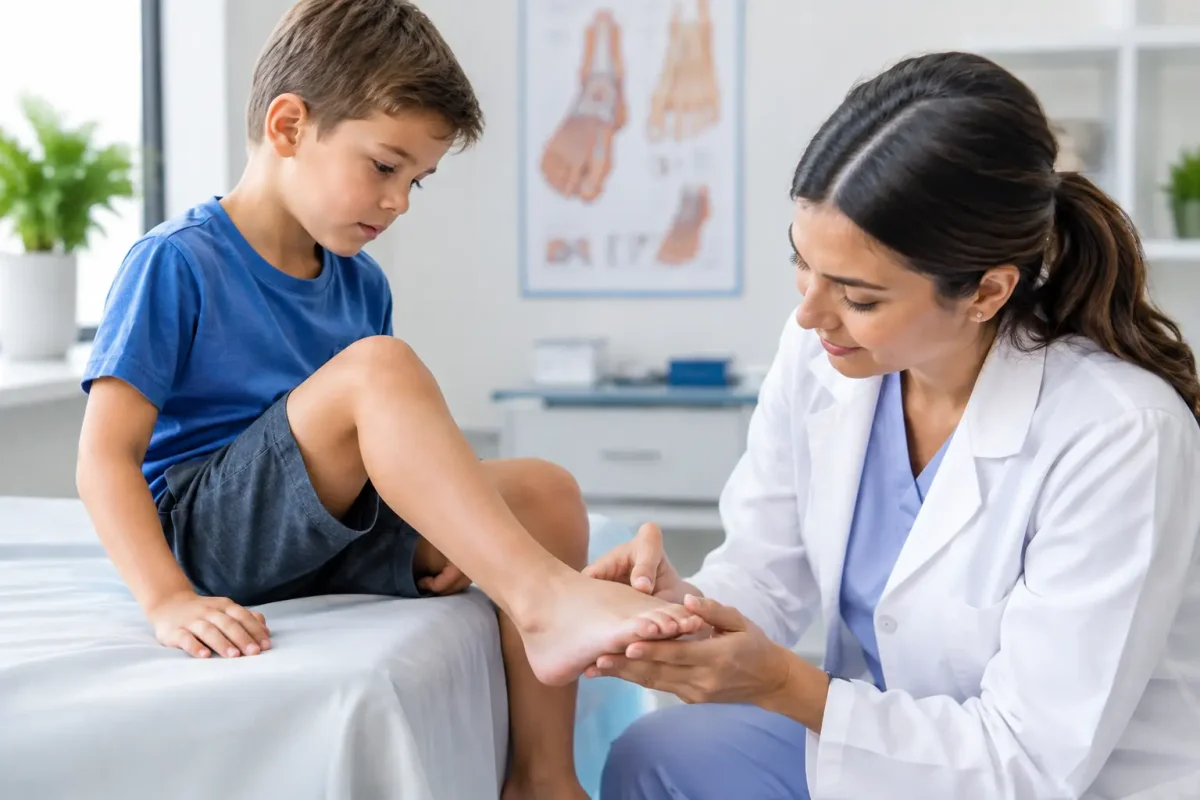
A child who suddenly wants to be carried home from school, sits out of footy training or regularly rubs their heels after sport is telling you something – even if they cannot yet describe it clearly. Parents often ask when should children see a podiatrist, particularly because growing bodies can look and move differently from one year to the next. The answer is not always ‘at the first complaint’, but ongoing pain, changes in walking or running, and problems that limit play deserve a professional assessment.
Children place large demands on small, developing feet. From the first steps through to busy school days, dance classes and weekend sport, their bones, muscles, tendons and joints are adapting quickly. Identifying the source of discomfort early can relieve pain now and help your child move with greater confidence as they grow.
Is foot pain ever just part of growing up?
Children can have short-lived aches after an unusually active day, a new sport season or a rapid growth phase. A single complaint that settles with rest and does not change how they walk is often not a cause for alarm. However, recurring pain should not be dismissed as ‘growing pains’ without looking more closely.
Growing pains typically occur in both legs, often later in the day or overnight, and are not usually associated with limping, swelling or pain in one specific joint. Heel pain during activity, soreness beneath the foot, repeated ankle rolling or pain that makes a child avoid running may have a different cause. A paediatric podiatry assessment can clarify what is normal development and what needs treatment or support.
When should children see a podiatrist?
It is sensible to arrange an appointment if a foot, ankle or leg problem is persistent, worsening or changing your child’s usual movement. Children do not always complain directly. They may slow down, avoid certain shoes, stop joining in at recess or become frustrated during activities they once enjoyed.
Look out for these signs:
- Pain in the heel, arch, ball of the foot, ankle, shin, knee or calf that lasts longer than a few days or keeps returning.
- Limping, toe walking, walking on the inside or outside edges of the feet, or a noticeable change in running style.
- Frequent tripping, poor balance, repeated ankle sprains or difficulty keeping up with children of a similar age.
- Flat-looking feet that are painful, stiff, uneven or linked with fatigue during walking and sport.
- Ingrown toenails, warts, skin cracks, persistent blisters, unusually thick nails or signs of infection.
- Swelling, bruising, redness or tenderness after an injury that does not improve as expected.
A podiatrist can assess the issue in the context of your child’s age, activity level, footwear and growth stage. This matters because a foot position that is common in a toddler may require closer attention in an older child, especially when it causes pain or affects sport and daily mobility.
Common reasons children need podiatry care
Heel and leg pain in active children
Heel pain is one of the most common reasons school-aged children see a podiatrist. It can be linked to strain around the heel’s growth area, particularly in children who play running and jumping sports such as AFL, netball, soccer, basketball or athletics. Calf tightness, a sudden increase in training load, hard playing surfaces and unsupportive footwear can all contribute.
The goal is not simply to tell a child to stop being active. A podiatrist can identify aggravating factors, reduce symptoms and create a plan that keeps them moving safely where possible. This may include activity modification, footwear advice, targeted stretching, temporary supports or a staged return to sport.
Flat feet, in-toeing and unusual walking patterns
Many young children have flexible flat feet, and many do not need treatment. Their arches may become more visible as they grow and their muscles strengthen. The picture changes if flat feet are painful, one foot looks markedly different from the other, the feet are stiff, or your child tires quickly on walks.
In-toeing, out-toeing and toe walking also need to be considered in context. Some patterns are developmental and improve naturally, while others affect balance, comfort or running efficiency. An assessment looks beyond the feet to the knees, hips, muscle strength and coordination, helping identify whether observation, exercises, footwear changes or further care is appropriate.
Sports injuries and repeat ankle sprains
A child who repeatedly rolls an ankle or develops shin, knee or forefoot pain should not have to simply ‘push through’. Recurrent injuries can reflect reduced ankle stability, poor landing control, muscle weakness, training errors or footwear that does not suit the sport.
At Comfort Feet Podiatry Group, a lower-limb assessment can examine how a child walks, runs and loads their joints. When clinically appropriate, 3D biomechanics analysis and neuromuscular rehabilitation can help identify movement patterns that are easy to miss in a quick examination. Treatment should be matched to the child, rather than assuming every young athlete needs orthotics.
Nail, skin and shoe problems
An ingrown toenail can make school shoes and sport miserable. Redness, swelling, discharge or increasing pain around a nail needs prompt attention, as does a wart that becomes painful under pressure. Children may also develop blisters, athlete’s foot or painful hard skin when shoes are too small, too narrow or poorly suited to their activity.
A podiatrist can provide gentle clinical treatment and practical prevention advice. For nails, this may include addressing the curved nail edge and discussing safe trimming habits. For shoes, the focus is on fit, adequate toe room, heel support and choosing the right style for school, sport and everyday play.
What happens at a paediatric podiatry appointment?
A good appointment starts with listening. Your podiatrist will ask when the problem began, what makes it better or worse, which activities are affected, and whether there has been a recent growth spurt, injury or change in sport. Bringing along the shoes your child wears most often can be helpful, especially if they are worn unevenly.
The clinical assessment may include watching your child stand, walk, run, balance or squat; checking joint movement, muscle flexibility and strength; and examining the feet, nails and skin. If pain follows an injury or there are signs of a more significant condition, your podiatrist may recommend imaging or referral to another health professional.
Treatment is designed around comfort, function and age-appropriate development. Depending on the diagnosis, it may involve footwear recommendations, stretching and strengthening, taping, activity guidance, rehabilitation or custom orthotics. Orthotics can be useful for some children, but they are not a default solution. The decision should be based on symptoms, foot function, activity demands and how your child responds to more conservative measures.
When pain needs urgent medical attention
Some symptoms need same-day medical assessment rather than waiting for a routine podiatry appointment. Seek urgent care if your child cannot put weight through the foot after an injury, has severe or rapidly increasing pain, obvious deformity, significant swelling, fever, a hot red joint, or a wound with spreading redness or discharge.
Night pain that repeatedly wakes a child, unexplained weight loss, ongoing fatigue or pain that is not connected to activity should also be discussed with a GP promptly. These signs do not necessarily indicate a serious problem, but they should be assessed without delay.
Supporting healthy feet between appointments
Parents do not need to inspect every footstep. Instead, pay attention to changes in behaviour and comfort. Encourage a gradual increase in sport training rather than sudden jumps in activity, make time for recovery, and replace shoes once they become too tight, worn through or unstable.
Choose shoes with enough length and width for toes to move freely, a secure heel and a fastening that holds the foot in place. Thongs have their place around the pool or beach, but they are not ideal for long walks, active play or sport. Avoid handing down heavily worn sports shoes, as the midsole and heel support may already be compressed to another child’s movement pattern.
Most importantly, take your child seriously when they say something hurts. Early care is not about labelling normal development as a problem. It is about giving children the comfort, confidence and support they need to keep enjoying school, sport and everyday movement.