
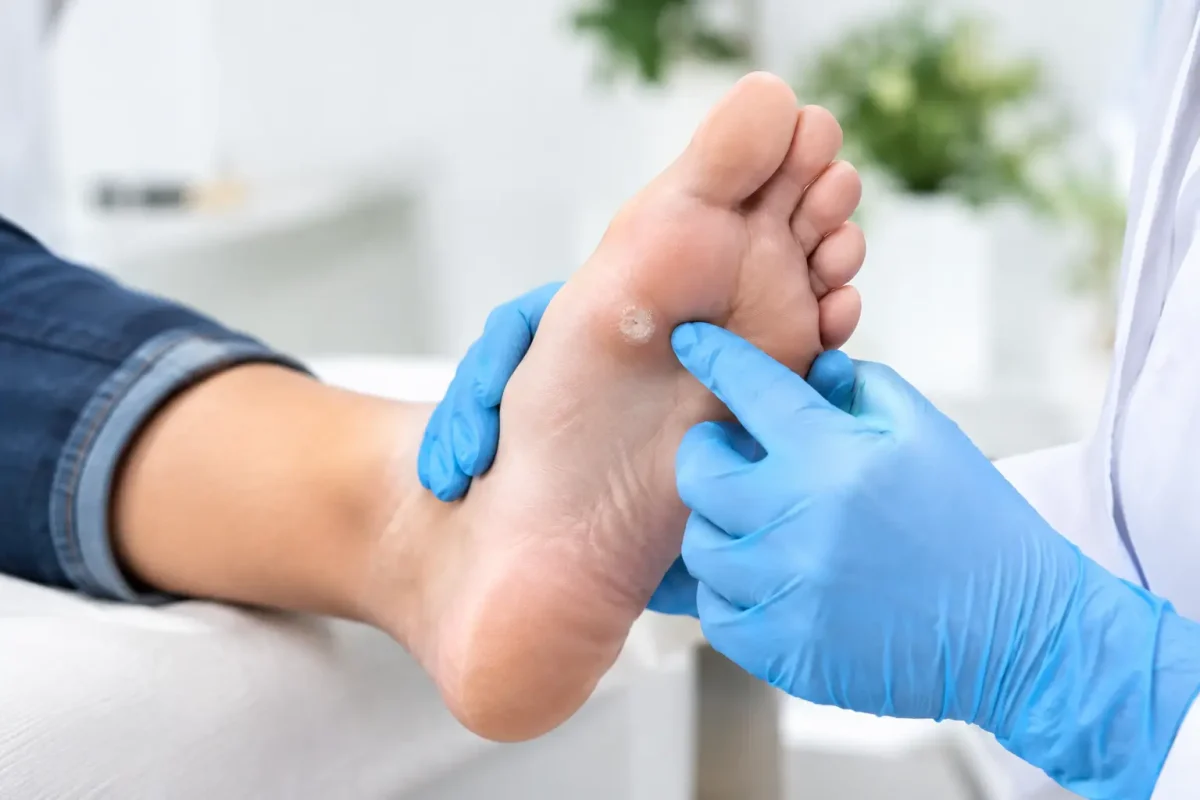
A painful spot on the sole of your foot can change how you walk long before it looks serious. Wart removal is not always urgent, but it can be the right next step when a wart is painful, spreading or stopping you from training, working comfortably or keeping up with family life.
Foot warts are common, but they are often mistaken for corns, calluses or a small piece of embedded debris. The treatments for these problems are very different. A clear assessment helps avoid months of self-treatment that does not address the real cause of your pain.
What is a foot wart?
A wart is a harmless skin growth caused by certain strains of the human papillomavirus, or HPV. On the foot, it is often called a plantar wart. The virus can enter through tiny breaks in the skin, particularly when feet are damp or softened by moisture.
Plantar warts tend to develop on weight-bearing areas such as the heel, ball of the foot or beneath the toes. Pressure from walking can push the wart inward, leaving a rough, thickened patch of skin. Small black or dark red dots may be visible within it. These are tiny clotted blood vessels, not wart “seeds”.
Unlike a simple callus, a wart may interrupt the natural skin lines on the sole of the foot. It can also hurt more when squeezed from the sides than when pressed directly from above. These clues are useful, but they are not a substitute for a professional diagnosis.
Why a wart can become painful
Some warts cause no discomfort and may resolve without treatment. Others become a genuine mobility problem. A wart under a high-pressure area can feel like walking with a pebble permanently caught in your shoe. To avoid it, you may unconsciously shift your weight to the outside of the foot, change your stride or overload the other leg.
For runners, court-sport athletes and people who spend long shifts standing, that compensation can affect more than the skin. It may aggravate forefoot pain, calf tightness, knee discomfort or an existing lower-limb condition. Children can also be reluctant to participate in sport or wear enclosed shoes when a wart becomes tender.
Warts may spread to nearby skin, particularly if they are picked, cut or repeatedly rubbed with a pumice stone. More than one wart growing together can form a clustered pattern known as a mosaic wart. This can make treatment slower, but it is still manageable with the right plan.
When to seek professional wart removal
It is sensible to arrange a podiatry assessment if a suspected wart is painful, growing, bleeding, multiplying or has not improved after consistent over-the-counter treatment. Seek advice sooner if you have diabetes, poor circulation, reduced feeling in your feet, a weakened immune system or a history of slow-healing wounds. Home acids and cutting tools can cause skin damage in these situations.
Professional assessment is equally worthwhile if you are not sure it is a wart. Not every lump, discoloured spot or painful patch on the foot is one. A podiatrist can assess the lesion, surrounding skin and the way pressure is moving through your foot before recommending treatment.
Wart removal options at the podiatrist
There is no single treatment that suits every wart. The best approach depends on its size, location, duration, pain level, your general health and how much pressure the area receives each day. Effective care is often a course of treatment rather than a one-off appointment.
Careful reduction of hard skin
A podiatrist may first reduce the thickened skin that sits over a plantar wart. This can improve comfort quickly by taking pressure off the lesion and allows topical treatments to reach the affected tissue more effectively. It is performed with sterile instruments and should not be confused with digging or cutting a wart out at home.
Topical treatments
Topical preparations may be used to gradually break down wart tissue. Your podiatrist can advise whether this is appropriate, how to apply it safely and how often it should be reviewed. Consistency matters. Skipping applications or stopping as soon as the area looks better can allow remaining viral tissue to persist.
Cryotherapy and other clinic-based care
For some patients, freezing treatment or another clinically appropriate treatment method may be considered. These options aim to trigger a local response that helps clear the wart, but they can cause temporary soreness or blistering. The likely benefits need to be balanced against your work, sport and ability to stay comfortable in footwear over the following days.
Pressure relief and movement support
If the wart sits in a high-load area, felt padding, footwear advice or an offloading strategy can make walking more comfortable while treatment progresses. For patients whose gait is increasing pressure through the painful site, a broader assessment may be helpful. At Comfort Feet Podiatry Group, this can include looking at lower-limb function and, where appropriate, 3D biomechanics analysis or orthotic support to reduce avoidable pressure on the foot.
Why home wart treatments sometimes fail
Pharmacy treatments can be useful for uncomplicated warts, but they require a correct diagnosis and careful use. A corn or callus will not respond in the same way, and repeated treatment of the wrong condition can lead to irritation and delayed care.
Another common issue is treating only the surface. Thick callused skin can shield the wart beneath it, making an active product less effective. Reinfection can also occur if the surrounding skin remains damp, damaged or exposed in shared wet areas.
Avoid cutting a suspected wart with blades, nail scissors or other sharp tools. This risks bleeding, infection and spreading viral tissue. Do not share nail files, pumice stones, socks or towels used on the affected foot.
Reducing the chance of warts spreading
Warts are contagious through direct skin contact and through contaminated moist surfaces, although exposure does not guarantee infection. Small habits can reduce the chance of transmission and recurrence:
- Keep feet clean and dry, including between the toes.
- Wear thongs or waterproof footwear in public pools, communal showers and change rooms.
- Cover the wart with a suitable dressing when swimming or using shared facilities.
- Change socks daily, and rotate shoes so they can dry thoroughly.
- Avoid picking the lesion or biting nails after touching your feet.
These measures matter during treatment as well as after the wart has cleared. If a child has a wart, keep the approach calm and practical. There is no need for shame, but covering the area and avoiding shared foot-care tools helps protect the rest of the household.
How long does wart treatment take?
Warts can be stubborn. Some improve within weeks, while others need treatment over several months. A longstanding wart, a deep plantar wart or a cluster of warts may take longer than a small new lesion. Your immune response also plays a role, which is why two people with similar-looking warts can have very different treatment timelines.
The aim is not simply to make the top layer look smoother. A successful outcome means the wart tissue has cleared, normal skin lines return and the area is no longer painful under load. Follow-up appointments allow treatment to be adjusted if progress stalls and help identify whether another diagnosis should be considered.
Do not let a small lesion alter your day
A foot wart is rarely dangerous, but persistent pain is still worth taking seriously. If you are changing the way you walk, avoiding your usual exercise or putting up with discomfort at work, an assessment can provide a clearer path forward. Early, well-directed care can protect your skin, restore comfort underfoot and help you get back to moving with confidence.