
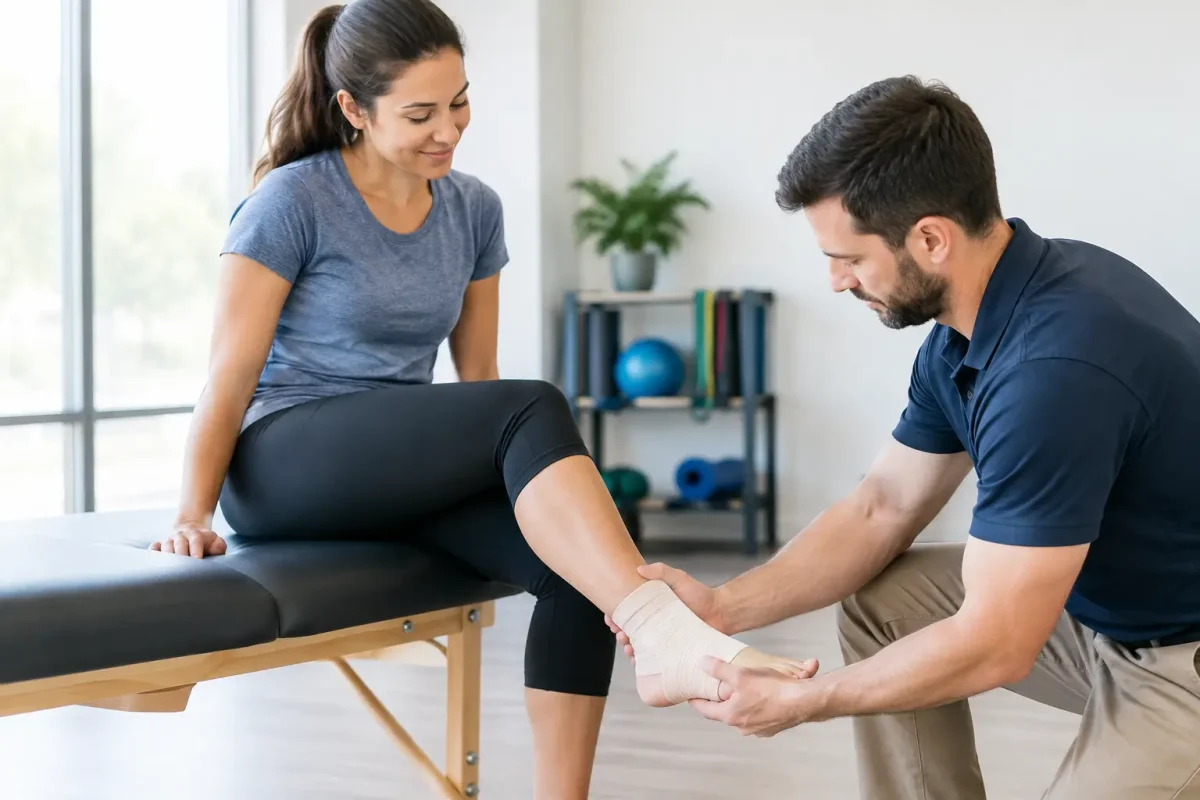
The first few weeks after ankle surgery can feel surprisingly restrictive. A simple trip to the kitchen, getting into the shower or keeping up with work and family routines may suddenly take planning. Successful ankle surgery recovery is not about pushing through pain or racing towards a date on the calendar. It is about protecting the repaired tissues, managing swelling and rebuilding the strength, balance and confidence your ankle needs for everyday movement.
Your surgeon’s instructions always lead the way. The operation performed, the quality of the bone and soft tissue, your general health, and whether you are recovering from an injury, arthritis or a long-standing instability problem all affect the pace of rehabilitation. A tailored plan gives you the best chance of returning to walking, work, sport and the activities that matter to you without creating a new setback.
What affects ankle surgery recovery?
“Ankle surgery” covers a wide range of procedures. Recovery after fixation for an ankle fracture is different from recovery after an ankle arthroscopy, tendon repair, ligament reconstruction, joint fusion or ankle replacement. Some procedures require a period of strict non-weight-bearing to protect healing bone, hardware or repaired tendons. Others allow carefully controlled movement much earlier.
Your post-operative plan may also change if you have diabetes, circulation concerns, reduced sensation in your feet, osteoporosis, inflammatory arthritis or a history of slow wound healing. Smoking and nicotine products can impair healing, while poor sleep and inadequate nutrition can make pain and fatigue harder to manage. These factors are not reasons to lose hope. They are reasons to make your rehabilitation specific, well monitored and realistic.
Swelling is another major variable. It is common for an ankle and foot to remain swollen for months, especially later in the day or after you have been upright. That does not automatically mean something is wrong, but persistent swelling can limit movement, make footwear uncomfortable and alter the way you walk. Managing it well is part of rehabilitation, not an optional extra.
The usual stages of recovery
Timelines vary, but most recovery plans move through distinct stages. Your surgeon and treating team should tell you exactly which restrictions apply to you.
Protect the surgical repair
Immediately after surgery, the priorities are wound care, pain control, elevation and protecting the ankle in a cast, splint or medical boot. You may need crutches, a knee scooter or another mobility aid, particularly if you are not permitted to put weight through the foot.
Keep dressings dry and do not alter them unless your surgical team has advised you to. Elevating the foot above heart level where practical can help settle swelling. Small, regular movements of the toes and knee may be encouraged, but only do exercises that have been specifically approved. A repaired tendon or surgically stabilised joint can be damaged by movement that seems harmless.
Pain should gradually become more manageable. Medication can be useful, particularly in the early days, but take it only as directed and discuss concerns with your doctor or pharmacist. Severe or escalating pain deserves attention rather than silent endurance.
Restore safe movement
Once the wound has healed and your surgeon permits it, rehabilitation usually begins to focus on restoring ankle and foot movement. Stiffness is expected after immobilisation, but forcing range of motion can irritate healing tissues. The aim is controlled progress, not aggressive stretching.
This stage may include gentle ankle mobility work, scar management when appropriate, circulation exercises and treatment to reduce stiffness in nearby joints. The calf, midfoot, toes and knee all influence ankle movement. If they are neglected, it is easy to develop compensations that make walking awkward or overload the other leg.
A podiatrist can assess how your foot is loading as you transition from a cast or boot into a supportive shoe. This matters because the foot may feel unfamiliar after weeks without normal use. Some people roll to the outside of the foot to avoid discomfort; others avoid pushing through the big toe. Both patterns can prolong pain higher up the leg if left unaddressed.
Rebuild strength and balance
As weight-bearing increases, strength work becomes central. Muscles in the calf, shin, foot and hip help control every step, particularly on stairs, uneven ground and slippery footpaths. Weakness after immobilisation is normal, even for very active people.
Neuromuscular rehabilitation helps retrain timing, stability and body awareness. Your program may progress from supported standing and weight shifts to calf raises, controlled step work, single-leg balance and more demanding functional exercises. The right progression depends on your surgical restrictions and your response over the next 24 hours, not just how the exercise feels in the clinic.
For athletes, this stage also addresses the movements that caused trouble before surgery. Reduced hip control, limited ankle mobility, poor landing mechanics or inappropriate footwear can all contribute to repeated ankle problems. A 3D biomechanics analysis may help identify loading patterns that are difficult to see with the eye alone.
Return to work, exercise and sport
Returning to normal activity is usually a gradual exposure process. You may be ready to walk short distances before you are ready for a full shift on your feet, a weekend hike, netball, running or physically demanding work. The ankle needs to tolerate repeated load, not merely one good day.
A sensible return plan considers the demands of your real life. A teacher moving between classrooms, a tradie working on uneven sites and a parent carrying a toddler all need different milestones. Athletes should regain strength, hopping control, change-of-direction capacity and confidence before returning to competition. Bracing, taping, supportive footwear or custom orthotics may be useful for some people, but they should support rehabilitation rather than replace it.
Managing swelling and discomfort day to day
Your ankle often gives clear feedback when activity has progressed too quickly. Increased swelling, a limp that worsens through the day, pain that persists into the next morning or a sudden loss of movement can mean you need to reduce load and seek advice.
Supportive shoes are usually more appropriate than thongs, loose slippers or worn-out runners during the transition back to walking. A stable heel counter, secure fastening and enough depth to accommodate swelling can make a meaningful difference. Do not force your foot into shoes that compress the surgical area.
Pacing is more effective than alternating between complete rest and an overly ambitious burst of activity. Break longer tasks into shorter periods, elevate the ankle after being on your feet and build walking distance in manageable increments. If you use a boot, follow the plan for wearing it precisely. Removing it too early can be as problematic as relying on it longer than advised.
When to contact your surgeon urgently
Some post-operative symptoms need prompt medical review. Contact your surgical team, GP or urgent care service if you notice increasing redness, heat, drainage, a bad smell from the wound, fever, or pain that is worsening rather than settling. New calf pain, significant calf swelling, chest pain or shortness of breath require urgent assessment, as these can be signs of a blood clot or another serious complication.
Also seek advice if your toes become unusually pale, blue, cold, numb or difficult to move, or if a cast, splint or boot feels excessively tight. Do not wait for your next scheduled appointment if something does not feel right.
How podiatry supports your recovery
Once cleared by your surgeon, podiatry can play a practical role in restoring comfortable, efficient movement. At Comfort Feet Podiatry Group, recovery support can include gait assessment, footwear guidance, swelling management strategies, hands-on treatment where appropriate and progressive lower-limb rehabilitation.
The goal is not simply to get you out of the boot. It is to help you walk with better control, rebuild capacity in the whole lower limb and reduce avoidable strain on the knee, hip and opposite foot. For some people, custom orthotics can help redistribute pressure and support a more stable return to activity. For others, the greater priority is calf strength, balance retraining or restoring confidence on uneven ground.
Your surgical follow-ups remain essential, and any rehabilitation program should work alongside your surgeon’s protocol. Clear communication between providers helps ensure that treatment respects the stage of healing while still moving you forward.
A steady recovery can feel slow when you want your usual life back. But each well-managed step, from protecting the repair to walking without a limp, is progress towards moving with confidence again.