
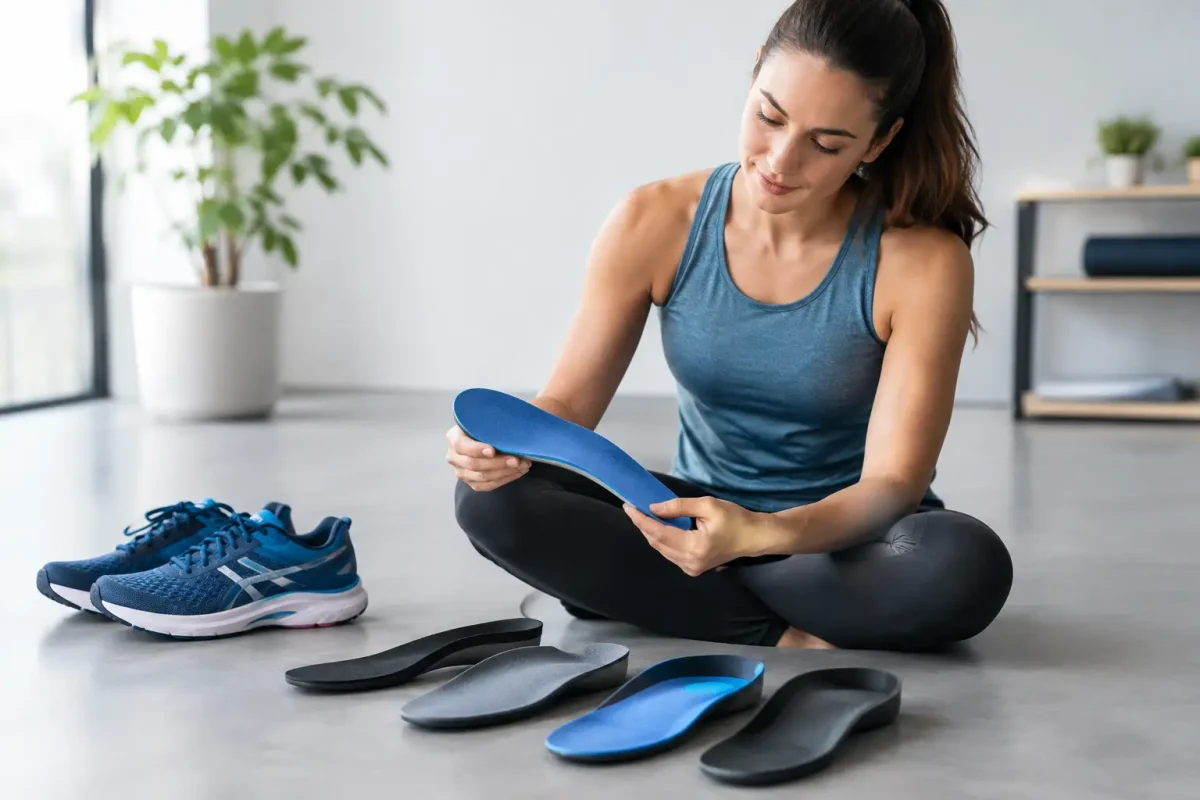
A run can feel fine for the first few kilometres, then heel pain, shin tightness or an ache around the knee starts to build. If that sounds familiar, learning how to choose running orthotics can help – but the right device is not simply the firmest insert on the shelf. It needs to work with your foot, your shoes, your running load and the reason pain is occurring in the first place.
Running orthotics can improve comfort, support movement and reduce stress on irritated tissues. They can also feel awkward or make symptoms worse when they are chosen for the wrong problem. The goal is not to force every foot into a textbook position. It is to help you move efficiently and comfortably enough to keep enjoying your training, work and everyday life.
Start with the problem, not the orthotic
Orthotics are often described as a cure for flat feet, overpronation or running pain. In reality, none of those labels tells the whole story. Plenty of runners with flat feet are pain-free, and plenty with high arches need support too. A foot posture alone does not determine whether you need an orthotic.
Start by noticing when and where symptoms appear. Pain under the heel with first steps in the morning may point to plantar fascia irritation. Pain along the inside of the shin can relate to changes in training load, calf capacity, footwear or foot mechanics. Forefoot burning, numbness, recurrent ankle rolling, Achilles pain and knee discomfort each need a different assessment.
Also consider what changed before pain began. A new pair of shoes, a return to running after injury, hill sessions, increased weekly kilometres or a move from road to trail can all alter the demand placed on the lower limb. An orthotic may be part of the solution, but it will not replace a sensible training plan, appropriate shoes or rehabilitation when those are the main drivers.
How to choose running orthotics for your needs
The best choice depends on the combination of your symptoms, foot shape, movement pattern and goals. A runner preparing for a half marathon may need a different level of control and cushioning from someone who walks and jogs recreationally after a long shift on their feet.
Know the difference between off-the-shelf and custom orthotics
Off-the-shelf orthotics are pre-made inserts available in different shapes, arch heights and cushioning levels. They can be a reasonable starting point for mild, occasional discomfort, especially when they fit your shoe well and provide comfortable support. They are generally less expensive and can be useful while you determine whether additional support helps.
Their limitation is that they are not made for your specific foot or injury. A high arch in a generic device may press into the wrong spot, while a deep heel cup may not sit correctly in your shoe. If pain is persistent, recurrent or affecting your ability to run, work or exercise, a clinical assessment is more useful than repeated trial and error.
Custom orthotics are prescribed after an assessment and made to suit your foot shape, footwear and activity requirements. They are not automatically better for everyone, but they give a podiatrist more control over features such as arch contour, heel stability, cushioning, forefoot accommodation and the way the orthotic manages load through an injured area.
Match the orthotic to your running shoe
Even an excellent orthotic will not perform well in a shoe that is too narrow, worn out or mismatched to your needs. Take your running shoes to your assessment where possible. The shoe and orthotic function as a system, so both must have enough room to work together.
Remove the shoe’s existing liner before trying an orthotic, unless the manufacturer advises otherwise. The heel should sit securely rather than being pushed upward, your toes should still have space, and the upper should not feel overly tight across the top of the foot. A running shoe with a removable liner and a slightly deeper fit often accommodates an orthotic more comfortably.
Avoid choosing an insert solely because it promises maximum arch support. The arch should feel supported, not like a hard lump under the middle of your foot. Firmness can be useful for some runners, while others need more shock absorption or a more gradual contour. Comfort matters because a device that stays in the cupboard cannot improve your running.
Consider your running surface and training volume
Road running, trail running, treadmill sessions and court sports place different demands on the body. A runner who covers long distances on hard footpaths may prioritise cushioning and pressure redistribution. A trail runner may need a stable fit that does not shift on uneven terrain. Someone returning from a calf or Achilles injury may require a temporary modification that reduces strain while strength is rebuilt.
Training volume matters just as much. If symptoms only arise after a big increase in distance, the most effective plan may include reducing load temporarily, building calf and hip strength, improving recovery and reviewing footwear. Orthotics can help manage forces during this process, but they should support rehabilitation rather than become the only strategy.
What a running orthotics assessment should include
A quality assessment looks beyond the sole of your foot. Your podiatrist should discuss your pain history, previous injuries, work demands, sporting goals, running routine and the shoes you wear most often. They should examine joint movement, muscle strength, tissue tenderness and how your feet and lower limbs function when you stand, walk and run.
At Comfort Feet Podiatry Group, 3D biomechanics analysis may be used alongside hands-on clinical assessment to understand movement patterns in more detail. This helps identify whether an orthotic is likely to assist, what design features may be appropriate and whether other treatment is needed at the same time.
A useful prescription is individual, not based on a single observation such as “your feet roll in”. Your podiatrist may consider how the heel moves, how the arch changes under load, whether your big toe is working effectively, the strength of your calf and hip muscles, and whether one side is compensating for an old injury. These details can influence both orthotic design and your rehabilitation plan.
Give your body time to adapt
A new orthotic should feel supportive, but your body may need time to adjust to a changed position or pressure pattern. For many people, it is sensible to begin by wearing the orthotics for short periods during walking, then gradually build up before using them for longer runs. Follow the plan provided by your podiatrist, particularly if you are managing an active injury.
Mild awareness of the orthotic during the first week can be normal. Sharp pain, numbness, rubbing, new blisters or worsening symptoms are not signs that you should simply push through. The device may need an adjustment, the shoe may not be suitable, or the original source of pain may need further treatment.
Do not judge the result after one run. Track your symptoms over several sessions: when pain starts, how intense it becomes, whether it settles afterwards and how you feel the next morning. This gives your clinician practical information for fine-tuning the orthotic and your return-to-running plan.
When orthotics are not enough on their own
Orthotics may reduce stress on painful structures, but lasting improvement often needs more than support under the foot. Conditions such as plantar heel pain, Achilles tendinopathy, shin pain and recurrent ankle instability commonly respond best to a broader plan that addresses mobility, strength, load management and running technique where relevant.
Seek professional assessment promptly if pain changes your gait, persists beyond a couple of weeks, wakes you at night, causes swelling or numbness, or follows a sudden injury. Stress injuries, nerve irritation and tendon problems can be missed when runners keep changing shoes and inserts without a diagnosis.
A podiatrist can also help if you have diabetes, reduced sensation, arthritis, circulation concerns or a history of recurrent foot wounds. In these situations, pressure distribution and footwear fit need particular care.
The right running orthotic should make movement feel more confident, not more complicated. If pain is limiting your runs or making everyday steps harder, a personalised assessment can identify what your feet need and give you a clearer path back to a pain-free, active lifestyle.