
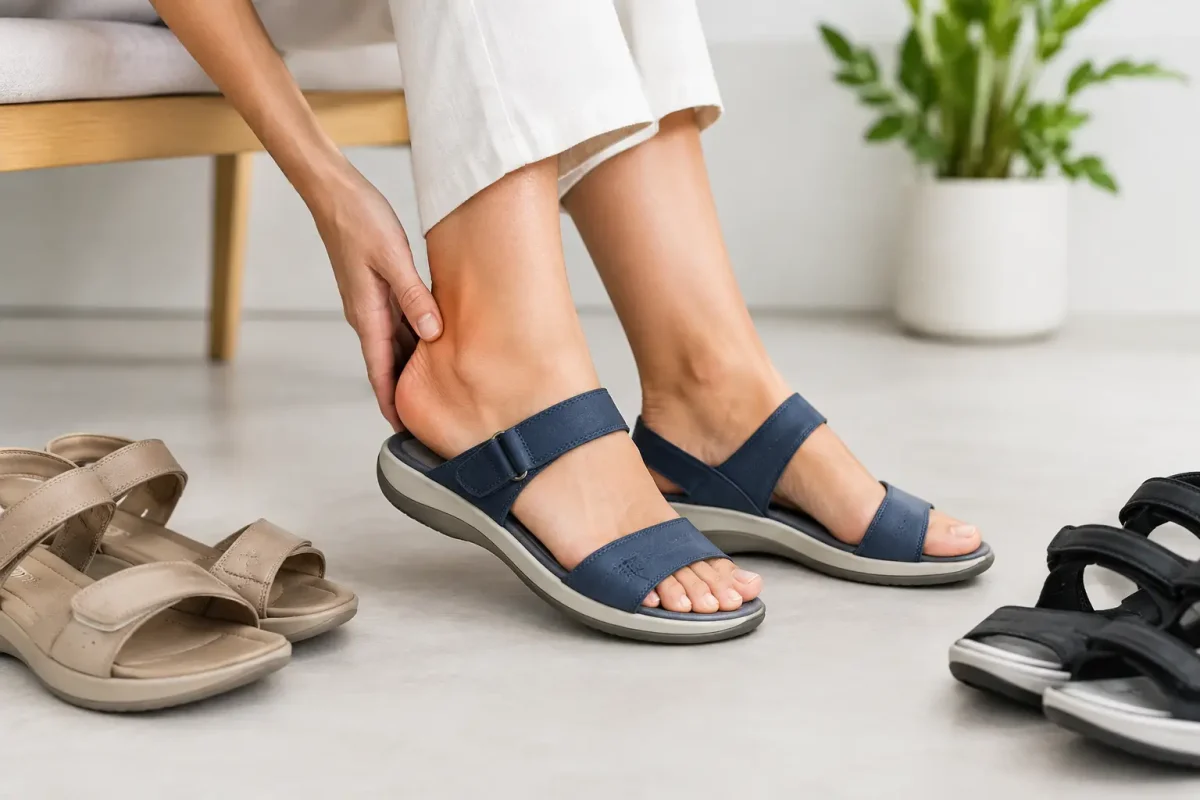
A pair of flat thongs can turn a pleasant walk to the shops, an afternoon at the beach or a day on your feet into a sharp reminder that your heel is not coping. The best sandals for heel pain are not simply soft underfoot. They need to control how your foot moves, reduce strain through the heel and keep you stable with every step.
For many people, heel pain is most noticeable with the first few steps in the morning or after sitting down. Others feel it build during a long work shift, a school drop-off, or a weekend walk around Melbourne. Sandals can make a genuine difference to comfort, but only when their structure matches the reason your heel is sore.
Why ordinary sandals can aggravate heel pain
Most fashion sandals and basic thongs have a thin, flexible sole, no heel stability and straps that do very little to hold the foot in place. Your toes may grip to keep the sandal on, while the foot and ankle work harder to control each step. This can increase load through the plantar fascia, Achilles tendon and heel pad.
Plantar fasciitis is a common source of heel pain. It involves irritation and degeneration of the thick band of tissue running from the heel towards the toes. However, pain at the heel can also relate to Achilles tendinopathy, bursitis, nerve irritation, a bruised heel pad, a stress injury or referred pain from higher up the leg. That is why a sandal that helps one person may not suit another.
Softness alone is not the answer. A very soft sandal can feel lovely for five minutes but allow the foot to collapse or twist with each step. The goal is supportive cushioning: enough shock absorption to reduce impact, with enough structure to guide the foot efficiently.
What the best sandals for heel pain should include
A contoured footbed
Look for a footbed that follows the shape of the foot rather than one that is completely flat. Gentle arch support can reduce tension through the plantar fascia, particularly for people whose feet roll inwards excessively. A deep heel cup is also valuable because it cradles the heel and improves stability during stance.
The arch should feel supportive, not painfully hard or placed in the wrong spot. If it presses into the middle or front of your arch, the sandal may not suit your foot shape. People with high arches, flat feet and different levels of foot flexibility can all need different support.
Firmness through the midsole
Try bending the sandal. It should flex near the toes, where your foot naturally bends, but it should not fold easily through the middle. A firmer midsole helps limit excessive movement that can aggravate heel pain.
You do not need a heavy, rigid sandal. Instead, look for a sole that feels stable when you stand on it and resists twisting when you gently wring it in your hands. This is especially useful if you spend long periods walking or standing at work.
Cushioning under the heel
A cushioned heel area can help reduce the impact of hard surfaces such as concrete footpaths, shopping centres and tiled floors. Materials should rebound after pressure rather than flatten quickly. A small heel raise can also reduce pull on the Achilles tendon and plantar fascia for some people.
There is a trade-off. An overly high heel can push body weight forwards and affect balance, while a sandal with no cushioning may leave a sensitive heel exposed. A modest heel-to-toe drop is often more comfortable than a completely flat sole, but it should be paired with a stable base.
Secure, adjustable straps
A back strap is often a better option than a slide or loose thong when heel pain is active. It helps keep the sandal attached to your foot without toe gripping. Adjustable straps across the forefoot and around the ankle are useful if your feet swell during the day or if you need to accommodate a bunion, wider foot or orthotic modification.
Check that straps do not rub or compress the top of the foot. For people with diabetes, reduced sensation or fragile skin, even a small pressure point can become a serious problem and should be assessed promptly.
A stable outsole with grip
Heel pain can alter the way you walk. If you are subconsciously avoiding the sore area, an unstable or slippery sandal raises the risk of a trip or ankle sprain. Choose a broad base under the heel, a durable outsole and reliable tread for wet surfaces around pools, change rooms and outdoor paths.
Which sandal style is likely to suit you?
Supportive walking sandals are often the strongest all-round choice for people who need to cover distance. They usually have a secure heel strap, adjustable upper and a thicker sole with better shock absorption. They may not be your preferred dress sandal, but they can be a practical option for holidays, errands and active weekends.
Contoured slides can work well for short periods at home, around the pool or after sport, provided they have a deep heel cup and a firm sole. They are less suitable for long walks because the lack of a rear strap can make your toes work harder to hold them on.
Recovery sandals may feel comfortable after training due to their cushioning and rocker-shaped sole. For some people, the rocker reduces demand on the forefoot and heel during walking. For others, particularly those with balance concerns, ankle instability or a recent injury, the height and shape can feel unsteady. Test them carefully indoors first.
Dress sandals are the hardest category to get right. A lower, wider heel, a secure ankle strap and a supportive footbed are preferable to a narrow high heel or flat sole. If an occasion calls for less supportive footwear, consider wearing it only for the event itself and changing into supportive shoes for travel and walking.
How to test sandals before you commit
Do not judge a sandal while seated. Put on both sandals, fasten the straps as you would normally and walk around for several minutes. Notice whether your heel feels centred, whether the arch is comfortable and whether your toes are gripping.
A good sandal should feel stable from the first steps. It should not require a break-in period to stop painful rubbing, and it should not increase heel pain later that day or the following morning. If possible, try sandals on in the afternoon when feet are often slightly more swollen.
If you wear custom orthotics, standard sandals may not have enough depth or a removable footbed to accommodate them. A podiatrist can advise whether an orthotic can be adapted for an open shoe, whether a sandal-specific device is appropriate, or whether another footwear option will better support your goals.
When sandals are not enough for heel pain
Supportive sandals are a useful part of managing symptoms, but they do not resolve every cause of heel pain. Persistent pain, pain that is worsening, marked swelling, numbness, bruising or difficulty bearing weight deserves professional assessment. Sudden pain after a jump, fall or increase in exercise should also be checked rather than walked through.
At Comfort Feet Podiatry Group, heel pain assessment looks beyond the painful spot. Your podiatrist can assess foot posture, calf flexibility, walking mechanics, footwear and training or work demands. Depending on the diagnosis, treatment may include hands-on care, stretching and strengthening, 3D biomechanics analysis, custom orthotics, shockwave therapy or a rehabilitation plan designed to restore confident movement.
The right sandals should make daily movement feel easier, not make you plan your day around the next painful step. If heel pain is limiting work, exercise or time with family, a clear diagnosis and targeted plan can help you return to the active life you enjoy.