
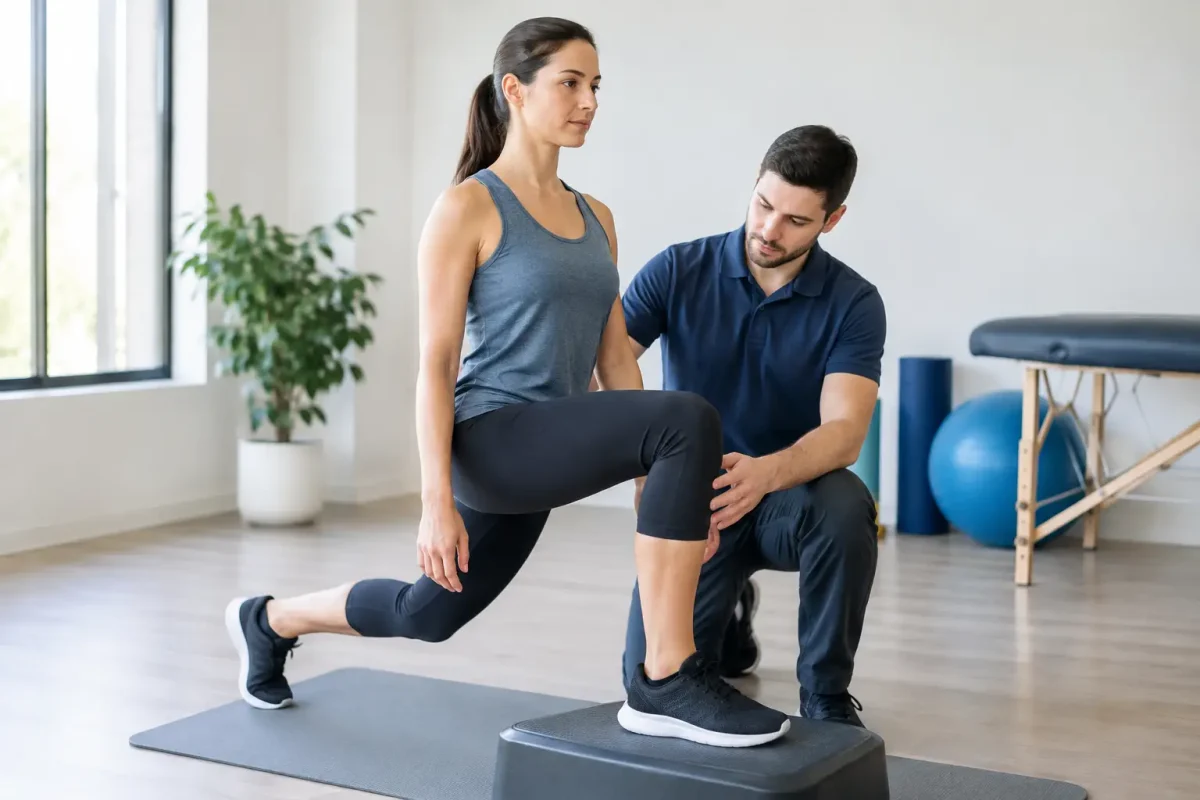
Pain in the foot, ankle, calf or knee can change far more than your exercise routine. It can affect how you get through a shift, keep up with the kids, walk the dog or simply move around with confidence. This lower limb rehabilitation guide explains how a structured, personalised plan can help address the cause of pain, restore useful movement and support a safer return to the activities that matter to you.
Rehabilitation is not just a set of exercises handed over after an injury. The most effective care connects your symptoms with the way your whole lower limb is working. A sore heel may change your walking pattern; an ankle injury may reduce calf strength; knee pain may be affected by hip control, footwear or the way your foot loads the ground. Looking at the full picture gives you a better chance of lasting improvement.
Start with the right diagnosis
The first stage of lower limb rehabilitation is understanding what is actually driving the problem. Pain in one location does not always mean the issue began there. For example, plantar heel pain can be influenced by calf tightness, a sudden jump in running volume, footwear changes or foot mechanics. Shin pain may be related to training load, muscle capacity or poor recovery rather than one isolated tissue.
A thorough assessment should consider your symptoms, medical history, work demands, sport, footwear and recent changes in activity. It should also assess how you stand, walk, squat, balance and move through the joints of the foot, ankle, knee and hip. Where appropriate, 3D biomechanics analysis can provide useful detail about loading and movement patterns that are difficult to see with the naked eye.
This matters because treating every sore foot with the same stretch, or every ankle sprain with the same exercise sheet, can leave important contributors unaddressed. A plan for a warehouse worker on their feet all day will not necessarily look like a plan for a footballer preparing for pre-season.
Reduce pain without stopping all movement
When pain is sharp, swollen or worsening, rest from aggravating activity may be sensible. But complete rest for too long can reduce strength, mobility and confidence. The goal is usually to find a tolerable level of movement while protecting irritated tissues.
Depending on your diagnosis, early treatment may include hands-on therapy, footwear guidance, activity modification, taping, therapeutic ultrasound, shockwave therapy or dry needling. These treatments may help manage symptoms for suitable patients, but they work best as part of a broader rehabilitation plan rather than as a stand-alone fix.
For an acute ankle sprain, this might mean reducing running and jumping while maintaining gentle ankle movement and gradually returning to weight-bearing. For heel pain, it may mean changing the volume and surface of walking or running, while starting carefully selected calf and foot-strengthening work. The right balance depends on pain severity, your condition and the physical demands of daily life.
A simple rule can be useful: exercise discomfort that settles quickly and does not make symptoms worse the following day is often manageable. Pain that escalates, causes limping or lingers well beyond activity is a signal to review the plan. Do not push through severe pain just to meet a timetable.
Rebuild movement before chasing performance
Restore joint mobility
After injury or prolonged pain, joints can lose range of motion. The ankle is a common example. Limited ankle movement can alter squatting, stair climbing, walking and running mechanics, and may place extra load on the foot, Achilles tendon or knee.
Your program may include controlled mobility exercises, manual therapy and gradual exposure to movements that feel stiff or guarded. The aim is not always to achieve extreme flexibility. It is to regain enough comfortable, functional range for your goals.
Build strength where it counts
Strength is one of the most valuable protections against recurring lower-limb pain. Your feet and calves absorb substantial force during walking, running and jumping, while the hips and thighs help control leg alignment and load transfer.
Effective rehabilitation often progresses from simple exercises to more demanding tasks. Early stages may involve calf raises, foot-strengthening drills, balance work, resistance exercises for the hips and controlled sit-to-stands. Later stages may include single-leg strength, step-downs, hopping, change-of-direction drills or sport-specific loading.
The key is progression. Doing difficult exercises too soon can flare symptoms, while staying with easy exercises for months may not prepare you for real-life demands. A podiatrist can adjust sets, repetitions, resistance and speed according to your response.
Relearn balance and control
Pain and injury can affect the body’s awareness of joint position, particularly after ankle sprains. You may feel physically healed but still hesitate on uneven ground, stairs or during quick turns. Balance and neuromuscular rehabilitation help retrain that control.
This may begin with single-leg standing and progress to reaching tasks, unstable surfaces, hopping and reactive drills. For athletes, the final stages should reflect the unpredictable movements of their sport. For older adults, the emphasis may be on safer walking, turning, stepping over obstacles and reducing falls risk.
Manage training and everyday load
A rehabilitation plan can be excellent on paper and still fail if your weekly load keeps exceeding what the body can currently tolerate. This is where practical planning makes a difference.
Think beyond formal exercise. A long shift, a weekend of gardening, walking around a shopping centre, standing at an event or returning to netball all add load. If you increase several of these at once, pain can return even if your rehabilitation exercises are appropriate.
Instead, build gradually. Increase distance, intensity, hills, pace or time on your feet one variable at a time. Runners may need to reduce speed sessions while rebuilding easy kilometres. Workers may benefit from pacing strategies, more supportive footwear or temporary task modifications. Parents recovering from an injury may need a plan that fits around school drop-offs and family commitments, not an unrealistic daily gym schedule.
Good rehabilitation is flexible. A flare-up does not automatically mean you have failed or caused serious damage. It often means the load needs adjusting, recovery needs improving or an underlying contributor needs another look.
Footwear and orthotics can support the process
Shoes do not need to be expensive or heavily structured for every person, but they should suit the activity, foot shape and current symptoms. Worn-out runners, work boots with poor support or shoes that compress the toes can contribute to discomfort. A footwear assessment can identify whether your current pair is helping, neutral or making matters worse.
Custom orthotics may be useful when foot mechanics, pressure distribution or specific symptoms require additional support. They can help alter loading and improve comfort, particularly for some people with plantar heel pain, flat feet, high arches, forefoot pain or recurring overuse issues. However, orthotics are not a replacement for rehabilitation. The strongest outcomes usually come from combining appropriate support with strength, mobility and load management.
Know when to seek professional assessment
Some lower-limb problems need prompt assessment rather than self-management. Seek advice if you cannot bear weight, have significant swelling or deformity, notice numbness or weakness, develop redness and heat with fever, or have pain that is severe, night-dominant or getting worse. People with diabetes, reduced circulation, neuropathy or a history of foot ulcers should have new foot wounds or changes checked early.
If pain has persisted for more than a few weeks, keeps returning, or is stopping you from working, exercising or sleeping well, a targeted assessment can save time and frustration. At Comfort Feet Podiatry Group, rehabilitation can be integrated with podiatry care, biomechanics assessment and, where needed, collaboration with osteopathy and exercise physiology services.
A return to activity should feel earned
Returning to sport, work or longer walks is not simply about waiting until pain disappears. You also need enough strength, movement, balance and confidence for the activity ahead. A recreational runner may be ready for a flat 20-minute jog before they are ready for intervals or trail running. A basketball player may need to demonstrate controlled hopping, landing and cutting before returning to a full game.
Set meaningful milestones rather than chasing a perfect timeline. That could be walking the dog without limping, completing a full work shift comfortably, getting through a child’s weekend sport, or returning to your favourite run. These goals keep rehabilitation connected to your life and make progress easier to recognise.
The best next step is a plan that meets you where you are, then moves forward at the right pace. With an accurate diagnosis, progressive rehabilitation and support that fits your everyday demands, healthier movement can become part of life again.