
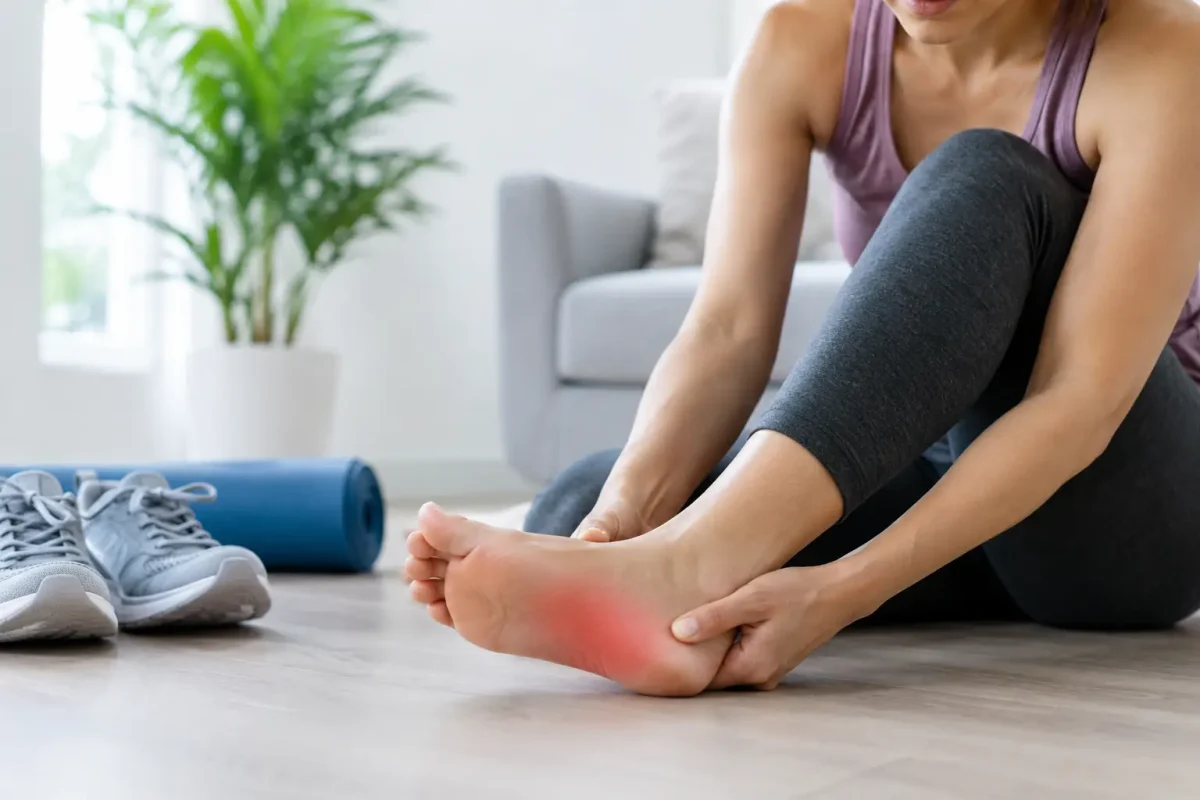
That pulling, burning or bruised feeling through the middle of your foot can make every step feel calculated. Knowing how to manage arch pain starts with recognising that the arch is not a single structure – it is a working system of muscles, ligaments, tendons and joints that helps absorb load every time you stand, walk, run or push off.
For some people, arch pain arrives after a big jump in walking or training. For others, it builds slowly through long work shifts, worn-out shoes or years of compensating for flat feet, high arches or an old injury. The right approach can settle symptoms and help you return to the activities that matter, but persistent pain deserves a proper assessment rather than endless trial and error.
What can cause pain in the arch of your foot?
Plantar fascia irritation is one of the most common causes. The plantar fascia is a strong band of connective tissue running from the heel towards the toes. When it is overloaded, discomfort may be felt in the heel, along the arch or both. Pain that is sharp with your first few steps in the morning, then eases before returning after a busy day, often follows this pattern.
Arch pain can also come from strain in the posterior tibial tendon, which supports the inside of the foot and ankle. This may be more likely if you have flat feet, notice swelling around the inside of your ankle, or find your foot rolling inwards as you walk. On the other hand, people with high arches can experience concentrated pressure through the midfoot and forefoot because the foot is less effective at spreading load.
Other possibilities include a muscle strain, joint irritation, nerve compression, stress injury or a change in gait caused by knee, hip, calf or ankle stiffness. This is why two people with pain in the same spot may need very different treatment plans. The location of pain matters, but so do your footwear, activity demands, medical history and the way your whole lower limb moves.
How to manage arch pain in the first few days
The aim is not to stop moving completely unless you have been advised to do so. It is to reduce the aggravating load while keeping your foot and lower limb functioning well.
Start by adjusting the activity that triggers symptoms. If running, court sport or long walks are causing a flare-up, temporarily reduce distance, hills, speed or frequency. Choose lower-impact exercise such as cycling, swimming or an upper-body session if it is comfortable. Pushing through worsening pain can turn a manageable overload problem into a longer recovery.
Supportive footwear can make an immediate difference. Choose shoes with a stable heel, enough width through the forefoot and a sole that does not twist easily through the middle. A modest amount of cushioning can help, but very soft shoes are not always the answer, particularly if they allow your foot to collapse or work harder for stability. Avoid spending long periods barefoot on hard floors while the arch is sensitive, and retire shoes with compressed midsoles or uneven wear.
Cold therapy may help settle a painful flare. Try rolling the sole of the foot over a chilled water bottle for five to 10 minutes, using light to moderate pressure. This can provide short-term relief while gently mobilising the tissues. Stop if it causes numbness, sharp pain or increased irritation.
Simple calf and foot mobility work can also be useful when performed within comfort. Tight calves can increase the pull through the plantar fascia and change how the ankle moves during walking. A gentle calf stretch with the knee straight, followed by one with the knee bent, can target different calf muscles. Hold each stretch without bouncing and avoid forcing through sharp pain.
Build support, strength and load tolerance
Arch pain often improves when you move beyond passive relief and address the reason the tissues were overloaded. This is where rehabilitation matters.
Foot strengthening does not need to be complicated. Slowly lifting the arch while keeping the toes relaxed and the heel on the floor can help activate the small muscles that support the foot. Controlled calf raises are also valuable, as the calf, ankle and arch work together during push-off. Begin with both feet if needed, progress gradually, and keep the movement comfortable and controlled.
Balance exercises can be useful too, especially after an ankle injury or where the foot feels unstable. Standing on one leg near a bench or wall for support challenges the muscles that guide the foot and ankle. If this reproduces arch pain, reduce the duration or seek guidance rather than persisting.
The key is dosage. A person who works on concrete all day will have a different starting point from a recreational runner preparing for a half marathon. Improvement is usually more reliable when activity is increased in small, planned increments instead of alternating between doing too much on a good day and resting completely after a flare-up.
Consider insoles and orthotics carefully
Over-the-counter arch supports can provide useful short-term comfort for some people, particularly when paired with well-fitting shoes and a sensible return to activity. They are not a universal fix. An insole that feels too high, too firm or poorly positioned may increase pressure and make symptoms worse.
Custom orthotics may be appropriate when there is a clear biomechanical contributor, recurrent symptoms, substantial foot shape differences or specific sporting and work demands. They are designed to influence how load is distributed through the feet and lower limbs, not simply to fill the arch. The best prescription depends on a clinical assessment, your footwear and what you need your body to do each day.
At Comfort Feet Podiatry Group, a podiatrist can assess foot posture, joint motion, walking and running mechanics, footwear wear patterns, strength and lower-limb alignment. Where appropriate, 3D biomechanics analysis can provide a clearer picture of movement patterns that may be contributing to repeated overload.
When arch pain needs professional assessment
Book an assessment if pain is not improving after one to two weeks of sensible activity modification, or if it keeps returning whenever you resume normal exercise. Early care is particularly worthwhile if pain is affecting your work, sleep, sport or confidence on stairs and uneven ground.
Seek prompt medical attention for any of the following:
- severe pain after a fall, twist or direct impact
- inability to bear weight or a sudden major change in walking
- marked swelling, bruising, redness, heat or fever
- numbness, tingling or burning that persists
- pain that is very localised over a bone or worsens with hopping, which may indicate a stress injury
People with diabetes, reduced circulation, neuropathy or inflammatory arthritis should not ignore new foot pain or skin changes. These conditions can alter sensation, healing and the risks associated with self-treatment.
Treatment should match the cause
A podiatry assessment can distinguish between common conditions that often feel similar at home. Your treatment may include hands-on therapy, targeted strengthening and neuromuscular rehabilitation, footwear guidance, taping, dry needling, therapeutic ultrasound, shockwave therapy or custom orthotics where clinically suitable. Not every treatment is appropriate for every diagnosis, and the most effective plan usually combines symptom relief with a practical strategy to restore mobility and capacity.
If your pain began after changing jobs, starting a fitness program, returning to sport or spending more time on your feet, bring that context to your appointment. It can reveal the loading change that triggered the problem and help shape a plan that fits your routine rather than asking you to put life on hold.
Your feet carry you through school drop-offs, warehouse shifts, weekend runs and every ordinary trip across the house. Give arch pain the attention it deserves, and you can take the next steps towards comfortable, confident movement again.