
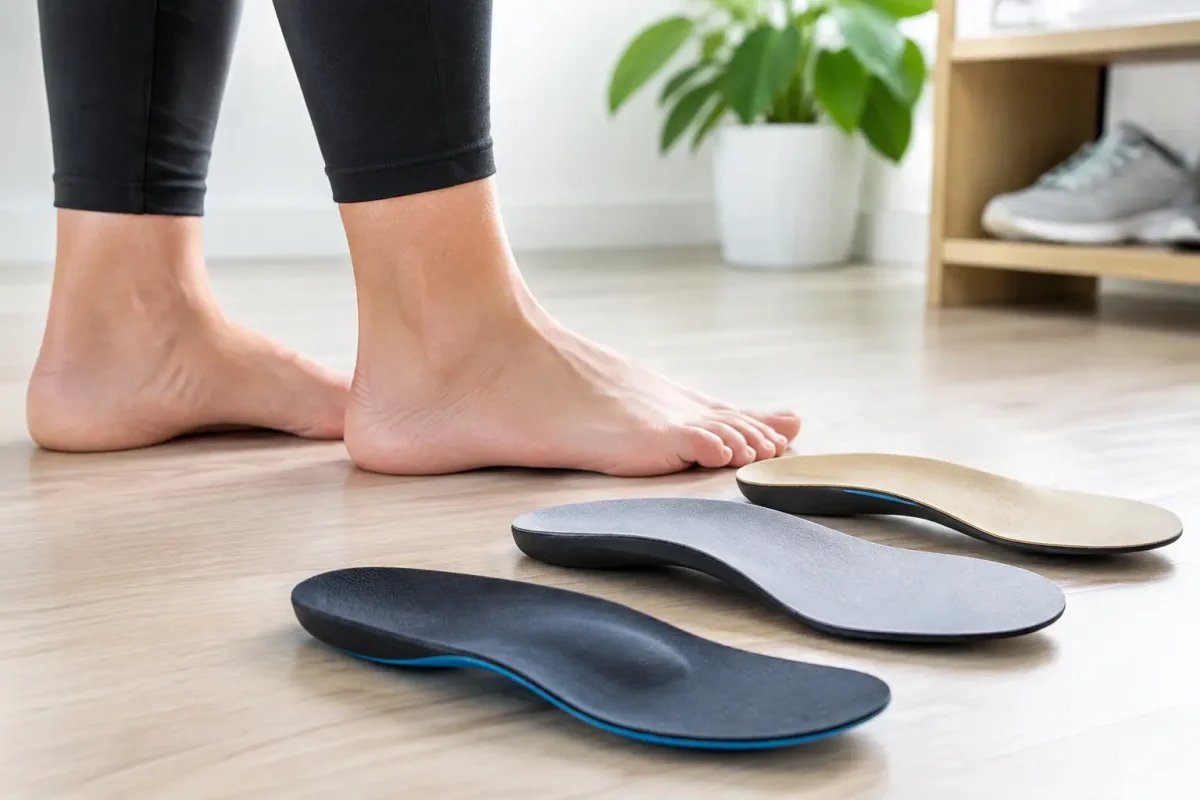
Flat feet orthotic examples can look very different from one person to the next. A supportive insole that helps a retail worker get through a long shift may not be the right choice for a runner with recurring shin pain, or a child whose feet are still developing. The best orthotic is not simply the one with the highest arch. It is the one designed to support your foot, control unwanted movement where needed and help you move with less pain.
Flat feet are common, and many people have no symptoms at all. For others, the arch lowers when standing or walking, allowing the heel and ankle to roll inwards more than their body can comfortably manage. This can place extra strain on the plantar fascia, tendons, calves, shins, knees and hips. If pain is limiting work, sport or everyday mobility, an orthotic assessment can identify whether foot posture is part of the problem.
What an orthotic for flat feet is designed to do
An orthotic is an in-shoe device that changes how forces travel through the foot and lower limb. It does not permanently create an arch or “cure” flat feet. Instead, it can improve support, redistribute pressure and guide the foot through a more comfortable range of motion while you walk, run or stand.
For a flexible flat foot, where an arch appears when you sit or rise onto your toes but lowers under body weight, the aim is often to reduce excessive pronation. That may involve supporting the midfoot, stabilising the heel and improving the timing of movement through the foot. For a rigid flat foot, arthritis, injury, neurological conditions or significant tendon dysfunction may be involved. These situations require careful clinical assessment before choosing an orthotic.
Your symptoms matter as much as the appearance of your feet. Two people can have similar-looking flat feet but need very different treatment. One may need cushioning for aching forefeet, while the other needs firm heel control to settle posterior tibial tendon pain.
Flat feet orthotic examples and when they may help
Prefabricated arch-support insoles
A quality prefabricated orthotic is a ready-made device available in a range of sizes and arch profiles. It commonly includes a shaped arch support, heel cup and a moderately firm shell beneath the foot. For mild discomfort, fatigue from prolonged standing or early symptoms during exercise, this can be a practical starting point.
These devices are generally less expensive and can be fitted quickly. They may work well when your shoe has enough depth and a removable liner. The trade-off is that they are not made around your exact foot shape, gait pattern or pressure points. If one edge rubs, the arch feels intrusive, or pain continues after a sensible settling-in period, a more individual solution may be needed.
Semi-rigid functional orthotics
Semi-rigid functional orthotics are often prescribed for active adults with flexible flat feet, recurring heel pain, shin splints, knee discomfort or lower-limb overload. They are usually made from a durable shell material and are shaped from a detailed assessment of your feet, footwear, walking pattern and activity demands.
The shell provides controlled support under the arch and heel without making the foot completely rigid. Additions such as rearfoot posting can help improve heel stability, while a deep heel cup can reduce side-to-side movement. For someone who walks Melbourne footpaths all day for work or trains several times a week, this balance of control and function can be particularly useful.
They do take up room in a shoe. Supportive runners, work shoes and many casual shoes are usually easier to fit than narrow dress shoes or minimal footwear. A podiatrist will consider the shoes you actually wear rather than prescribing an orthotic that stays in a drawer.
Soft accommodative orthotics
Not every flat foot needs firm control. Soft accommodative orthotics are made with cushioning materials to protect sensitive or painful areas. They may suit people with diabetes-related pressure risks, arthritis, reduced natural cushioning under the foot, prominent bony areas or forefoot pain alongside a flattened arch.
Their focus is comfort and pressure redistribution rather than strong motion control. Layers may be added to cushion the heel, offload a painful joint or reduce rubbing. They can be particularly valuable for older adults who want safer, more comfortable daily mobility but cannot tolerate a hard device.
Because soft materials compress over time, they may need review or replacement sooner than a rigid shell. They are also less likely to manage substantial heel rolling or tendon overload on their own. The right choice depends on whether protection, stability or both are needed.
Custom sports orthotics
Running and field sports place repeated load through the feet and lower limbs. A custom sports orthotic may be lower profile than a day-to-day device, with features chosen for running shoes, football boots or court shoes. It can include a firm but responsive shell, targeted arch contouring and cushioning in high-impact areas.
The goal is not to eliminate all pronation. Pronation is a normal part of movement. The goal is to reduce the amount or speed of movement that is contributing to pain, while keeping the device light enough for your sport. A runner with flat feet and plantar fasciitis, for example, may need heel cushioning and arch support, while a footballer may benefit more from a stable heel platform that fits securely in a boot.
Orthotics work best alongside a rehabilitation plan when pain is persistent. Calf strength, foot and ankle control, training load, recovery and footwear all influence your result.
Orthotics with a medial flange or extra heel control
For more pronounced flexible flat feet, posterior tibial tendon irritation or significant ankle rolling, an orthotic may include a medial flange. This is an extension that rises along the inside of the foot to provide extra contact and guidance. A deeper heel cup or specialised posting may also be used to improve rearfoot control.
This is a more structured option and may feel unusual at first. It is generally prescribed when simpler arch support has not provided enough stability or when clinical testing shows greater control is required. The fit needs to be precise, as too much pressure can create discomfort rather than relief.
Ankle-foot orthoses for severe instability
Where flat feet are associated with substantial tendon dysfunction, severe collapse, neurological weakness or ongoing ankle instability, an ankle-foot orthosis may be considered. This device extends above the ankle and offers more control than a standard foot orthotic.
It is not the usual answer for common flat feet. However, it can be an important part of maintaining mobility and reducing pain when the foot and ankle need a higher level of support. Management may also involve imaging, footwear changes, rehabilitation and referral to other health professionals where appropriate.
Why off-the-shelf advice can miss the real issue
Buying the firmest arch support on the shelf can be tempting when your feet ache. But an arch that is too high, too hard or positioned incorrectly may aggravate the problem. Likewise, a very soft insole may feel pleasant initially but provide too little stability for someone with persistent tendon pain.
A thorough assessment looks beyond the arch. At Comfort Feet Podiatry Group, this can include clinical testing, footwear review and 3D biomechanics analysis to understand how the foot, ankle, calf, knee and hip work together. Your podiatrist may identify restricted ankle movement, calf tightness, weakness through the hip, an old ankle injury or a sudden change in training load that is maintaining your symptoms.
This is also why orthotics should not be viewed as a stand-alone fix. They can reduce strain while targeted exercises build capacity, changes to footwear improve support and hands-on care helps manage pain where needed.
What to expect when you start wearing orthotics
A short adjustment period is common, especially with firmer devices. You may be advised to wear them for an hour or two on the first day, then gradually increase use over the following week or two. Mild awareness of support is expected. Sharp pain, numbness, rubbing, blisters or worsening symptoms are not signs that you should simply push through.
Bring the shoes you wear most often to your appointment. For work, that may mean safety boots or office shoes; for exercise, bring your runners or sport-specific footwear. The orthotic and shoe need to function as a team. A stable shoe with adequate depth and a firm heel counter often improves comfort and effectiveness.
When to book a podiatry assessment
Book an assessment if flat feet are linked with ongoing heel, arch, ankle, shin, knee or hip pain; if one foot has changed shape; or if you are avoiding activities you previously enjoyed. Swelling or tenderness along the inside of the ankle, particularly after activity, should also be checked promptly as it can indicate posterior tibial tendon involvement.
Children with flat feet often do not need orthotics if they are pain-free, active and developing normally. Assessment is worthwhile if a child has pain, frequent tripping, unusual fatigue, a rigid-looking foot, one-sided changes or difficulty keeping up with play.
The right orthotic should make movement feel more achievable, not more complicated. With a clear diagnosis and a device matched to your body, shoes and goals, you can take practical steps towards more comfortable workdays, steadier exercise and a more active life.