
A small rough patch on the sole of your foot can make every step feel as though you have a pebble caught in your shoe. Foot warts are common, but they are not always harmless to ignore – particularly when they become painful, spread, or begin changing how you walk. Knowing how to treat foot warts early can help protect your comfort, mobility and confidence in everyday activities.
Often called plantar warts, these lesions are caused by strains of the human papillomavirus (HPV) entering the skin through tiny breaks. They can affect anyone, from children using public pool change rooms to runners training in damp shoes and workers who spend long days on their feet. The right treatment depends on the wart’s size, location, duration and your overall health.
What does a foot wart look and feel like?
A foot wart often appears as a small, grainy or rough area of thickened skin. On pressure-bearing parts of the foot, such as the heel or ball of the foot, the pressure of walking can push it inward rather than outward. This may make it look more like a callus than a raised bump.
Signs that suggest a wart rather than ordinary hard skin include tiny black dots within the lesion, interrupted skin lines and pain when the area is squeezed from the sides. A single wart can also be joined by smaller warts, creating a wider cluster sometimes known as a mosaic wart.
Warts can be uncomfortable, but not every painful spot on the foot is a wart. Corns, calluses, foreign bodies and some skin conditions can look similar. A clear diagnosis matters because treating the wrong problem with wart products can irritate healthy skin and delay proper care.
How to treat foot warts at home
Some uncomplicated foot warts resolve without treatment as the immune system recognises the virus. That process may take months or longer, however, and the wart can spread in the meantime. For a small wart that is not especially painful, an over-the-counter treatment may be reasonable if used carefully.
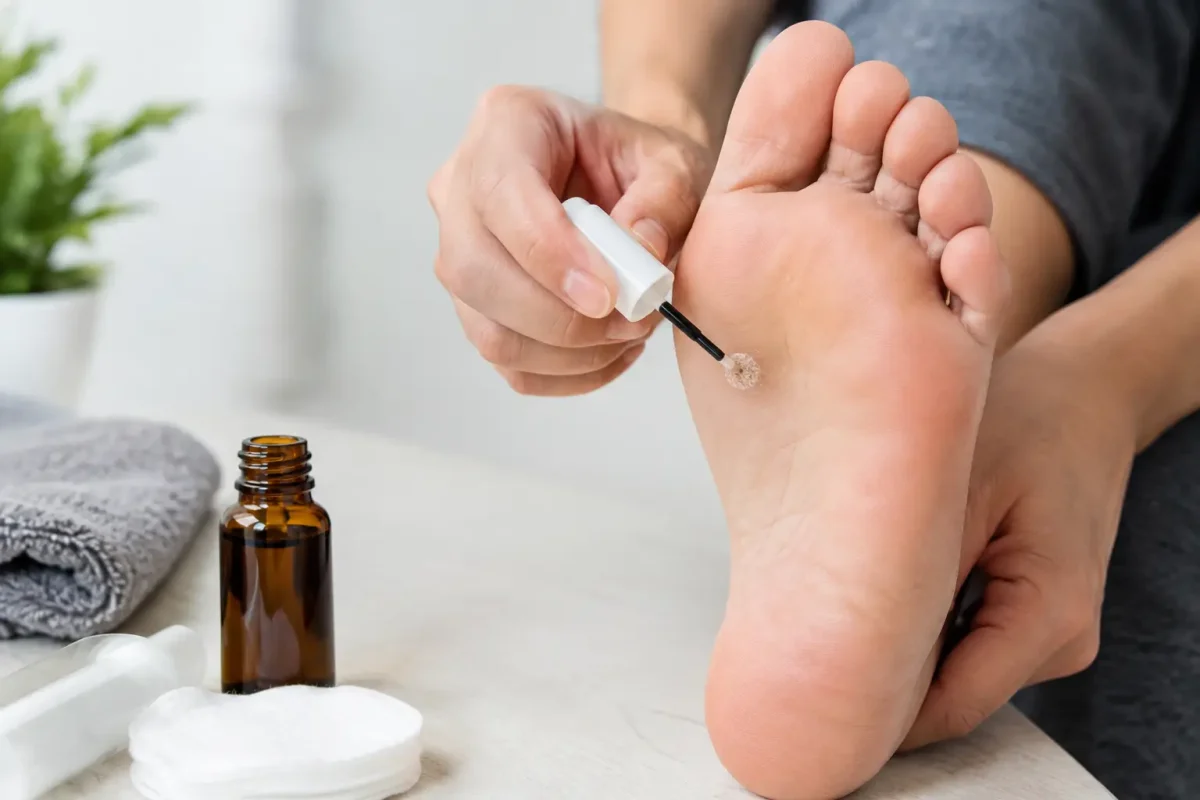
Salicylic acid is a common option. It gradually softens and removes layers of wart tissue. Consistency is the key: it is usually applied daily over several weeks, following the product instructions exactly. Soaking the foot first and gently filing loose dead skin with a file reserved only for that wart can help the treatment reach the lesion. Stop if surrounding skin becomes very sore, raw or inflamed.
Keep the area clean and dry, and cover the wart if it may rub against footwear or come into contact with shared surfaces. Do not cut, dig at or shave a wart yourself. This can cause bleeding, bacterial infection and spread of the virus to nearby skin.
Home treatment is not suitable for everyone. People with diabetes, poor circulation, neuropathy, immune suppression or reduced sensation in their feet should seek professional advice before using acids, freezing kits or sharp tools. A small chemical burn can become a much larger problem when skin healing is compromised.
Why home treatment sometimes falls short
The sole of the foot has thick skin, and a wart may sit beneath a substantial layer of callus. Even when a pharmacy treatment is appropriate, it can be difficult to apply precisely enough to be effective while protecting surrounding skin. Treatment can also be frustrating if the wart is directly beneath a high-pressure area of the foot.
If pain is making you limp, avoid sport, or change how you stand at work, it is worth having the lesion assessed rather than persisting for months. Altered walking patterns can place extra strain on the ankle, knee, hip or lower back.
Podiatry treatment for persistent or painful warts
A podiatrist can confirm whether a lesion is a wart and develop a treatment plan around your skin, activity level and medical history. This is particularly helpful for lesions that have persisted despite home care, spread to other areas, or become painful under pressure.
Clinical management commonly begins with careful reduction of the overlying hard skin. Removing this dead tissue can reduce pressure and improve the effectiveness of topical treatment. It is performed using sterile instruments and does not involve cutting into healthy living skin.
Depending on the assessment, a podiatrist may use stronger topical medications or a controlled freezing treatment known as cryotherapy. These treatments work differently and are not equally suitable for every wart. Cryotherapy may cause short-term soreness or blistering, while topical therapy requires steady follow-through between appointments. Your podiatrist will explain what to expect and how to protect the area afterwards.
For stubborn warts, treatment is often a course rather than a single appointment. The goal is not simply to remove the visible hard skin, but to clear the viral tissue while keeping you as comfortable and active as possible. At Comfort Feet Podiatry Group, wart care can also include pressure relief strategies when the lesion is affecting walking, work or sport.
When should you book an appointment?
Arrange a podiatry assessment if a suspected wart is painful, bleeding, changing colour, growing quickly or not improving after a sensible course of home treatment. It is also wise to book if you are unsure whether it is actually a wart.
Prompt professional care is especially important for people with diabetes, circulation concerns, nerve damage, an immune condition, or a history of slow-healing wounds. Children may also benefit from assessment when a wart is painful or spreading, as discomfort can affect their willingness to run, play sport and wear school shoes.
Seek urgent medical advice for redness spreading around the lesion, warmth, swelling, discharge, fever or significant pain. These may indicate infection or another condition requiring medical management.
Reduce the chance of foot warts spreading
Foot warts spread through skin contact and from contaminated damp surfaces. Prevention is not about blaming hygiene – HPV is common and can be picked up easily – but a few practical habits can reduce the opportunity for the virus to spread.
Wear thongs or waterproof sandals in public showers, pool areas and communal change rooms. Keep your feet dry, change socks after exercise, and avoid sharing socks, shoes, nail tools or pumice stones. If you have a wart, cover it with a clean dressing when using communal facilities and wash your hands after touching your feet.
Avoid picking at the lesion. Picking can transfer the virus to fingers or other parts of the foot. If you use a nail file or pumice stone on the wart, do not use it anywhere else, and replace it regularly.
Protecting active feet during treatment
You do not necessarily need to stop exercising while a wart is being treated, but comfort should guide your choices. A tender lesion beneath the forefoot can be aggravated by running, court sports or long walks in firm-soled shoes. Padding or offloading can reduce direct pressure, and footwear with enough room can prevent rubbing.
If pain is affecting your normal gait, reduce the activity that provokes it until you have been assessed. Pushing through pain can turn a local skin problem into a broader lower-limb issue. A podiatrist can help you find a practical way to stay mobile while the wart is treated.
A foot wart is usually manageable, but you should not have to put up with pain every time you walk. Early assessment and targeted care can help you return to comfortable movement, whether that means getting through a work shift, keeping up with the kids or getting back to your preferred sport.