
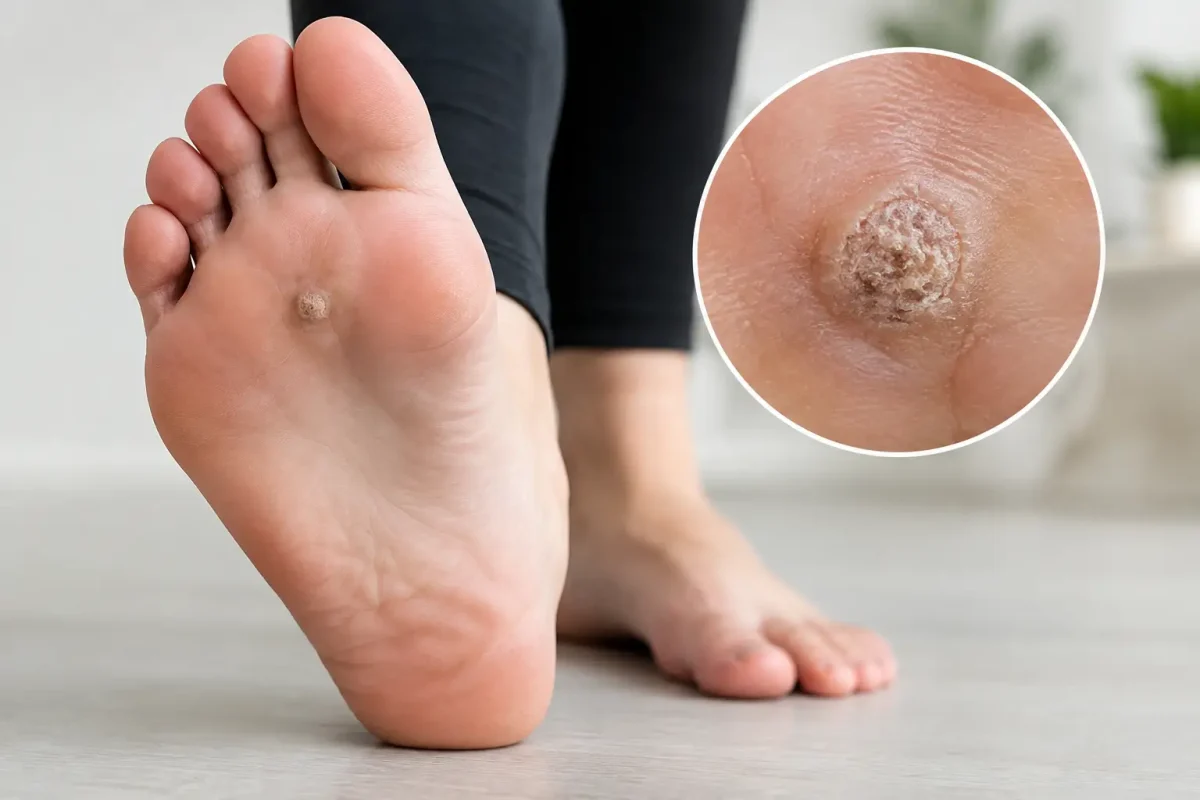
A small rough patch on the sole of your foot can become a bigger concern when you share a bathroom, change room or pool deck with family members. So, are foot warts contagious? Yes. Foot warts can spread through contact with the virus that causes them, particularly in warm, damp communal areas where bare feet are common. The reassuring news is that practical hygiene and timely treatment can greatly reduce the chance of passing them on.
Are foot warts contagious to other people?
Foot warts, also called plantar warts or verrucae, are caused by certain strains of human papillomavirus (HPV). The virus enters the skin through tiny breaks, which may be too small to see. It can then cause a thickened, grainy growth, often on a pressure-bearing part of the foot such as the heel, ball of the foot or toes.
A wart is contagious, but transmission is not automatic. One person may walk barefoot in the same shower as someone with a wart and never develop one, while another may be more susceptible because their skin is softened, cracked or irritated. Sweaty feet, eczema, small cuts from shaving or friction, and reduced skin integrity can all make it easier for the virus to enter.
The virus may be shed from the wart onto surfaces or directly transferred through skin contact. It can also spread from one part of your own foot to another. Picking, scratching, filing or shaving a wart can transfer viral particles to nearby skin, especially if you then touch another area without washing your hands.
Where foot warts are most likely to spread
Bare feet in moist shared environments create the right conditions for wart transmission. Public swimming pools, communal showers, gym change rooms and school changing areas are common places where the virus may be present. This does not mean you need to avoid these places altogether. It means sensible foot protection matters.
At home, the risk is generally lower, but it is still wise not to share towels, socks, shoes, pumice stones, nail files or foot-care tools with someone who has a wart. Covering an active wart with a waterproof dressing when using shared wet areas can help protect others and prevent the wart from becoming irritated.
Children and teenagers can be more prone to warts because they often spend time barefoot around pools, sport facilities and school change rooms. Active adults face similar exposure through gyms, yoga studios, football clubrooms and aquatic centres. For people who work long shifts in enclosed footwear, persistent moisture and friction can also compromise the skin barrier.
How to tell if it is a plantar wart
Plantar warts can look different from warts on the hands because body weight pushes them inward. Rather than appearing as a raised lump, they may look flat, callused and rough. They can be mistaken for corns, calluses or even a small area of trapped debris.
A plantar wart may have tiny black or dark-red dots within it. These are small blood vessels and are sometimes described as wart seeds, although they are not actually seeds. The normal skin lines may be interrupted across the lesion, whereas skin lines usually continue through a callus.
Pain can also provide a clue. A corn often hurts with direct downward pressure. A wart may be more uncomfortable when squeezed from the sides, though this is not a reliable diagnosis on its own. Warts can occur as a single lesion or as a cluster known as mosaic warts.
Because different foot conditions can look similar, a professional assessment is worthwhile if the area is painful, spreading, bleeding, changing in appearance or not responding to pharmacy treatment. People with diabetes, reduced circulation, neuropathy or an impaired immune system should not self-treat suspicious lesions with acids or sharp tools without clinical advice.
Can you spread a wart around your own foot?
Yes. Autoinoculation is the clinical term for spreading a virus from one area of your body to another. This is one reason an isolated wart can become several warts over time.
Avoid cutting, digging at or trying to pull out the wart. Do not use the same nail file or pumice stone on healthy skin after using it on the wart. If you apply a topical treatment, wash your hands afterwards and follow the product directions carefully. Keeping the wart covered during activities where it may rub can also reduce irritation and discourage picking.
Reducing the risk of passing foot warts on
Prevention is not about perfect control. HPV is common, and no strategy removes all risk. However, a few consistent habits make a meaningful difference, particularly in households with children or for people regularly using sporting facilities.
- Wear thongs, pool shoes or waterproof sandals in public showers, pool surrounds and change rooms.
- Keep feet clean and dry, including between the toes, and change damp socks promptly after sport or work.
- Do not share footwear, socks, towels or personal foot-care equipment.
- Cover a known wart with a suitable dressing when swimming or using shared wet areas.
- Inspect your feet regularly, especially if you have previously had warts or attend communal barefoot activities.
Clean, dry feet are less likely to develop the tiny skin breaks that give the virus an entry point. Well-fitting shoes also matter. Shoes that rub, create pressure or trap excessive sweat can contribute to skin irritation and make walking uncomfortable when a wart is already present.
Treatment can relieve pain and limit spread
Some warts resolve without treatment, particularly in children, but this can take months or sometimes longer. Waiting may be reasonable for a small, painless wart that is not changing or spreading. The trade-off is that it may become more uncomfortable under pressure, spread to other areas or be passed to people at home.
Over-the-counter salicylic acid treatments may help some people when used consistently and exactly as directed. They work by gradually removing the thickened skin around the wart. Results vary, and treatment can irritate healthy skin if it is applied too broadly. It is not the best option for everyone, particularly people with circulation concerns, diabetes or reduced sensation in their feet.
A podiatrist can confirm whether the lesion is a wart and recommend a treatment plan based on its location, size, depth, duration and impact on your walking. Care may include careful reduction of hard skin, targeted topical therapies and strategies to reduce pressure on a painful area. For stubborn lesions, your clinician may discuss other treatment options and whether referral is appropriate.
At Comfort Feet Podiatry Group, assessment goes beyond simply looking at the skin lesion. If a wart is changing the way you walk, causing heel or forefoot pain, or affecting your ability to train and work comfortably, the team can assess the pressure and movement factors contributing to your symptoms. The aim is to treat the wart while helping you stay mobile and confident on your feet.
When to book a podiatry appointment
Arrange an assessment if you are unsure whether a lesion is a wart, it is painful when walking, or it has persisted despite several weeks of careful home treatment. Prompt care is also sensible if warts are multiplying, the skin becomes red or infected, or the lesion is bleeding.
Seek professional advice before treating any foot lesion yourself if you have diabetes, poor circulation, nerve damage, immune suppression or a history of foot ulcers. What looks like a straightforward wart may need a different approach, and protecting the health of your skin comes first.
A foot wart is usually manageable, but it does not have to become the thing that makes every step, school run or training session uncomfortable. Cover it, avoid sharing foot-care items, protect your feet in communal wet areas and have persistent or painful lesions checked early. Small action now can help keep you and the people around you moving comfortably.