
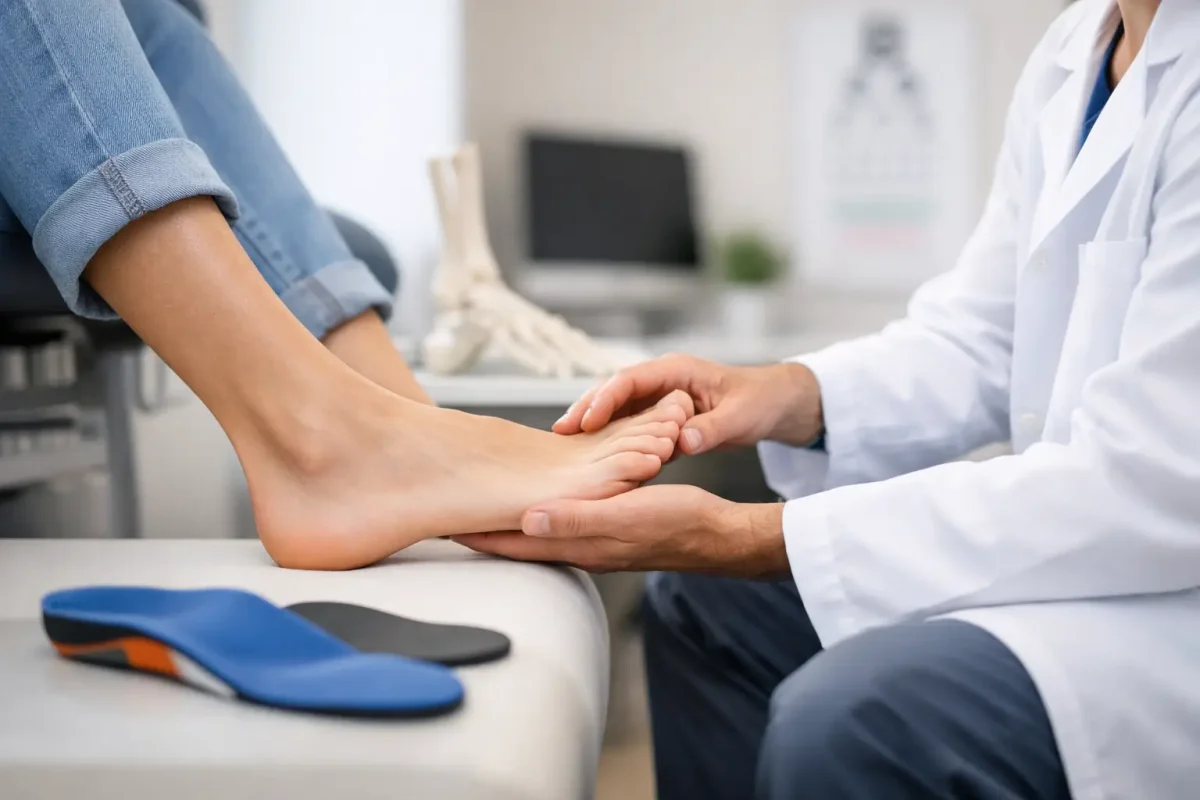
A high arch can look like a strong, healthy foot – until standing at work leaves your forefoot burning, a short run triggers shin pain, or you keep rolling an ankle on uneven ground. A podiatrist for high arches Melbourne patients turn to can identify why your feet are under pressure and create a practical plan to help you move with greater comfort and confidence.
High arches, clinically known as pes cavus, are not always painful or problematic. Some people naturally have a pronounced arch and stay active without symptoms. However, a high-arched foot often makes less contact with the ground, concentrating load through the heel, ball of the foot and outer edge. Over time, that altered loading can affect the feet, ankles, calves, knees and the way you walk or run.
When high arches need professional assessment
It is worth booking an assessment if pain is stopping you from exercising, working comfortably or enjoying everyday activities. Repeated pressure spots, corns and calluses under the ball of the foot can be a sign that weight is not being distributed evenly. You may also notice heel pain, aching through the arches, sore ankles, tight calves, shin splints, knee discomfort or pain on the outside of the foot.
Ankle instability is especially common in people with high arches. Because the foot may naturally sit in a more outward-rolling position, it can be easier to sprain an ankle during sport, on a footpath or simply when stepping off a kerb. If you have had several ankle sprains, do not assume it is just bad luck. The shape and mechanics of your feet may be contributing.
Other signs include shoes wearing down heavily on the outside edge, toes that claw or curl, numbness or burning in the forefoot, and a feeling that your footwear never seems supportive enough. Children with very high arches, frequent tripping, toe walking, pain or changes in the shape of their feet should also be assessed early.
A high arch that develops or becomes noticeably more pronounced over time deserves particular attention. While many high arches are inherited, an acquired change can occasionally be associated with a neurological or muscle-related condition. A thorough podiatry assessment helps determine whether further investigation or referral is appropriate.
What a podiatrist for high arches in Melbourne assesses
Treating high arches is not about simply putting an insole into every shoe. The most effective care starts by understanding how your body moves as a whole. Your podiatrist will discuss where and when pain occurs, previous injuries, your work demands, training routine, footwear and health history.
The clinical examination may include checking foot posture, joint range, muscle strength, calf tightness, toe position, skin pressure areas and ankle stability. Your walking and running pattern can reveal details that are not obvious when you are sitting on the treatment chair.
At Comfort Feet Podiatry Group, 3D biomechanics analysis can provide a more detailed view of how the feet and lower limbs function through movement. This can be particularly useful for runners, court-sport athletes, workers who are on their feet all day and people whose symptoms keep returning despite changing shoes.
The goal is to identify the driver of your symptoms. For one person, forefoot pain may come from excessive pressure beneath the metatarsals. For another, repeated ankle sprains may be linked to poor stability and weak muscles around the ankle and hip. Two people can have similarly high arches but need very different treatment plans.
Treatment should reduce pressure and build control
A tailored treatment plan may combine pain relief, better load distribution, improved strength and practical changes to daily footwear. The right approach depends on your symptoms, activities and the flexibility of your feet.
Custom orthotics and footwear guidance
Custom orthotics can help redistribute pressure away from overloaded areas, cushion the heel and forefoot, and provide more stable contact with the ground. They are designed from an assessment of your foot shape and movement, rather than selected from a shelf based on shoe size alone.
That does not mean every person with high arches needs custom orthotics. Some people respond well to targeted exercises, appropriate running shoes or work shoes, and a carefully chosen prefabricated device. If an orthotic is recommended, it should have a clear purpose – such as easing forefoot pain, reducing ankle rolling or supporting a return to running.
Footwear matters just as much. A shoe with adequate cushioning, a secure heel counter and enough width and depth through the toe box can reduce pressure and improve stability. Highly worn shoes, very flat casual footwear and shoes that allow the foot to slide around can aggravate symptoms. Your podiatrist can advise on features that suit your foot and activity without pushing you into a one-size-fits-all solution.
Rehabilitation for ankles, calves and lower limbs
High arches are often part of a wider movement pattern. Rehabilitation may include calf mobility work, foot-strengthening exercises, balance training and progressive ankle-strength work. Neuromuscular rehabilitation can help retrain control and confidence after repeated ankle sprains, particularly when you feel unstable during sport or on uneven surfaces.
For active people, rehabilitation should be specific to the demands of the sport. A netball player needs to tolerate landing and change of direction. A runner needs gradual capacity for repeated impact. Someone working in healthcare, retail or construction needs comfort and endurance across a long shift. The aim is not only to settle pain but to make your lower limbs more capable of handling the load that matters to you.
Hands-on care for painful symptoms
Where pain and tissue irritation are limiting movement, treatment may include lower-limb sports massage, therapeutic ultrasound, dry needling or shockwave therapy when clinically appropriate. These treatments are not stand-alone cures for a high arch, but they can assist with symptoms such as tight calves, persistent heel pain and certain tendon-related problems while the underlying mechanics and strength are addressed.
Painful corns and calluses may also need professional reduction. Removing hard skin can provide immediate relief, but prevention relies on reducing the pressure that caused it. That is why foot care, footwear advice and orthotic support are often considered together.
Staying active with high arches
You do not need to stop moving because you have high arches. In fact, maintaining strength and mobility is usually valuable. The key is managing change sensibly. A sudden jump in running distance, a new exercise class, long days in unsupportive shoes or returning to sport after time away can overload tissues that are already working hard.
Increase activity gradually and pay attention to pain that builds during exercise, changes your walking pattern or lingers into the next day. Recurrent ankle sprains, swelling, night pain, unexplained numbness or weakness should be assessed promptly rather than managed with repeated rest alone.
For parents, observe whether a child avoids sport, complains of tired or painful feet, wears out shoes unevenly or struggles with balance. Early assessment can provide reassurance when the arch shape is simply a normal variation, or a clear care plan when support is needed.
High arches do not have to dictate how much you can walk, work, play or train. A considered assessment can turn recurring pain and instability into a plan that supports healthier movement – so you can get back to the activities that make life feel like yours.