
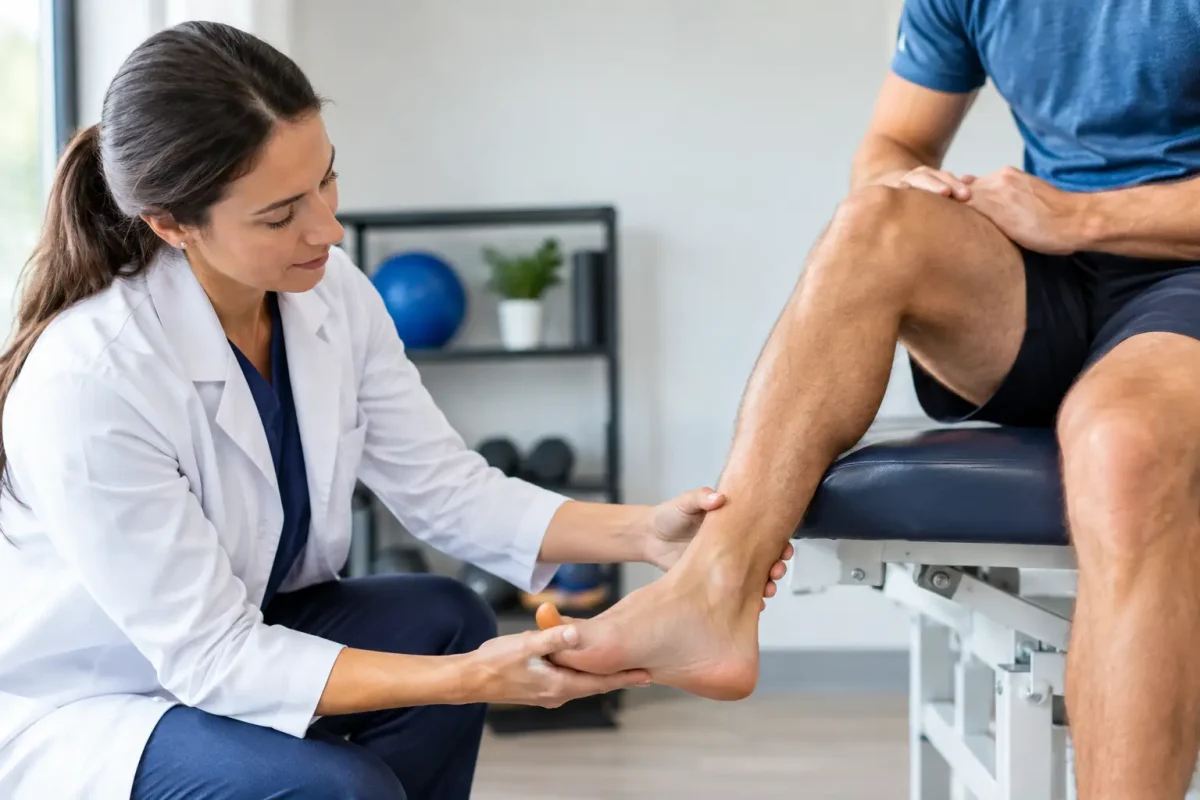
A run that starts with a tight calf and finishes with sharp heel pain is not something to simply push through. For many active Melburnians, podiatry for runners provides the missing link between recurring discomfort and a clear plan to run comfortably again. The right assessment looks beyond the painful spot to understand how your feet, ankles, calves, knees, training load and footwear are working together.
Running places repeated force through the lower limb. That is normal, and the body can adapt remarkably well when load is introduced gradually. Trouble can arise when training changes faster than your tissues can tolerate, an old injury alters your movement, or a foot and ankle issue is left to build in the background.
When should runners see a podiatrist?
A little muscle stiffness after a hard session can be expected, particularly after hills, speed work or a return from time off. Pain that changes the way you run, worsens as a session continues, returns every week or lingers into the next day deserves attention.
It is especially worthwhile to arrange an assessment if you have persistent heel or arch pain, pain around the Achilles tendon, repeated ankle rolls, shin pain, forefoot numbness, knee pain linked to running, or a toenail problem that makes shoes uncomfortable. A podiatrist can also help before pain begins when you are building towards a half marathon, marathon, trail event or a new running goal.
Seek prompt medical assessment for severe pain after an injury, inability to bear weight, marked swelling or bruising, redness and heat with fever, or pain that is intense at rest or overnight. These signs may need investigation beyond a routine running assessment.
Why running pain is not always a foot problem
The place that hurts is not always the source of the problem. Heel pain may relate to plantar fascia overload, but calf tightness, reduced ankle movement, a sudden jump in kilometres or a change in shoes can all contribute. Likewise, knee discomfort can be influenced by hip control, foot position, ankle mobility and the way force travels up the leg.
This is why a hands-on, whole lower-limb assessment matters. At Comfort Feet Podiatry Group, the focus is on finding the factors that are relevant to your pain rather than blaming one body part or assuming every runner needs the same treatment. Some people need better load management. Others need targeted strengthening, footwear changes, treatment for an irritated tissue or support from custom orthotics. Often, the best result comes from combining several of these approaches.
What happens in podiatry for runners?
A useful running assessment starts with your story. Your podiatrist will ask when the symptoms started, where they occur, whether they settle with rest, your previous injuries, work demands, running surfaces, weekly distance, pace sessions, hills and upcoming events. Small details matter. A new pair of shoes, a return to social sport, a holiday with more walking, or two hard sessions too close together can explain a flare-up.
Your consultation may include assessment of foot posture, joint movement, muscle strength, balance, calf capacity and areas of tenderness. Your podiatrist may watch you walk and run to identify movement patterns that could be increasing stress on a painful structure.
For runners with more complex or stubborn symptoms, 3D biomechanics analysis can provide a detailed view of how the lower limbs move under load. It is not about chasing a perfect running style. There is no single ideal gait for every runner. Instead, it helps identify patterns that may be relevant to your injury, then informs practical changes that suit your body and goals.
The goal is a plan, not just a diagnosis
A diagnosis can be reassuring, but runners also need to know what to do on Monday morning. A clear treatment plan should explain what activities are safe, what needs temporary modification and how progress will be measured. In many cases, stopping all movement is not necessary or helpful. Your podiatrist may recommend reducing distance, avoiding hills or speed work for a period, swapping one run for cycling or swimming, and gradually rebuilding capacity.
The right level of rest depends on the condition. A mildly irritated tendon may respond well to sensible load reduction and strengthening. A suspected bone stress injury needs a more cautious approach. That distinction is one reason professional assessment is valuable.
Common running conditions treated by podiatrists
Heel pain is one of the most common reasons runners seek care. Plantar fasciitis can cause sharp pain under the heel with the first steps in the morning or after sitting, while other heel conditions can feel different and require a different plan. Accurate assessment prevents a generic approach from dragging on for months.
Achilles pain often develops gradually and can feel stiff at the start of a run, then ease before returning later. It may be linked to increased hills, fast running, calf weakness or abrupt changes in training. Management commonly includes a carefully progressed calf-strengthening program and adjustments to training load.
Shin pain can range from muscle and bone irritation to a more serious stress injury. Pain that becomes increasingly localised, worsens with impact or persists after running should not be ignored. Early assessment can reduce the risk of a longer interruption to training.
Forefoot pain, burning or tingling can occur when the small joints and nerves in the front of the foot are overloaded. Conditions such as Morton’s neuroma may be aggravated by narrow shoes, tight lacing or high training volume. Toenail trauma, blisters, corns and calluses can also change your stride if every step becomes uncomfortable.
Treatment that supports a return to running
There is no one-size-fits-all fix for running injuries. Your treatment may include manual therapy, sports massage, dry needling, therapeutic ultrasound, shockwave therapy or neuromuscular rehabilitation when clinically appropriate. These treatments can help settle symptoms and restore movement, but they work best when paired with a plan to improve tissue capacity and manage the load that triggered the problem.
Custom orthotics may be recommended when foot mechanics, pressure distribution or a specific injury indicates they could reduce strain and improve comfort. They are not a substitute for strength or training management, and they are not necessary for every runner. When prescribed thoughtfully, however, they can be a valuable part of a broader rehabilitation program.
Footwear advice is also practical rather than prescriptive. The most expensive shoe is not automatically the best shoe for you. Fit, comfort, running history, foot shape, training surface and the condition being managed all matter. Bring your current running shoes to your appointment if possible. Wear patterns and shoe condition can offer useful clues.
Build capacity before chasing kilometres
Runners are often disciplined about completing a training plan but less consistent with the recovery and strength work that keeps them running. The most effective prevention strategy is rarely dramatic. It is usually a steady combination of gradual progression, adequate recovery, lower-limb strength and listening early when something changes.
Keep your training increases realistic, particularly after illness, travel, a busy period at work or time away from running. Hills and intervals are both valuable tools, but they add load quickly. If you introduce either one, avoid increasing distance and intensity at the same time.
Calf strength, single-leg control and balance are particularly relevant for runners because they support the repeated push-off and landing demands of each stride. Your program should reflect your injury history and goals. A recreational runner preparing for a 5 km event needs something different from a trail runner tackling steep descents or a competitive athlete returning after a tendon injury.
Pain is useful information, not a personal failure. If symptoms are becoming more frequent, changing your gait or taking the enjoyment out of running, acting early is usually easier than waiting for a forced break. The aim of podiatry for runners is not merely to get you through the next event, but to help you move with confidence in the weeks and seasons that follow.
If running has become painful, uncertain or frustrating, a targeted assessment can turn vague advice into a practical path forward. Your body is giving you feedback – responding to it now can protect the active life you value.