
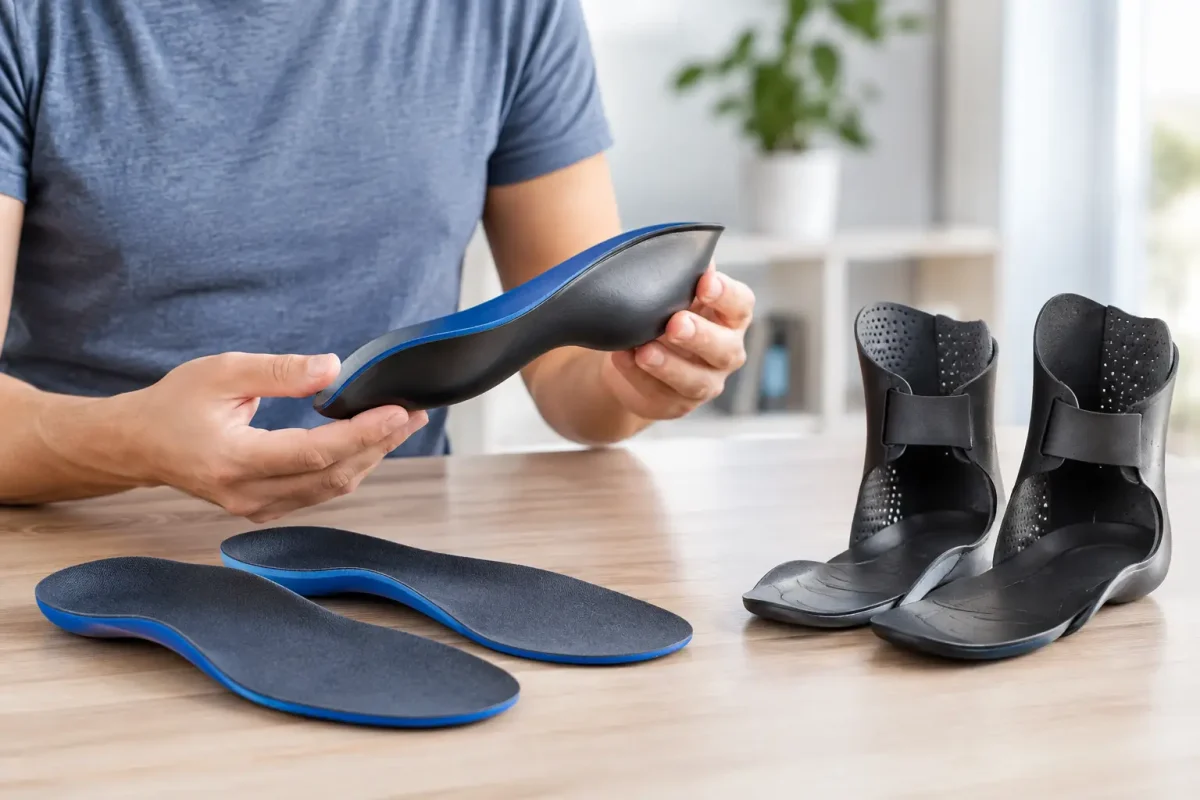
A pair of shoes can feel comfortable in the shop yet leave your heels aching by the end of a shift, your shins tight after a run, or your knees sore on the stairs. When comparing orthotics versus insoles, the right choice is not simply the one with the most cushioning. It is the option that best addresses how your feet, ankles and lower limbs move under load.
For some people, an over-the-counter insole offers welcome short-term comfort. For others, ongoing pain, recurrent injuries or a noticeable change in walking pattern calls for a more individual solution. Understanding the difference can help you avoid spending money on support that feels good briefly but does not meet the reason your pain started.
Orthotics versus insoles: what is the difference?
Insoles are removable inserts placed inside shoes. They are commonly sold in pharmacies, footwear stores and sports shops, and may provide extra cushioning, arch contour, heel padding or warmth. Most are made in standard sizes and are designed for broad groups of people rather than one person’s foot shape or movement pattern.
Orthotics are devices used to influence foot and lower-limb function. The term can describe both prefabricated devices and custom orthotics, which are prescribed after a podiatry assessment. A custom device is made around your foot shape, footwear requirements, symptoms and biomechanics. It may be designed to redistribute pressure, support or accommodate part of the foot, improve stability, or reduce strain on tissues further up the leg.
The distinction matters because the word “orthotic” is sometimes used loosely in retail marketing. A ready-made arch support may be useful, but it is not the same as a custom orthotic prescribed to manage a diagnosed condition. The best option depends on your symptoms, activity, footwear and clinical findings.
When an insole may be enough
A well-chosen insole can be a sensible starting point for mild discomfort, particularly when the issue is linked to poor cushioning or a change in footwear. Someone standing on concrete all day may benefit from additional shock absorption. A runner returning gradually after time away may find a supportive insole improves comfort while they build strength and training volume.
Insoles can also be practical when you need support across several pairs of shoes, provided the insert fits without making the shoe too tight. They are generally lower cost than custom devices and can be replaced easily as the cushioning compresses.
However, more padding is not always better. Thick, soft insoles can take up too much room, causing toe pressure, rubbing or heel slippage. They may also feel unstable in work boots, court shoes or football boots. A high arch insole can be uncomfortable for a foot that does not suit that shape, while a very flexible insert may flatten quickly under an active person’s body weight.
If discomfort settles with a suitable insole, sensible footwear and a gradual return to activity, that may be all you need. Persistent or recurring pain is a different situation.
When custom orthotics can make a meaningful difference
Custom orthotics are not a cure-all, and they are not automatically necessary for every case of foot pain. They can, however, play an important role when symptoms are driven by the way forces travel through the foot and lower limb.
A podiatrist may recommend custom orthotics for ongoing heel pain or plantar fasciitis, painful flat feet, high arches that concentrate pressure, recurrent shin splints, forefoot pain, Morton’s neuroma, tendon overload, knee pain linked to lower-limb mechanics, or repeated sports injuries. They can also help people with arthritis, diabetes-related pressure concerns or changes in foot shape that require accommodation rather than generic arch support.
The device itself is only one part of the plan. If calf tightness, hip weakness, reduced ankle movement or a sudden jump in training load is contributing to the problem, an orthotic alone may not produce lasting relief. Targeted exercises, footwear advice, hands-on treatment and a gradual activity plan are often just as relevant.
For a warehouse worker, the priority might be reducing pain during long shifts in safety boots. For a netball player, it may be improving landing control and reducing strain through the Achilles tendon. For an older adult, it may be greater balance and confidence when walking around the neighbourhood. A good orthotic prescription starts with the life you need your feet to support.
The assessment behind a custom device
A custom orthotic should be based on more than a footprint or a quick look at your arches. At Comfort Feet Podiatry Group, assessment considers your symptoms, health history, footwear, work demands, sport and movement goals. Your podiatrist may assess joint range, muscle strength, walking and running mechanics, and areas of pressure or tenderness.
Where appropriate, 3D biomechanics analysis can add a more detailed picture of how your lower limbs move. This can be particularly valuable for active patients, people with recurring pain, and those whose symptoms appear in one area but are influenced by mechanics elsewhere. Foot pain does not always begin in the foot. Restricted ankle movement, poor calf capacity or altered hip control can all change the load reaching the feet.
The orthotic is then designed for a purpose. It may use firmer materials for control, softer areas for cushioning, cut-outs to offload a painful region, or a lower profile to work inside particular shoes. Dress shoes, school shoes, runners and work boots do not offer the same space or stability, so footwear must be part of the conversation.
Signs you should not rely on a shop-bought insert alone
An insole is unlikely to solve every concern. Book a podiatry assessment if pain continues beyond a few weeks, repeatedly returns when you increase activity, affects your ability to work or exercise, or changes the way you walk.
Assessment is also worthwhile if you have swelling, numbness, burning, night pain, sudden severe pain, an injury, or sores and skin changes on your feet. People living with diabetes, reduced circulation, inflammatory arthritis or nerve changes should seek professional advice before self-treating pressure areas with generic inserts.
For children, avoid assuming flat feet need an insert simply because they look flat. Many children have flexible, painless flat feet that develop normally. Pain, frequent tripping, fatigue, limited participation or one foot behaving differently from the other are better reasons to arrange a paediatric podiatry assessment.
Getting the fit right in everyday shoes
Even the most carefully selected support will underperform in footwear that is worn out, too narrow or unstable. Bring your most-used shoes to your appointment, including work boots and sports footwear. Wear patterns on the sole, a collapsed heel counter or tight toe box can reveal why an insert is not feeling right.
New orthotics may require an adjustment period. Your podiatrist will advise how long to wear them initially and how to increase use safely. Mild awareness of a new support can be normal, but pain, numbness, rubbing or worsening symptoms are not signs to push through. Review and adjustment are part of good care, particularly if your work, shoes or training changes.
It is also worth remembering that orthotics do not replace strength. Foot, calf, ankle and hip capacity helps your body absorb and control force. For runners and field-sport athletes, progressive loading is often what turns a period of pain relief into a safer return to training.
Choose support based on the problem, not the label
The practical question is not whether orthotics are “better” than insoles. It is whether the support matches your body, your symptoms and the activities that matter to you. An affordable insole may be appropriate for mild, temporary discomfort. A custom orthotic can be a valuable clinical tool when pain is persistent, complex or linked to lower-limb mechanics.
If your feet are limiting your work, sport or time with family, do not settle for guessing in the shoe aisle. A thorough podiatry assessment can identify what is driving the load and create a plan that helps you move with more comfort and confidence.