
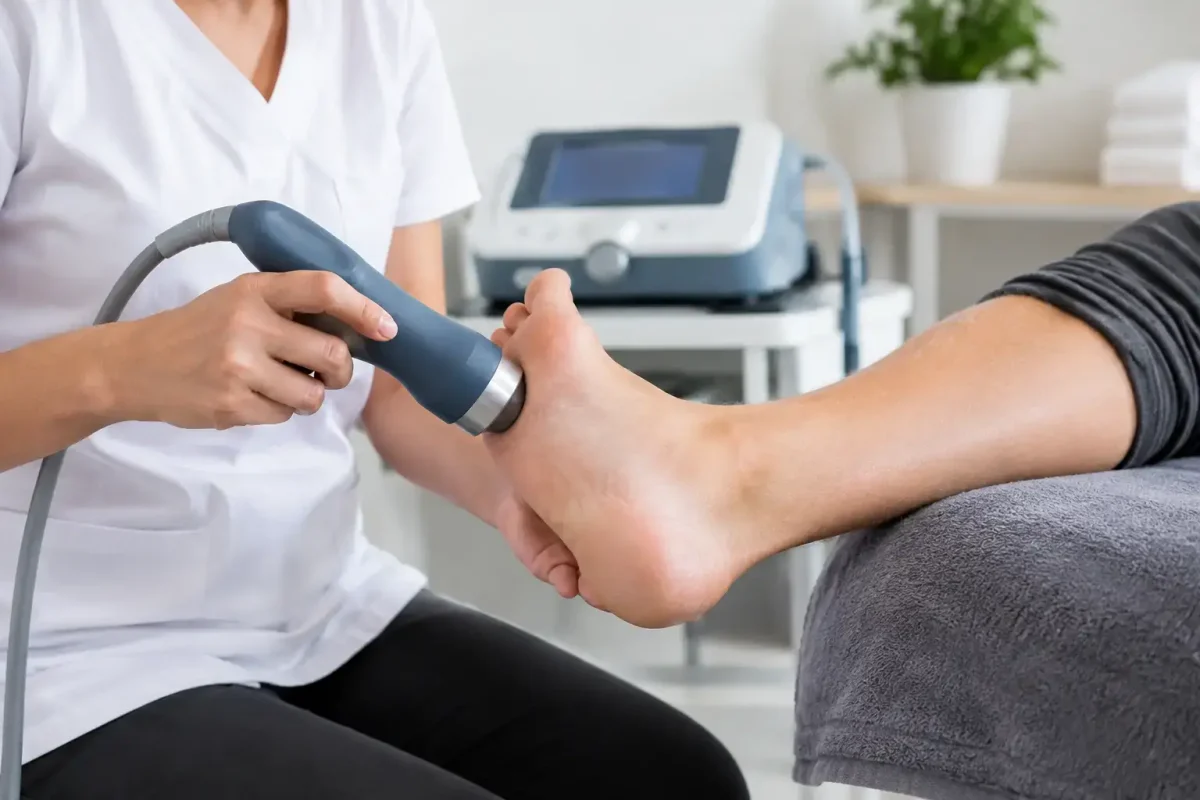
That first step out of bed, the sharp pull through your Achilles after a run, or an ankle that stays sore well beyond a sprain can make every part of the day feel smaller. Therapeutic ultrasound podiatry is one of several hands-on treatment options that may be used to settle painful lower-limb tissues and support your return to comfortable, confident movement.
At Comfort Feet Podiatry Group, treatment starts with understanding why the pain is there. Ultrasound may be helpful, but it is not a stand-alone fix or a one-size-fits-all answer. The best results come from matching treatment to your diagnosis, how your body is moving and what you need to get back to – whether that is work, school drop-off, walking the dog or sport.
What is therapeutic ultrasound in podiatry?
Therapeutic ultrasound uses sound waves delivered through a treatment head placed on the skin with conductive gel. Unlike diagnostic ultrasound, which creates an image of structures inside the body, therapeutic ultrasound is used as a treatment modality.
The sound waves can be applied continuously or in pulses. Depending on the setting selected by your podiatrist, the aim may be to create a mild warming effect in deeper soft tissue or to provide non-thermal stimulation to the affected area. Treatment is generally comfortable. You may feel gentle warmth, although many people feel very little during the session itself.
In podiatry, it may be considered for irritated muscles, tendons, ligaments and other soft tissues in the foot, ankle and lower leg. Your podiatrist adjusts the treatment area, intensity and duration based on the tissue involved, your symptoms and your stage of recovery.
When therapeutic ultrasound podiatry may help
Lower-limb pain is rarely just about the spot that hurts. Heel pain may be influenced by calf tightness and loading patterns. Achilles pain can be affected by training volume, footwear, ankle mobility and strength higher up the leg. A thorough assessment helps determine whether ultrasound has a useful role in your care.
Therapeutic ultrasound may be incorporated into a plan for conditions such as plantar heel pain, Achilles tendinopathy, shin pain, calf muscle strain, ankle sprains and some forms of forefoot soft-tissue irritation. It can also be considered when stiffness or tenderness is limiting your ability to begin rehabilitation exercises comfortably.
There is an important distinction here: ultrasound does not repair a tendon overnight or correct the movement habits that contributed to an injury. Research on therapeutic ultrasound has shown mixed results across different conditions. For that reason, good podiatry care uses it selectively, as an adjunct to a broader rehabilitation plan rather than promising it as a cure.
For some patients, reducing local sensitivity or stiffness enough to make walking and prescribed exercise more manageable is worthwhile. For others, a different approach – such as shockwave therapy, dry needling, sports massage, neuromuscular rehabilitation, footwear changes or custom orthotics – may be more appropriate. It depends on the diagnosis and your goals.
What happens during an appointment?
Your appointment should never begin and end with a machine. Your podiatrist will first discuss your symptoms, relevant health history, activity demands and what has changed since the pain began. They may assess your footwear, joint movement, muscle strength, tenderness, balance and walking or running pattern.
Where needed, 3D biomechanics analysis can provide further insight into the way your feet and lower limbs move under load. This helps connect the painful area to the forces acting on it, rather than simply chasing symptoms.
If therapeutic ultrasound is suitable, gel is applied to the treatment area and the ultrasound head is moved slowly over the skin. A session commonly takes only a few minutes. Your podiatrist will check how the area responds and may pair ultrasound with hands-on treatment, mobility work or an exercise prescription during the same consultation.
You should be able to ask what the treatment is intended to achieve and how progress will be measured. That might be less pain on first steps, improved ankle movement, greater calf strength, a longer walk without symptoms or a gradual return to training.
It works best as part of a plan
Pain relief matters, particularly when pain has been disrupting sleep, work or exercise. Yet lasting improvement usually relies on gradually restoring your capacity to tolerate load.
For an active runner with Achilles pain, this may mean modifying running temporarily, improving calf strength and building mileage back in a controlled way. For a worker who spends long shifts on their feet, it may involve supportive footwear, changes to standing and walking demands, and strategies to improve foot and calf endurance. For someone with persistent heel pain, it may include targeted stretching, strengthening, taping or orthotic support alongside treatment to settle irritable tissue.
Your plan should be practical enough to fit real life. Overloading an injury because you feel briefly better can cause a setback, but avoiding movement for too long can also reduce strength and confidence. The right progression finds a sensible middle ground.
Is therapeutic ultrasound safe?
When provided after an appropriate clinical assessment, therapeutic ultrasound is generally a non-invasive and well-tolerated treatment. However, it is not appropriate for everyone or every body area.
Your podiatrist will consider factors including altered sensation, circulation concerns, pregnancy, active infection, suspected fracture, open wounds, certain implanted medical devices and a history of cancer in the treatment area. It should not be applied over growth plates in children or over particular sensitive structures. Tell your podiatrist about any medical condition, medication, recent surgery or change in symptoms before treatment.
Seek prompt assessment rather than self-treating if you have severe swelling, inability to bear weight, a visibly deformed foot or ankle, unexplained redness and heat, calf swelling, numbness, fever, or pain that is rapidly worsening. These symptoms may need medical investigation before any rehabilitative treatment is considered.
How many sessions will you need?
There is no useful fixed number. A recent mild soft-tissue injury may respond differently to long-standing plantar heel pain or a tendon problem that has been building for months. Your activity level, work demands, health history and ability to complete rehabilitation between visits all influence the timeline.
Rather than booking treatment indefinitely, your podiatrist should review whether your symptoms and function are changing. If ultrasound is not providing meaningful benefit, the plan can be adjusted. This is a strength of a personalised approach: treatment is guided by your response, not by a standard package.
Many lower-limb conditions improve over weeks rather than days. Consistency with the parts of your plan you can control – exercises, load modification, footwear advice and follow-up – is often what moves recovery forward.
Getting back to pain-free movement
Foot and lower-limb pain can quietly change how you live. You may skip a weekend walk, turn down a game, take shorter shifts or avoid stairs because you are worried about the next flare-up. You do not need to simply put up with it.
Therapeutic ultrasound can be a useful part of podiatry treatment when it is chosen for the right reason and paired with a clear rehabilitation pathway. A detailed assessment can identify what is driving your symptoms, give you realistic expectations and create a plan focused on the outcome that matters most: moving with less pain and more confidence in daily life.