
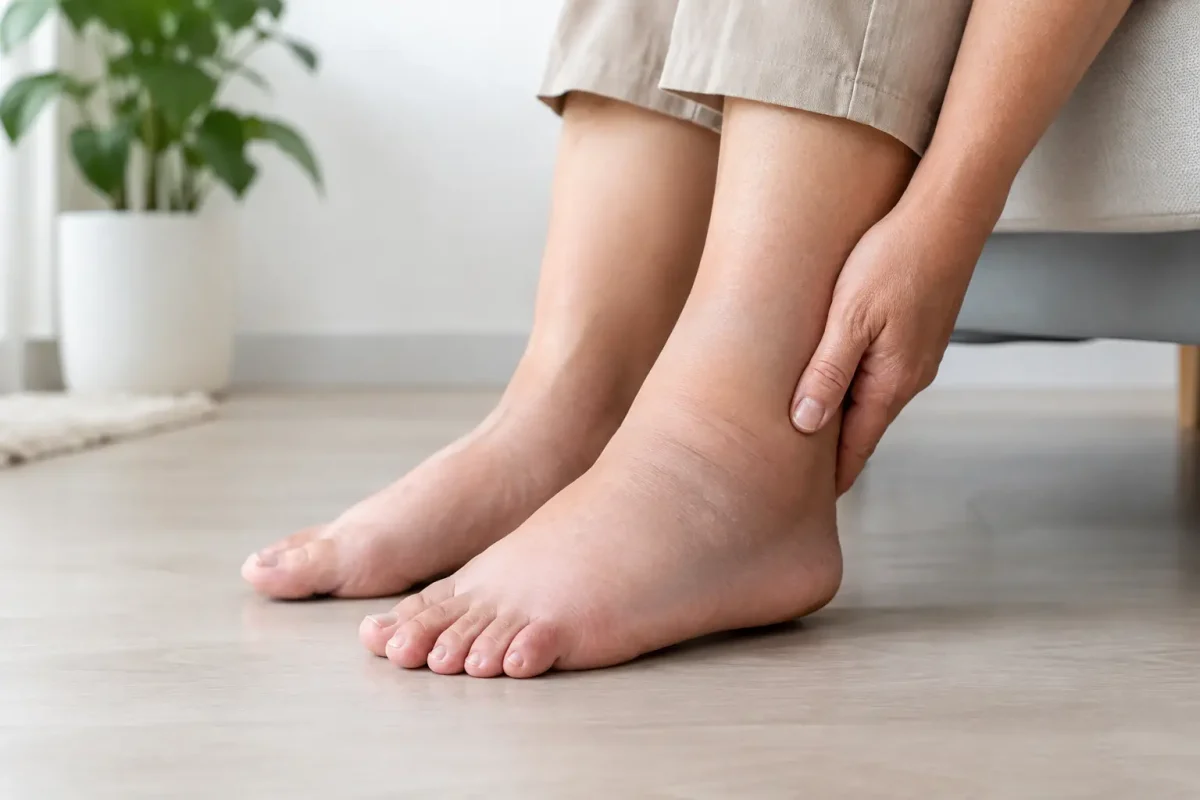
A shoe that fits in the morning but feels tight by late afternoon can be more than an inconvenience. If you are asking why feet swell, the answer may be as simple as a long day standing at work or as significant as an injury, circulation issue or medical condition that needs prompt attention. The pattern matters: when the swelling began, whether it affects one foot or both, and whether pain, heat or other symptoms are present.
Foot swelling is often called oedema. It occurs when fluid collects in the tissues of the feet, ankles or lower legs. Sometimes it settles with rest and movement. At other times, it is your body’s signal that the lower limb needs a proper assessment.
Why feet swell after standing, travel or exercise
Your calf muscles act as a pump, helping return blood from your feet back towards your heart. When you stay still for a long period, whether at a desk, on a flight, in the car or standing behind a counter, that pump is less effective. Gravity then encourages fluid to pool around the ankles and feet.
Warm weather can make this more noticeable because blood vessels widen, allowing more fluid to move into surrounding tissue. A salty meal, alcohol, dehydration and poorly fitting shoes may add to the problem. Many people notice mild swelling after a Melbourne summer day, a long shift or time on their feet at an event.
Exercise can also cause temporary swelling. Increased blood flow, heat and small amounts of inflammation after an unfamiliar or intense session can leave feet feeling puffy. This is usually mild, occurs in both feet and improves within a day or two. However, swelling after a twist, fall, tackle or sudden increase in running load should not automatically be blamed on exercise. A sprain, tendon injury, stress fracture or joint irritation may be involved.
Common causes of swollen feet
Not every swollen foot has the same cause. Looking at the location and timing of swelling helps narrow it down.
Injury and local inflammation
Swelling in one foot or ankle is common after an ankle sprain, fracture, tendon injury or impact. It may arrive quickly and be accompanied by bruising, tenderness or difficulty putting weight through the foot. Arthritis, gout and infection can also cause localised swelling, often with marked pain, warmth or redness.
Overuse injuries can be quieter. A runner developing a bone stress injury may first notice a specific tender area and swelling that builds with activity. A worker who regularly climbs stairs or ladders may develop tendon irritation around the ankle. Continuing to push through these symptoms can extend recovery time.
Footwear, biomechanics and workload
Tight footwear, restrictive socks and safety boots can leave indentations and make feet feel swollen, especially at the end of a shift. Foot mechanics can contribute too. Flat feet, high arches, reduced ankle movement and altered walking patterns can overload particular joints and tendons, causing persistent local inflammation.
This is where a podiatry assessment can be useful. The goal is not simply to reduce visible swelling. It is to identify what is placing excess demand on the area, whether that is footwear, training volume, work demands, muscle weakness or the way the foot and lower limb move together.
Vein and circulation changes
Veins in the legs have valves that help blood return upwards. When these valves are less effective, fluid can build up by the end of the day. This is often associated with aching, heaviness, visible veins or swelling in both ankles that improves overnight.
Poor arterial circulation is different and should be assessed medically. Symptoms can include cold feet, colour changes, pain in the calves when walking, slow-healing wounds or reduced sensation. Diabetes and smoking can increase the risk of circulation and nerve problems, which is why regular foot checks are so valuable.
Medical conditions and medicines
Swelling in both feet can be related to heart, kidney, liver or thyroid conditions. It may also occur with pregnancy, hormonal changes or lymphoedema. Some medicines can contribute, including certain blood pressure medicines, anti-inflammatories, steroids and diabetes medicines. Never stop a prescribed medicine because of swelling without speaking with the clinician who prescribed it.
The key point is that new, ongoing or worsening swelling deserves a medical review, particularly if it is not clearly linked to a minor injury or a temporary change in activity.
When swollen feet need urgent care
A swollen foot is not always an emergency, but some symptoms should never be watched and waited on. Seek urgent medical assessment for swelling that comes on suddenly in one leg or foot, particularly if the calf is painful, warm, red or tender. These can be signs of a deep vein thrombosis, or blood clot.
Call 000 if swelling is accompanied by chest pain, shortness of breath, coughing blood, fainting or severe dizziness. These symptoms need emergency care.
You should also seek same-day medical advice if the foot is very red, hot and painful, if there is fever or a spreading wound, or if you cannot bear weight after an injury. People with diabetes, poor circulation, reduced sensation or immune suppression should have new swelling, skin breaks and infections checked early. A small blister or cut can become serious faster than expected.
What you can do for mild swelling
If the swelling is mild, affects both feet, has an obvious trigger and there are no warning signs, a few simple measures may help. Take regular movement breaks rather than sitting or standing in one position for hours. A short walk, ankle circles and calf raises can activate the calf pump.
When resting, elevate your feet above heart level where practical. Choose shoes with enough depth and width for your feet at the end of the day, not only first thing in the morning. Avoid tight sock bands and footwear that rubs across the top of the foot. Staying hydrated and moderating very salty foods may also help where fluid retention is a factor.
After a minor soft-tissue injury, relative rest, elevation and a wrapped cold pack can reduce discomfort in the first 24 to 48 hours. Do not apply ice directly to skin, and be cautious with cold therapy if you have circulation or sensation problems. Compression can be helpful for some people, but it is not suitable for everyone. If you have known artery disease, heart failure, diabetes-related circulation concerns or unexplained one-sided swelling, ask a health professional before using compression garments.
When to book a podiatry assessment
Book an assessment if your feet swell repeatedly, swelling lasts more than a few days, or it affects your ability to work, exercise or walk comfortably. A podiatrist can examine the foot, ankle and lower limb, assess joint movement and muscle function, and look at footwear and walking mechanics. Where appropriate, 3D biomechanics analysis can provide a clearer picture of how movement patterns may be contributing to overload.
Treatment depends on the cause. It may include hands-on care, rehabilitation exercises, footwear changes, temporary offloading, custom orthotics or a gradual plan to return to sport and activity. If symptoms suggest a circulation issue, infection, fracture or broader medical condition, your podiatrist can guide you towards the right medical pathway rather than treating swelling as an isolated foot problem.
For workers who spend all day on hard floors, athletes building training volume and older adults protecting independence, the aim is the same: reduce pain, restore confident movement and prevent a recurring problem from limiting daily life.
Feet are meant to carry you through work, family time and the activities you enjoy. If swelling keeps changing how you move, listen to that signal and arrange an assessment with a qualified clinician, such as the team at Comfort Feet Podiatry Group, before a manageable issue becomes a longer interruption.