
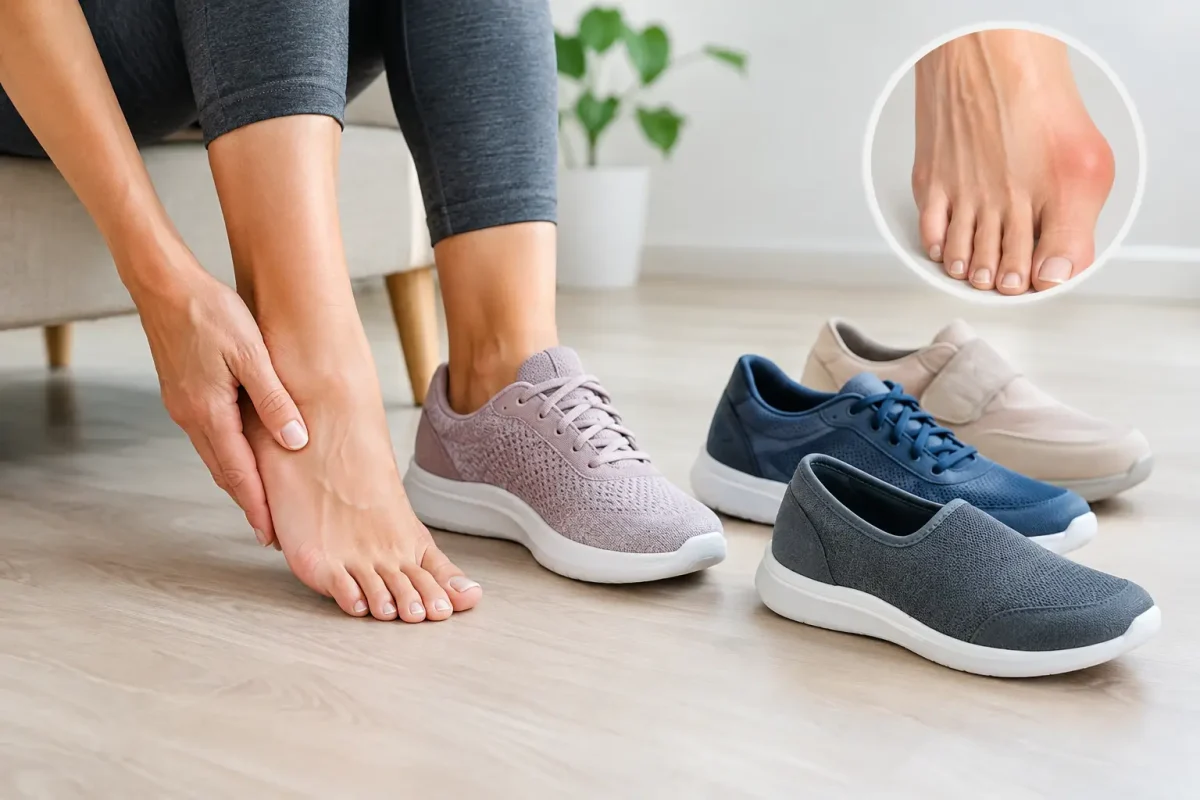
That painful bump beside your big toe can turn an ordinary walk to the shops, a full shift on your feet or a weekend run into something you brace for. The best footwear for bunions does more than feel soft for five minutes in the store. It gives the front of your foot enough room to function, limits pressure over the joint and supports the way you move.
A bunion, clinically called hallux valgus, develops when the big toe gradually angles towards the second toe and the joint at its base becomes more prominent. Footwear does not cause every bunion, and it cannot reverse an established bony change. Genetics, foot structure, joint mechanics and inflammatory conditions can all contribute. But narrow, pointed or rigid shoes can make an existing bunion far more painful.
The right pair can be a meaningful part of managing symptoms and staying active. The wrong pair can leave the joint red, rubbed and aching long after you take it off.
Best footwear for bunions starts with fit
The most useful feature is simple: adequate width and depth through the toe box. Your toes should be able to lie flat and spread naturally, without the upper pressing on the bunion or forcing the big toe inward. A shoe may be labelled wide, but what matters is whether its widest point matches the widest part of your forefoot.
Look for a toe box with a rounded or foot-shaped profile rather than a sharply tapered point. There should be around a thumb-width between your longest toe and the end of the shoe. Some people have a second toe that is longer than their big toe, so always fit to your longest toe rather than assuming the big toe sets the length.
Depth matters just as much. A deep toe box reduces friction over a prominent joint and leaves room for a protective pad or orthotic if needed. Soft uppers in leather, mesh or flexible knit materials can be more forgiving than stiff synthetic materials, provided the shoe still holds the heel securely.
Try shoes on later in the day, when feet are often slightly more swollen. Wear the socks or hosiery you would normally use, and walk around the shop rather than judging fit while seated. If a shoe needs a long break-in period before it stops pressing on your bunion, it is not the right shoe.
Features that reduce bunion pressure
A comfortable shoe is not necessarily a supportive one. For day-to-day walking, work and exercise, aim for a balance of cushioning, stability and flexibility in the right places.
A firm heel counter, the structured section around the back of the heel, can help control excessive rolling of the foot in some people. A stable sole can also reduce strain through the big toe joint as you push off. This does not mean the shoe should be stiff from heel to toe. The forefoot should flex where your toes naturally bend, rather than folding through the middle of the arch.
A low, broad heel is generally kinder to a bunion than a high or narrow heel. Higher heels shift body weight forward, increasing load through the forefoot and placing the big toe in a more compressed position. If heels are required for an event or workplace, choose the lowest practical height, a wider toe box and a block heel where possible. Save them for shorter periods rather than making them your all-day shoe.
Adjustable fastening is another practical advantage. Laces, straps or hook-and-loop closures let you alter the fit when swelling changes through the day. Slip-on shoes can work well for some people, but they must still grip the heel and midfoot. If you are clawing with your toes to keep a shoe on, it may increase forefoot discomfort.
Choosing shoes for work, walking and sport
The ideal shoe depends on what you need it to do. A hospitality worker standing for eight hours, a tradie in safety boots and a recreational walker each need a different balance of protection, support and flexibility.
Work shoes and boots
For professional footwear, prioritise width, depth and adjustability before appearance. Many dress shoes are narrow through the forefoot, even when the length is correct. A rounded toe, softer upper and modest heel will usually be more tolerable than a pointed court shoe or a slim loafer.
Safety footwear presents another challenge because toe caps can limit depth and shape. Look for work boots available in multiple widths, with enough room between the toe cap and your toes. A boot should feel secure through the heel and ankle without squeezing across the front of the foot. Do not assume pain is simply part of wearing safety footwear. Persistent pressure may mean the fit, style or internal support needs reviewing.
Walking and running shoes
Walking shoes and runners often offer useful cushioning and lacing, but not every athletic shoe suits a bunion. Some models have a surprisingly narrow forefoot or a curved shape that pushes the big toe towards the second toe.
Choose a runner with sufficient toe-box width, a secure heel and a sole that suits your activity. For some people, a rocker-style sole can reduce the amount the big toe joint needs to bend during walking. For others, especially those who feel unstable or have ankle concerns, it may not be appropriate. This is where individual assessment matters more than a general shoe trend.
If you run, do not size down for a snug racing feel. Your foot can spread and swell during exercise, and repeated pressure over the bunion can lead to blistering, bursitis and altered running form. A properly fitted running shoe should feel comfortable from the first kilometres, not only after it has stretched.
Sandals and casual shoes
Open footwear can relieve pressure over the bunion, but flimsy thongs and flat slides often provide little stability or shock absorption. For longer walks, choose sandals with an adjustable forefoot strap that does not cross directly over the bunion, plus a supportive footbed and heel strap.
Casual shoes should still pass the same basic test: room for the forefoot, no rubbing over the joint and adequate grip underfoot. Fashion trainers may look like sports shoes but can have little structure, so assess the fit rather than relying on the label.
Can orthotics help with bunion footwear?
Orthotics do not remove a bunion, but they may help improve comfort by supporting the foot’s mechanics, redistributing pressure and reducing strain on related structures. They can be particularly useful when bunion pain occurs alongside flat feet, high arches, plantar heel pain, Morton’s neuroma, knee discomfort or recurrent lower-limb fatigue.
The shoe needs to accommodate the orthotic. Remove the existing insole if it is designed to come out, then try the orthotic with your usual socks. Your heel should not lift, and the top of the shoe should not press down on the bunion or toes. Sometimes a deeper shoe is a better solution than trying to force an orthotic into a tight fit.
A custom orthotic is not automatically necessary. Some people respond well to a suitable off-the-shelf device and better footwear, while others benefit from an orthotic prescribed after a podiatry and biomechanics assessment. The decision should be based on your symptoms, activity demands and the way your feet and lower limbs move.
When footwear alone is not enough
Shoe changes can reduce irritation, but ongoing pain deserves attention. Seek podiatry advice if the bunion becomes increasingly painful, swollen or warm; if you develop corns, blisters or numbness; if walking distance is shrinking; or if you are changing how you walk to avoid pressure.
This is especially relevant if you have diabetes, poor circulation, peripheral neuropathy or inflammatory arthritis. Small areas of rubbing can become more serious when sensation or healing is reduced.
At Comfort Feet Podiatry Group, an assessment can look beyond the visible bump to identify how the big toe, arch, ankle and lower limb are loading during standing, walking or sport. Depending on your needs, this may include footwear guidance, pressure relief, nail and skin care, 3D biomechanics analysis, custom orthotics or a rehabilitation plan to help you move with greater confidence.
Your shoes should support the life you want to lead, whether that means getting through a shift comfortably, keeping up with the kids or returning to your regular walking route. If a bunion is deciding where you can go and how far you can walk, it is time to give your feet a more considered plan.