
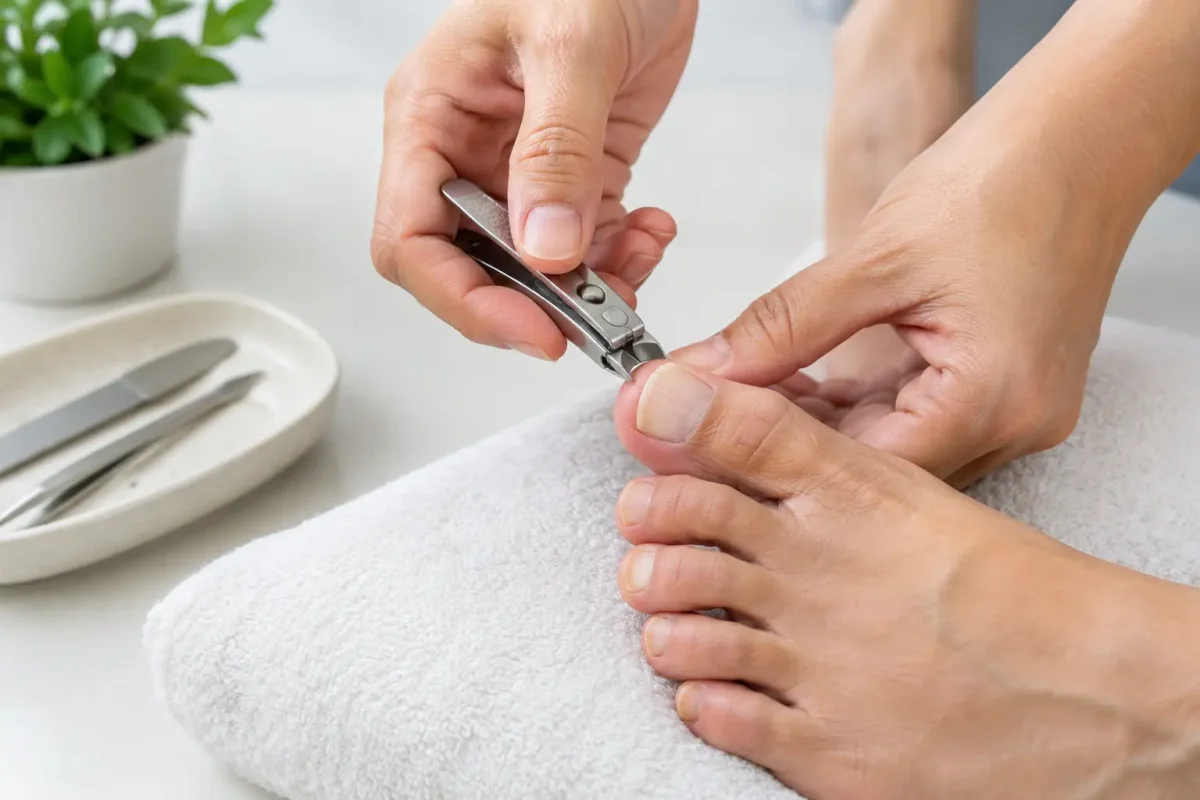
Thick toenails can turn a simple grooming task into an uncomfortable struggle. Nails may be too hard for standard clippers, difficult to reach safely, or painful when they press against shoes. Knowing how to trim thick toenails properly can reduce pressure and help you stay comfortable on your feet – but forcing a thick nail can lead to cuts, splitting and ingrown nails.
For many people, thick nails are more than a cosmetic concern. They can make walking, working, exercising and putting on favourite shoes harder than it needs to be. A careful approach protects the surrounding skin and helps you recognise when professional podiatry care is the safer choice.
Why toenails become thick
Toenails naturally become thicker and slower-growing with age. Repeated pressure from footwear, running, work boots or previous injuries can also change the nail over time. A nail that has been knocked, bruised or repeatedly compressed may become thicker, ridged or discoloured as it grows out.
Fungal nail infection is another common cause. It may make the nail yellow, white, brown, crumbly, lifted from the nail bed or unusually thick. However, not every thick or discoloured nail is fungal. Skin conditions, circulation changes, trauma and some medical conditions can create similar changes. That is why treating every thick nail with over-the-counter antifungal products is not always the answer.
Thick nails can also place more pressure on the toes inside footwear. If you are active, spend long shifts standing, or wear enclosed safety shoes, that pressure can become painful and affect how comfortably you move.
When not to trim thick toenails yourself
Home care is not suitable for everyone. If you have diabetes, poor circulation, reduced feeling in your feet, nerve damage, significant vision problems or difficulty reaching your feet safely, do not attempt to cut very thick nails without professional advice. A small cut can be slow to heal and may become infected before it is noticed.
It is also best to see a podiatrist rather than trimming the nail yourself if it is very painful, growing into the skin, bleeding, infected, loose, severely curved, or black following an injury. Redness, heat, swelling, pus or throbbing pain around the nail edge require prompt assessment.
People using NDIS, DVA, WorkSafe Victoria or TAC pathways may also be able to access appropriate podiatry support, depending on their individual plan or claim arrangements. Regular clinical nail care can be a practical part of maintaining safe mobility when self-care is difficult.
Tools that make trimming thick toenails safer
Standard fingernail clippers are usually not strong enough for thick toenails. They can slip, crush the nail or create a jagged edge. Start with clean, purpose-made tools that give you control.
- Heavy-duty toenail clippers or podiatry-style nail nippers with a wider jaw
- A coarse nail file or emery board for smoothing rough edges
- A clean towel and a basin, if soaking is appropriate for you
- A small torch or bright lamp so you can clearly see the nail and surrounding skin
Disinfect reusable tools before and after use, then dry them thoroughly. Do not share nail tools with other household members, particularly if fungal infection is suspected.
Avoid using scissors, craft cutters, knives or tools designed for fingernails. They are harder to control and raise the risk of cutting the skin. If the nail is too hard for your clippers despite preparation, stop rather than applying more force.
How to trim thick toenails step by step
Soften the nail first, if it is safe for you
Trim nails after a shower or bath, when they are generally softer. Alternatively, soak your feet in warm water for around 10 to 15 minutes, then dry them carefully, including between the toes. Do not soak if you have been advised to keep your feet dry, have open skin, or have diabetes or circulation issues without checking with your healthcare professional first.
Softening does not mean the nail will become easy to cut, particularly when it is very thick. It simply reduces brittleness and makes controlled clipping more achievable.
Find a stable, well-lit position
Sit somewhere secure with your foot supported. Avoid balancing on one leg, twisting awkwardly or trying to trim nails while standing in the shower. If you cannot comfortably see or reach your toes, that is a good reason to arrange professional nail care rather than pushing through.
Good lighting matters. You need to see the line between the nail, the nail bed and the skin at the sides of the toe.
Cut small sections straight across
Use heavy-duty clippers to take small cuts across the nail, rather than attempting to remove the full width in one squeeze. Start at one side, make a small controlled clip, then continue across. This reduces the chance of splitting a brittle nail or placing sudden pressure on the toe.
Keep the nail reasonably straight across and leave a small visible edge. Cutting deeply into the corners can encourage the nail to grow into the skin, particularly if your nails naturally curve or you have had ingrown toenails before.
Do not pull away a loose, crumbly or detached section of nail. Trim only the part that separates easily with gentle pressure. Pulling can tear attached nail from the nail bed and create a painful wound.
File sharp corners rather than digging into them
Once the nail is trimmed, use a file to smooth sharp corners and uneven edges. File in one direction with light pressure. The goal is to stop the nail catching on socks or pressing into adjacent toes, not to create a rounded, deeply cut corner.
If the nail remains too thick to be comfortable in shoes, filing the top surface at home is not usually the best solution. Aggressive thinning can create heat, trauma and pain. A podiatrist can reduce thickened nails with sterile clinical equipment while protecting the skin and nail bed.
Check your skin and footwear afterwards
Look for nicks, redness or tender spots around each toe. Put on your usual shoes and walk a few steps. A correctly trimmed nail should not press painfully into the top of the shoe or catch on your sock.
If footwear keeps rubbing against the nail, the issue may not be the nail alone. A shallow toe box, a tight work boot or changes in foot shape can all contribute. Addressing shoe fit can prevent the thick nail from becoming a recurring source of pressure.
Common mistakes that cause trouble
The most common mistake is cutting thick nails too short. It may feel like removing more nail will solve the pressure problem, but overly short nails leave the skin at the tip of the toe exposed and can increase the likelihood of an ingrown edge.
Another mistake is cutting a deep V-shape into the middle of the nail in an attempt to change its growth. This does not reliably prevent ingrown toenails and can weaken the nail. Similarly, trying to lever out hard debris from underneath the nail can injure the sensitive skin beneath it.
Avoid covering a suspected fungal nail with polish while ignoring increasing thickness, lifting or pain. Nail polish is not the cause of fungal infection, but it can make it harder to monitor changes and may delay assessment.
When thick toenails need podiatry treatment
A podiatrist can safely cut, reduce and smooth thick toenails when home clipping is uncomfortable or risky. More importantly, they can assess why the nail has changed. This may include checking for fungal infection, pressure from footwear, previous trauma, skin conditions or issues affecting circulation and sensation.
Professional treatment may involve careful nail reduction, management of an ingrown edge, advice on footwear and foot hygiene, or a treatment plan for fungal nails where appropriate. If pain is affecting your walking, sport, work or confidence getting around, it is worth addressing early rather than waiting for a nail problem to become an infection.
At Comfort Feet Podiatry Group, nail care is considered alongside the way you walk, your footwear demands and your broader mobility goals. This is particularly valuable when recurring pressure, toe pain or lower-limb discomfort is changing how active you can be.
Keep nails manageable between appointments
Check your toenails every few weeks, rather than waiting until they become difficult to cut. Keep feet clean and dry, change socks after exercise or long workdays, and choose shoes with enough depth through the toe box. If you use communal change rooms, pools or showers, wear thongs to reduce exposure to fungal organisms.
Take a photo if a nail changes colour, shape or thickness quickly. It can help you track progression and give your podiatrist a clearer picture at your appointment. The safest nail-care routine is the one that keeps you moving comfortably without putting your skin at risk.