
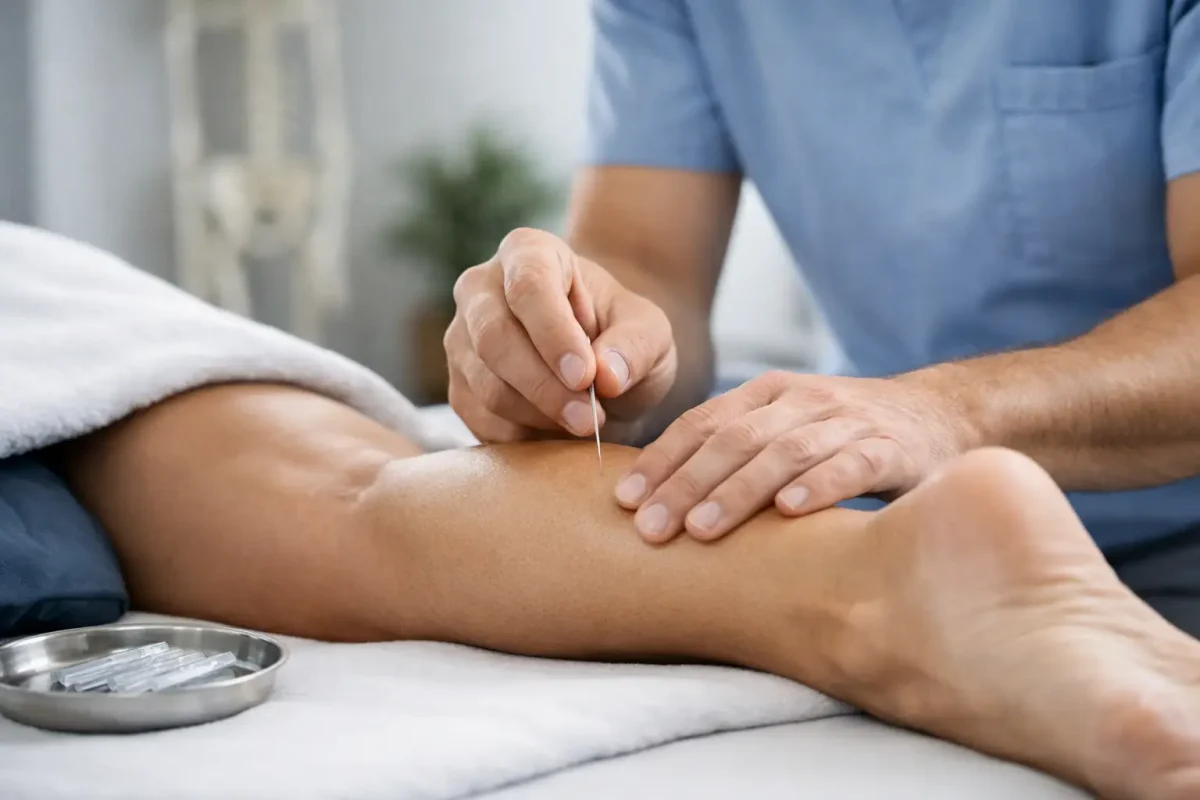
A calf that feels constantly tight can change far more than your training plan. It can make walking the dog uncomfortable, turn a full shift on your feet into a struggle, or leave you hesitant to push off when taking the stairs. Dry needling calf pain treatment may be considered when muscle tightness, trigger points or altered lower-limb loading are contributing to ongoing symptoms – but it is most useful when it is part of a clear rehabilitation plan, not a standalone quick fix.
The calf is a hardworking part of the lower limb. It helps control the ankle as you walk, run, jump and change direction, while also assisting blood flow back towards the heart. When it is sore, overworked or not functioning well, the effects can be felt in the foot, Achilles tendon, shin, knee and even the lower back.
What dry needling does for calf pain
Dry needling uses a very fine, single-use needle to target sensitive areas within a muscle, often called myofascial trigger points. These points may feel like a tender knot or tight band in the muscle and can contribute to local pain, stiffness, cramping or pain that travels into another area.
For calf symptoms, a podiatrist may assess muscles including the gastrocnemius, which is the larger superficial calf muscle, and the soleus, which sits deeper underneath it. Both muscles connect into the Achilles tendon and play a major role in ankle movement and load management.
The aim is not simply to needle a painful spot. Needling may help reduce muscle guarding, improve tolerance to movement and create a window in which stretching, strengthening and gait retraining can be more effective. Some people experience a brief twitch response during treatment, while others notice only a small prick or dull ache.
Results vary. Dry needling can be a helpful tool for selected muscle-related presentations, but it will not repair a torn muscle, reverse tendon degeneration or solve a footwear, training-load or biomechanics issue on its own. A thorough assessment identifies whether it is appropriate and what needs to happen alongside it.
Why calf tightness keeps returning
Calf pain is often blamed on tight muscles, yet the reason those muscles are working overtime can be more complex. A sudden increase in running distance, hill work, court sport or standing hours can overload the calf before it has had time to adapt. Returning to exercise after illness, injury or a break can do the same.
Foot and ankle mechanics also matter. Limited ankle range, a stiff big-toe joint, flat feet, high arches, worn shoes or a change in footwear can alter how force moves through the lower limb. For some patients, calf tension is linked to plantar heel pain or Achilles pain; for others, it develops because they are protecting a sore knee, ankle or foot.
A clinician will also consider muscle strength and control. A calf can feel tight because it is genuinely short and stiff, but it can also feel tight because it is fatigued, weak or compensating for poor hip and ankle control. This is why repeatedly stretching a sore calf without addressing the cause often produces only short-term relief.
Symptoms that may respond well
Dry needling may be considered when assessment suggests muscular trigger points or persistent tension are contributing to symptoms. This can include a cramping or knotted calf, tenderness when pressing into the muscle, stiffness after sitting or sleeping, and discomfort that builds during running or prolonged standing.
It may also be used within rehabilitation after a calf strain, once the acute stage has settled and the muscle is ready for carefully managed movement. In this setting, treatment is guided by your symptoms, tissue healing and functional goals – whether that is completing a workday comfortably, returning to weekend football or walking without fear of another flare-up.
When calf pain needs urgent assessment
Not all calf pain is muscular, and this distinction matters. Sudden swelling, warmth, redness, unexplained one-sided calf pain, shortness of breath, chest pain or coughing blood require urgent medical attention. These can be signs of a blood clot or another serious condition and should not be treated as ordinary muscle tightness.
A sharp snap, immediate bruising, marked weakness or an inability to push through the foot may indicate a significant calf or Achilles injury. Numbness, persistent pins and needles, fever, a wound or pain that is severe at rest also warrants prompt assessment.
If your symptoms began after a long flight, surgery, extended immobility, pregnancy or a recent medical illness, tell your clinician. Your health history, medications and circulation risk factors are important before any hands-on treatment is considered.
What happens in a dry needling calf pain appointment
A quality appointment begins well before a needle is used. Your podiatrist will ask how the pain started, where it is located, what makes it worse or better, and how it affects your work, sport and day-to-day mobility. They will examine the calf, Achilles tendon, ankle and foot, and may assess walking, running, balance, ankle range and calf strength.
At Comfort Feet Podiatry Group, this may include looking at the way your lower limb loads through movement, with 3D biomechanics analysis used where clinically appropriate. The goal is to identify the drivers of the problem rather than treating the calf in isolation.
If dry needling is suitable, the area is cleaned and the needle is placed into selected parts of the muscle. Treatment is typically brief. You may feel a local twitch, heaviness, ache or mild soreness afterwards, similar to the feeling following a demanding gym session.
Most people can walk out of the clinic and continue normal light activity. Your podiatrist may advise avoiding hard training, sprinting or heavy calf loading for the rest of the day, particularly after a strong treatment response. Gentle walking and normal hydration can be helpful. Temporary tenderness for 24 to 48 hours is common; worsening pain, unusual swelling or symptoms that concern you should be discussed with your practitioner.
The rehabilitation work that makes treatment last
Needling is most valuable when it helps you participate in the work that restores capacity. Your plan may include targeted calf strengthening, gradual single-leg heel raises, ankle mobility drills, balance work and a staged return to running or sport. The exact exercises depend on whether the issue involves the gastrocnemius, soleus, Achilles tendon, foot mechanics or another structure.
Load management is equally important. Rather than stopping all activity for weeks, many people benefit from adjusting distance, speed, hills, surfaces or training frequency while maintaining pain-appropriate movement. Workers may need practical strategies for long shifts, such as reviewing footwear and scheduling brief movement breaks where possible.
Supportive footwear or custom orthotics can sometimes reduce excessive strain and improve lower-limb alignment, but they are prescribed based on assessment rather than as a default answer. Other treatments, such as lower-limb sports massage, therapeutic ultrasound, shockwave therapy or neuromuscular rehabilitation, may be considered depending on the diagnosis.
Who should avoid or delay needling?
Dry needling is not right for everyone. It may need to be avoided or modified for people with certain bleeding disorders, needle phobia, active skin infections, compromised immune function, significant circulation concerns or particular medical conditions. Blood-thinning medication, pregnancy and previous adverse reactions should always be discussed before treatment.
Your informed consent matters. A skilled practitioner should explain why dry needling is being recommended, the expected benefit, possible side effects and alternatives. You can choose another approach if needling does not suit you.
Calf pain deserves more than a temporary release before the next busy week or training session. With an accurate diagnosis and a treatment plan that builds strength, confidence and better movement, you can give your lower legs a more reliable foundation for the life you want to lead. If calf discomfort is limiting your work, sport or everyday walking, book an assessment and take the first practical step towards moving comfortably again.