
A painful first step out of bed, a stubborn Achilles tendon or a calf that will not settle can quickly change how you work, train and move through your day. When comparing shockwave versus ultrasound therapy, the useful question is not which treatment is universally better. It is which approach suits your diagnosis, stage of recovery and movement goals.
Both treatments may be used in podiatry and lower-limb rehabilitation, but they work in very different ways. One uses acoustic pressure waves to stimulate a targeted healing response. The other uses high-frequency sound waves to deliver gentle deep-tissue treatment. A careful assessment helps determine whether either treatment is appropriate, and what else needs to be part of your recovery plan.
Shockwave versus ultrasound therapy: the key difference
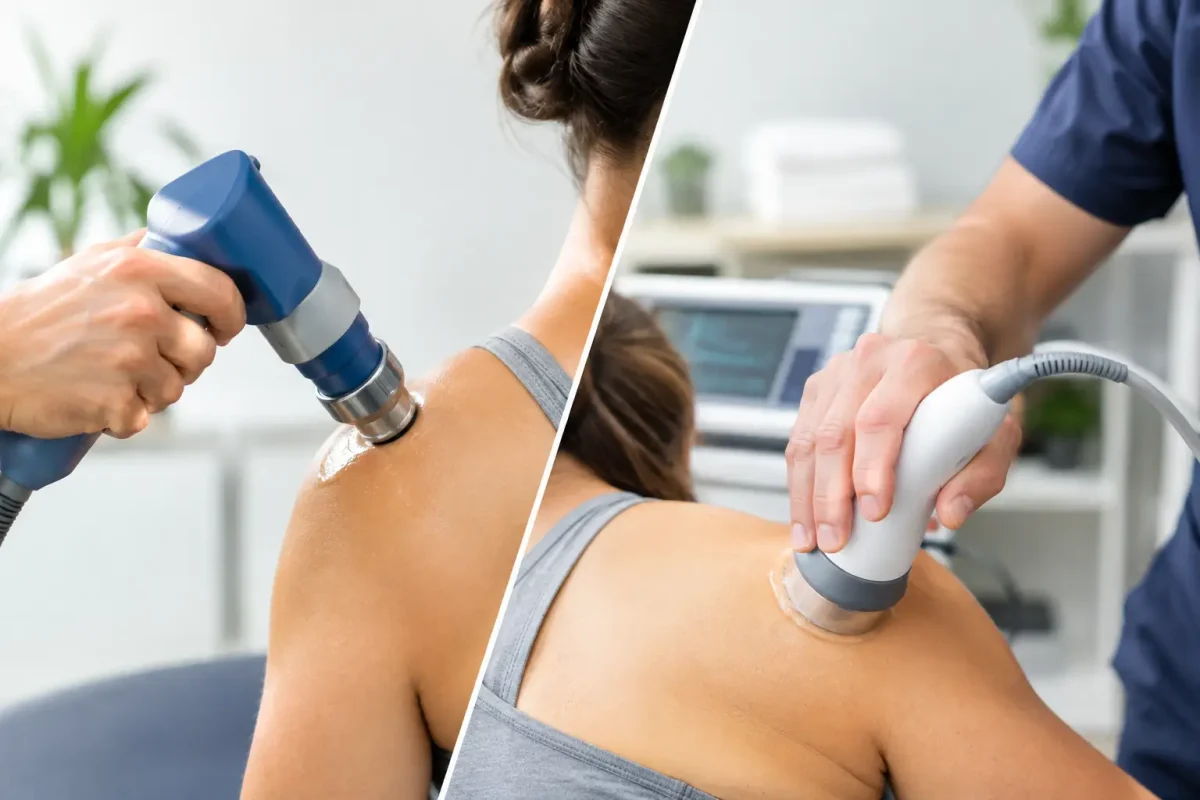
Shockwave therapy, often called extracorporeal shockwave therapy or ESWT, delivers controlled acoustic waves into painful or injured tissue. Despite the name, it is not an electric shock. The treatment is designed to stimulate the body’s response in a localised area, helping to address chronic tendon and fascia problems that have been slow to improve.
Therapeutic ultrasound uses sound waves at a much higher frequency than we can hear. A clinician applies gel to the skin and moves a treatment head over the affected area. Depending on the settings and condition, ultrasound may provide a gentle warming effect in deeper tissues or deliver non-thermal mechanical stimulation.
In practical terms, shockwave therapy is usually selected for persistent, well-defined tendon or fascia pain. Ultrasound is more often used as one component of treatment for soft-tissue irritation, muscle tightness or a condition where improving local tissue flexibility and comfort may assist rehabilitation. Neither is a replacement for a clear diagnosis, suitable loading plan or attention to footwear and biomechanics.
When shockwave therapy may be considered
Shockwave therapy is commonly considered for chronic conditions, particularly when a patient has followed sensible first-line care but pain remains. In a podiatry setting, this may include plantar fasciitis or plantar heel pain, Achilles tendinopathy, peroneal tendon pain, shin pain associated with tendon overload, and some cases of forefoot or calf soft-tissue pain.
It can be particularly valuable when pain has persisted for months and is limiting walking, work shifts, sport or family activities. For example, someone with plantar heel pain may have tried supportive shoes, activity modification, stretching and orthotic support, yet still be avoiding their morning walk because the first few steps are sharp. Shockwave may be included to support the recovery process while the underlying load and movement factors are addressed.
Treatment is delivered in short sessions, generally across a planned series. The area can feel uncomfortable during application, especially when the tissue is sensitive, but the intensity can be adjusted. Some people experience mild soreness afterwards for a day or two. This is usually manageable, but your clinician should explain what to expect and when to contact them.
Shockwave is not suitable for every person or every painful condition. Recent injury, certain circulation or nerve concerns, pregnancy in the treatment area, active infection, cancer at the site, some blood-clotting considerations and particular medications may affect suitability. Your podiatrist will screen for these factors before recommending treatment.
Why shockwave needs rehabilitation around it
Tendon and fascia pain rarely develops for one simple reason. It may be related to a sudden increase in running, long hours standing at work, poor recovery, changed footwear, reduced calf strength, altered foot mechanics or a combination of these factors.
That is why shockwave treatment should sit within a broader plan. This may include calf and foot strengthening, progressive tendon loading, hands-on therapy, mobility work, footwear advice, custom orthotics where indicated, and a gradual return to walking or sport. The goal is not merely to reduce pain for a week. It is to help the tissue tolerate the activities that matter to you.
When therapeutic ultrasound may be considered
Therapeutic ultrasound may be used for selected muscle, tendon and ligament concerns, particularly where tissue stiffness, local irritation or pain is making movement difficult. It is often a comfortable treatment and can be helpful before hands-on therapy, stretching or rehabilitation exercises.
For instance, ultrasound may be used around a tight calf muscle that is contributing to Achilles load, or alongside treatment for soft-tissue discomfort around the ankle and lower leg. The treatment itself is usually painless. You may feel gentle warmth, although not everyone feels a noticeable sensation.
The evidence for therapeutic ultrasound varies depending on the condition, settings and treatment goals. It is not a cure-all, and a session of ultrasound alone is unlikely to resolve a long-standing lower-limb problem. Its value is generally as an adjunct that may help make movement, exercise or manual treatment more tolerable at the right point in recovery.
Ultrasound is also not appropriate over all areas or for all patients. A podiatrist will avoid treatment over areas of reduced sensation where feedback is unreliable, suspected fractures, active infection, certain growth areas in children, or where other clinical precautions apply. A proper examination matters because pain that appears muscular may sometimes be referred from the back, related to a stress injury or driven by joint mechanics.
Which treatment is better for heel and tendon pain?
For persistent plantar heel pain and some chronic tendon conditions, shockwave therapy often has a clearer role than therapeutic ultrasound. This does not mean every case needs shockwave. Many people recover well with changes to load, footwear, targeted exercises and orthotic support.
The decision depends on how long you have had symptoms, the severity of pain, your activity level, medical history and what has already been tried. A runner with six months of Achilles pain has different needs from a retail worker with acute calf tightness after an unusually busy week. The first may benefit from a structured tendon rehabilitation program with shockwave considered as an adjunct. The second may need temporary load modification, soft-tissue care and a plan to restore calf capacity.
Pain location also matters. Heel pain is not always plantar fasciitis. It could involve the heel fat pad, a nerve irritation, a stress response, a joint issue or referred pain. Treating the wrong structure with any modality wastes valuable recovery time.
What a podiatry assessment should include
Before recommending shockwave or ultrasound, a clinician should look beyond the tender spot. At Comfort Feet Podiatry Group, assessment may include your history, pain pattern, footwear, work demands, training load, joint range of motion, muscle strength and walking or running mechanics. Where needed, 3D biomechanics analysis can provide further insight into how your feet and lower limbs are working under load.
Your treatment plan may include one modality, neither modality, or a combination of treatments at different stages. A person recovering from heel pain might need shockwave, calf strengthening and footwear guidance. Someone with a recently irritated ankle may be better served by protection, mobility work, neuromuscular rehabilitation and a progressive return-to-activity plan.
Be wary of any provider who promises that one machine will fix every painful foot or leg. Good lower-limb care is specific. It identifies the tissue involved, the reason it is being overloaded and the practical changes required to keep you moving with confidence.
Getting the most from treatment
Your actions between appointments influence your result. Follow the loading or exercise advice provided, even if symptoms start to settle. Avoid suddenly returning to long runs, court sport or full work duties simply because one treatment has reduced pain. Tendons and fascia often need time to build capacity.
Supportive footwear can also make a meaningful difference, particularly for heel and forefoot pain. Shoes should match your activity and provide stable, comfortable support rather than relying on a fashionable label. If foot mechanics are contributing to repeat overload, custom orthotics may be considered as part of a broader rehabilitation strategy.
If lower-limb pain is stopping you from walking comfortably, playing sport or getting through a shift, do not wait for it to become your new normal. A targeted assessment can clarify whether shockwave, ultrasound or a different treatment pathway will give you the strongest chance of returning to a pain-free, active lifestyle.