
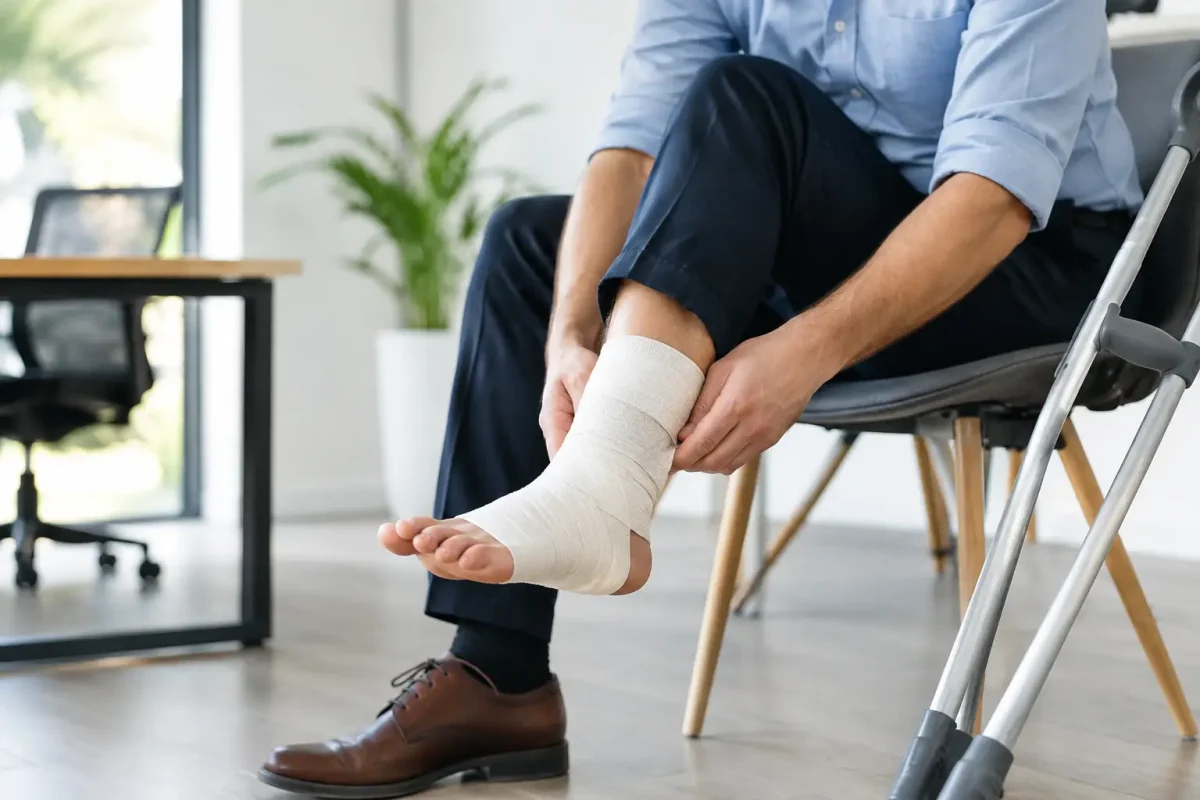
A dropped tool, a misstep from a ladder, a long shift on concrete or one awkward twist can change far more than the next day at work. Workplace foot injury outcomes can affect how safely you walk, how long you can stand, your confidence returning to duties and the comfort you have outside work with family, sport and everyday life.
The best recovery is not always the fastest-looking one. It is the one that restores strength, movement and load tolerance in a way that suits the demands of your role. For a warehouse worker, that may mean repeated lifting and kilometres of walking. For a nurse, chef, tradie or retail worker, it may mean being on your feet for most of the day. A thorough podiatry assessment helps turn a painful injury into a clear, practical plan for moving forward.
Workplace foot injury outcomes are shaped early
The first few days after a workplace injury often influence the weeks that follow. Some injuries are obvious, such as a fracture, deep wound or crush injury. Others can be easier to dismiss: a swollen ankle after stepping off a kerb, forefoot pain after kneeling or a heel that becomes increasingly sore after a demanding shift.
Continuing to load an injured foot without assessment can turn a manageable problem into a longer-term limitation. A minor ankle sprain may leave reduced balance and ankle control. A bruised forefoot may alter your gait, shifting pressure into the knee, hip or opposite foot. Persistent limping is not simply an inconvenience – it can be a sign that the body is compensating around pain.
Early care does not necessarily mean complete rest for every injury. It means identifying what has been damaged, protecting it appropriately and choosing the right amount of activity for that stage of healing. The balance depends on the injury, your work duties, your footwear and your general health.
The outcome is more than whether pain settles
Pain reduction matters, but it is only one measure of recovery. Strong workplace foot injury outcomes include being able to complete work tasks safely, manage a full day without a significant flare-up and return to normal activities without relying on compensation or avoidance.
Tissue healing and injury type
A fractured bone, tendon injury, plantar plate strain, severe ankle sprain or crush injury each follows a different recovery path. Bone healing may require immobilisation and medical imaging. Tendons need carefully progressed loading rather than being pushed too hard too soon. Soft tissue injuries can feel better before they are ready for repetitive standing, climbing or carrying.
Nerve involvement can also change the picture. Tingling, numbness, burning pain or unusual sensitivity after an injury should be assessed, particularly if symptoms are spreading or affecting your ability to feel the ground properly.
The demands of your job
A return to desk-based work and a return to physical work are not the same milestone. Work that involves ladders, uneven ground, driving, operating machinery, carrying loads or rapid direction changes places higher demands on the foot and ankle.
A worker may walk comfortably around home but still struggle with eight hours in safety boots. This is why recovery planning should consider the actual job, not just a brief test in the clinic. Suitable duties, altered hours or temporary restrictions may be helpful while function builds.
Footwear and biomechanics
Work boots and safety shoes protect the foot, but they can also affect symptoms when they are poorly fitted, overly worn or unsuited to an existing foot shape. Limited toe room can aggravate nail trauma and forefoot pain. A stiff boot may be useful for one injury and uncomfortable for another. Slippery, unsupportive or worn-out soles can increase the chance of another incident.
Foot posture, ankle range of motion, calf strength and walking mechanics can all influence how the injury settles. A 3D biomechanics analysis may help identify movement patterns that are placing extra pressure on healing tissue, particularly when pain keeps returning after shifts.
Assessment should look beyond the painful spot
The point of injury deserves close attention, but the whole lower limb matters. When the foot is painful, people often shorten their stride, roll to the outside of the foot or avoid pushing through the toes. Over time, this may contribute to calf tightness, shin pain, knee discomfort or hip symptoms.
A podiatry assessment can include a detailed history of how the injury occurred, observation of swelling and bruising, joint and muscle testing, footwear review, gait assessment and discussion of workplace demands. Where needed, referral for imaging or medical assessment may be appropriate to rule out a fracture, serious tendon injury or other condition requiring urgent care.
For workers using a WorkSafe Victoria pathway, clear assessment findings and functional goals can help guide a coordinated recovery plan. Treatment decisions should be based on clinical need and the requirements of your role, rather than an arbitrary timeline.
Treatment and rehabilitation that support return to work
Treatment depends on the diagnosis. Some injuries respond well to temporary offloading, taping, padding, footwear changes and targeted exercises. Others need a period of immobilisation, specialist medical management or a more gradual rehabilitation program.
Hands-on care may be used to address restricted joints, soft tissue tension and painful movement patterns where clinically appropriate. Therapeutic ultrasound, dry needling, lower-limb sports massage or shockwave therapy may also form part of care for selected conditions. These treatments are not shortcuts, and they are not suitable for every injury. Their value comes from being used as part of a broader plan that includes protection, progressive loading and functional rehabilitation.
Neuromuscular rehabilitation is particularly valuable after ankle injuries or prolonged time off feet. It targets balance, coordination, calf strength and confidence with tasks such as stepping, climbing and changing direction. This matters because a foot that is no longer painful is not automatically ready for a busy workplace.
Custom orthotics can be considered when foot mechanics, pressure distribution or footwear limitations are contributing to ongoing symptoms. They are not required for every worker, but can be useful where targeted support helps reduce strain during long periods of standing or walking.
Building a safer return to duties
Returning too early can prolong symptoms. Waiting until you feel completely deconditioned can make return harder. The right approach is usually a graded progression based on your role and recovery markers.
A practical plan may begin with shorter shifts, seated or lighter duties, reduced walking distances or limits on climbing and heavy carrying. As pain, swelling, strength and balance improve, workload can increase. Keeping track of how the foot feels during the shift, later that evening and the following morning provides useful feedback. A mild, short-lived response may be manageable; escalating pain or swelling is a sign the current load may be too high.
It also helps to prepare the basics before returning: supportive and correctly fitted work footwear, appropriate socks, any prescribed brace or orthotic, and enough time for simple exercises or recovery strategies. If your job requires specific safety footwear, changes should continue to meet workplace safety requirements.
When prompt assessment is needed
Seek urgent medical attention for a visibly deformed foot or ankle, an open wound, uncontrolled bleeding, severe swelling, a cold or pale foot, loss of sensation, inability to bear weight after significant trauma, or worsening pain that feels out of proportion to the injury. People with diabetes, reduced circulation or reduced sensation should also have foot injuries checked promptly, even when the wound appears small.
Less urgent symptoms still deserve assessment if they are not settling: persistent heel or forefoot pain, repeated ankle giving-way, swelling that returns after every shift, numbness, pain under a toenail after trauma, or difficulty fitting into normal footwear. These are common reasons people delay care, then find that work becomes harder week by week.
At Comfort Feet Podiatry Group, the focus is on identifying what is limiting your recovery and building the capacity you need for work and life beyond it. A well-managed foot injury should not keep shrinking your world. With timely assessment, suitable treatment and a return-to-work plan that respects your actual duties, you can work towards steadier movement, greater confidence and a more active life.