
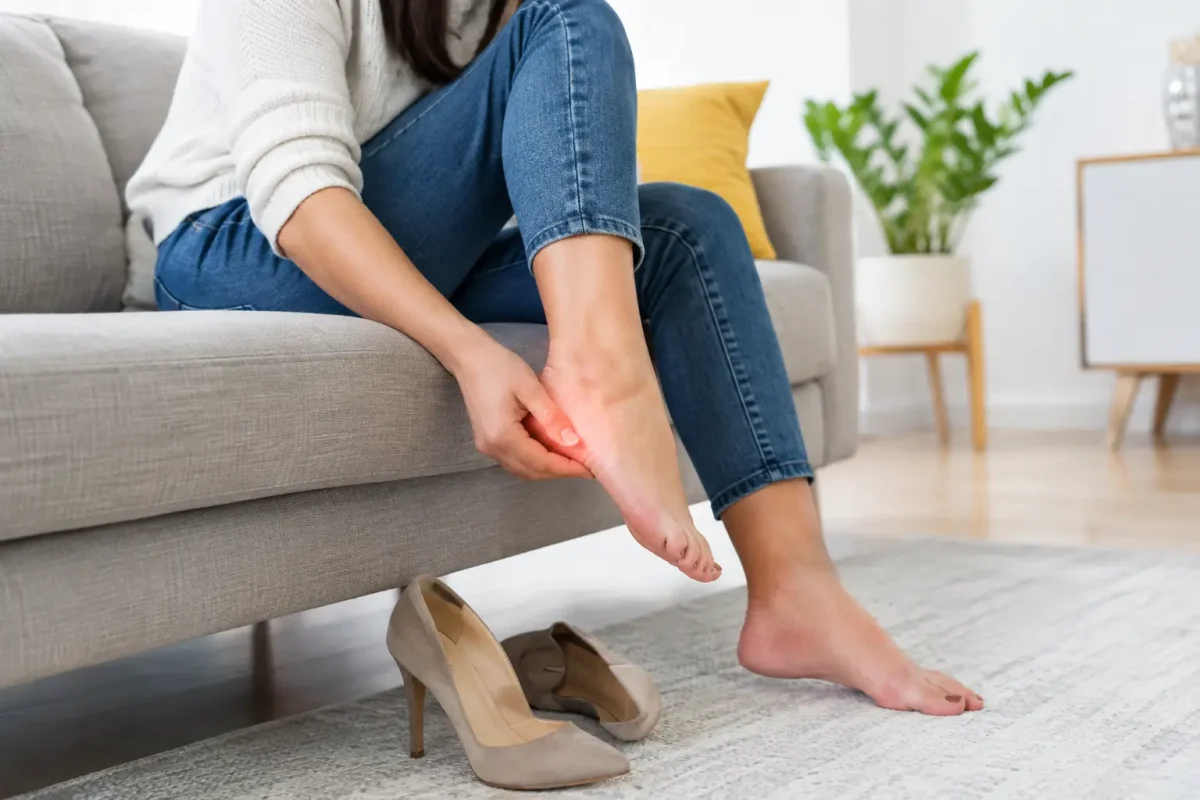
The first steps out of bed can be the giveaway. If you are asking, “why do my heels hurt?”, a sharp jab under the heel that eases after a few minutes is a common pattern – but it is not something you simply need to put up with. Heel pain can affect your walk to the train, a shift spent standing, your run around the Tan, and the energy you have left for family life.
The heel is where your body repeatedly absorbs force. Pain may come from the tissues under the foot, the Achilles tendon at the back of the heel, the heel bone itself, or the way your feet and lower limbs are moving. Getting the right diagnosis matters because the treatment that helps one type of heel pain may aggravate another.
Why do my heels hurt? Start with the pain location
Where you feel pain, when it appears and what makes it worse offer useful clues. Pain underneath the heel is different from pain at the back of the heel, and a gradual ache after long days is different from sudden pain after one awkward landing.
A podiatry assessment looks beyond the painful spot. Your footwear, training changes, work demands, ankle mobility, calf strength, foot posture and walking or running pattern can all influence the load passing through the heel. This broader view helps identify why pain has developed and what needs to change for it to settle.
Plantar fasciitis and plantar heel pain
Plantar heel pain is one of the most frequent reasons for sore heels. It involves irritation of the plantar fascia, the strong band of connective tissue running from the heel towards the toes. It is often called plantar fasciitis, although not every case involves ongoing inflammation.
Typical symptoms include a sharp or bruised feeling under the inside of the heel with first steps in the morning, after sitting, or at the beginning of a walk. The discomfort may warm up as you move, then return after a long day on your feet.
It can develop when the tissue is asked to cope with more load than it can currently manage. A sudden increase in walking, running or court sport can contribute, as can prolonged standing at work. Tight calves, reduced ankle movement, flat feet, very high arches and unsupportive or worn-out shoes may also play a part.
Achilles tendon pain
Pain at the back of the heel may involve the Achilles tendon, which connects the calf muscles to the heel bone. Some people notice tenderness higher up in the tendon; others feel it right where the tendon attaches to the heel.
Achilles pain commonly builds with hills, stairs, sprinting, jumping or a return to exercise after a break. Stiffness in the morning is common. A prominent bony area at the rear of the heel can also rub against firm shoe counters, making certain shoes particularly uncomfortable.
This condition needs a measured approach. Complete rest for long periods can reduce capacity, while pushing through severe pain can worsen the problem. Progressive strengthening and sensible load management are usually more useful than either extreme.
Heel bruising, stress injury and nerve irritation
A direct impact can bruise the heel pad, producing a deep, tender feeling that is worse on hard floors. Reduced cushioning in the heel pad, which can occur with age, may create similar symptoms during prolonged standing or walking.
A stress reaction or stress fracture in the heel bone is less common but requires prompt attention. Pain often becomes more persistent, worsens with weight-bearing and may follow a sharp rise in activity, especially running or marching. There may be swelling or pain when the sides of the heel are gently compressed.
Burning, tingling or electric-shock sensations are not classic plantar fasciitis symptoms. They may indicate irritation of a nerve around the ankle or foot, or sometimes a problem further up the leg or lower back. This is another reason not to self-diagnose every sore heel as plantar fasciitis.
Factors that can keep heel pain going
Heel pain is rarely explained by one factor alone. The issue may be a training change combined with a stiff ankle, tired calf muscles and shoes that no longer provide enough support. For someone working long shifts on concrete, standing load may be the main driver. For a recreational athlete, it may be repeated acceleration, hills or a rapid return to sport.
Body weight can increase force through the feet, but it should never be treated as the whole explanation. Mobility, strength, footwear, recovery, medical history and daily demands all deserve consideration. A well-fitted shoe can help, but footwear alone cannot correct every cause of heel pain.
Children and teenagers can develop heel pain too. In active young people, pain at the rear of the heel may be linked with Sever’s disease, an irritation around the growth plate. Young athletes should be assessed rather than encouraged to play through persistent heel pain.
What you can do for sore heels now
The aim is to reduce aggravating load without stopping all movement unnecessarily. Avoid the activity that repeatedly causes sharp pain for the moment, particularly running, jumping or long walks on hard surfaces. Choose lower-impact exercise, such as swimming or cycling, if it is comfortable and suitable for you.
Wear supportive shoes with adequate cushioning and a stable heel. Avoid spending long periods barefoot on tiled or concrete floors, and be cautious with very flat thongs, slippers or worn runners. If a shoe is twisted, flattened or unevenly worn, it may no longer be helping your feet.
Gentle calf and plantar fascia stretches may ease stiffness, provided they do not cause sharp pain. Rolling the sole of the foot lightly over a chilled water bottle can provide temporary relief for some people, although aggressive rolling directly into a highly tender heel can irritate it further. Ice may help after activity, but it is a symptom-management tool rather than a cure.
Over-the-counter pain relief may be appropriate for some adults, but check with a pharmacist or doctor if you have other health conditions, take regular medication, are pregnant or have been advised to avoid anti-inflammatory medicines. Do not use pain relief to mask pain and continue an activity that is clearly making symptoms worse.
When heel pain needs professional assessment
Book an assessment if heel pain is lasting more than one to two weeks, keeps returning, affects your work or sport, or changes the way you walk. Earlier care is especially worthwhile when you have a competition, physically demanding job or mobility goal you need to return to safely.
Seek urgent medical care if you cannot bear weight, felt a pop in the back of the ankle, have marked swelling, redness or heat, develop a fever, or have an open wound. People with diabetes, poor circulation, neuropathy or immune system conditions should have new foot pain assessed promptly.
At Comfort Feet Podiatry Group, treatment begins with understanding your pain pattern and lower-limb function. A clinical examination may include joint and muscle testing, footwear assessment and 3D biomechanics analysis where appropriate. If a stress injury, tendon tear or another condition needs imaging or medical input, the right referral pathway can be arranged.
Treatment should match the cause
A tailored plan may combine hands-on treatment, education about activity modification, mobility work, calf and foot strengthening, and a structured return-to-walking or sport plan. Depending on the diagnosis, therapeutic ultrasound, shockwave therapy, dry needling, lower-limb sports massage or neuromuscular rehabilitation may be considered. These options are not interchangeable, and they work best when used for the right condition at the right stage of recovery.
Custom orthotics can be valuable when foot posture or movement is contributing to repeated overload. They are designed to improve how force is managed through the foot rather than simply cushioning the painful area. Some people benefit from an orthotic device; others may do well with footwear changes and rehabilitation alone. The decision should follow a proper assessment, not a one-size-fits-all approach.
Heel pain often improves, but the timeline depends on the cause, how long symptoms have been present and whether the factors driving the overload are addressed. Small, consistent changes tend to beat quick fixes. If your heel is stopping you from walking comfortably, working confidently or enjoying the activity you value, an early podiatry assessment can give you a clearer path back to pain-free movement.