
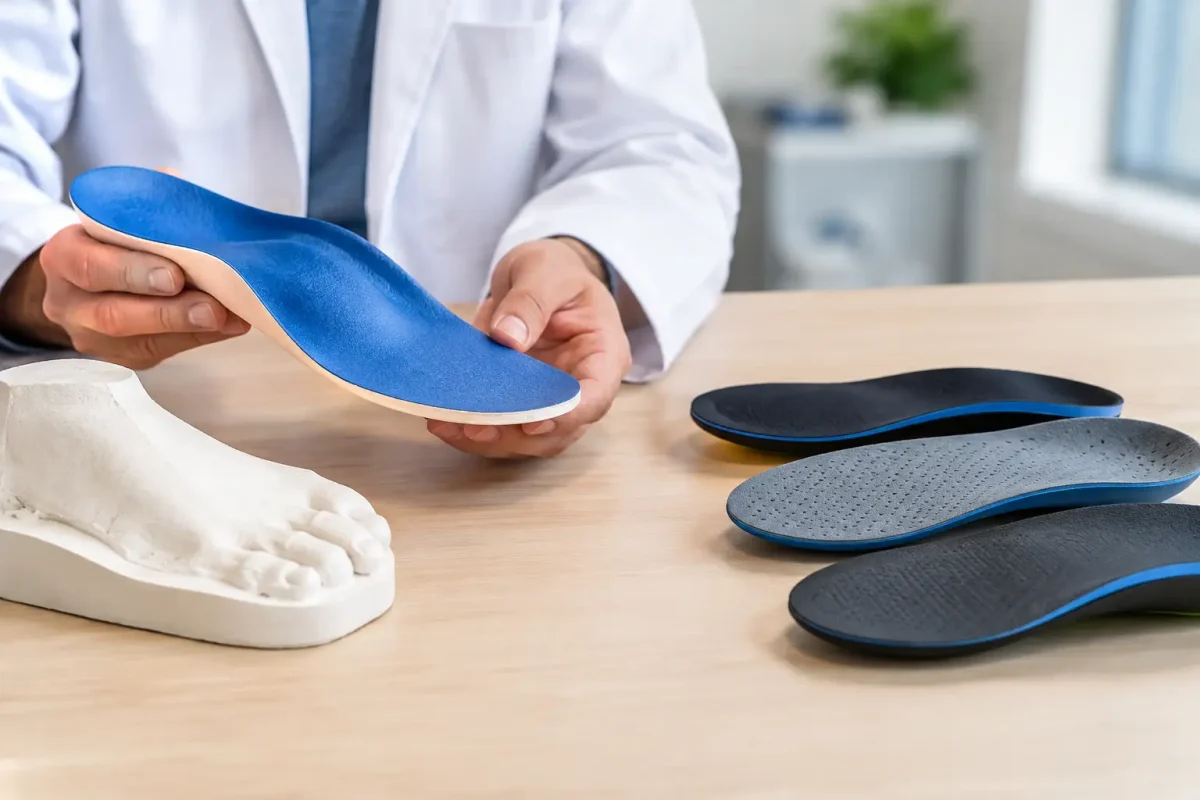
A pair of inserts can look deceptively simple, yet the difference between custom versus prefabricated orthotics can affect how comfortably you walk, work, train and recover. The best choice is not always the most expensive one. It depends on your symptoms, foot shape, activity demands, footwear and the way your feet, ankles, knees and hips work together.
For someone with mild foot fatigue after long shifts, a well-chosen prefabricated device may provide useful support. For persistent heel pain, recurrent sports injuries, marked flat feet or a complex lower-limb condition, a custom orthotic may be the more appropriate part of a broader treatment plan. A podiatry assessment helps move the decision beyond trial and error.
What orthotics are designed to do
Orthotics are shoe inserts designed to improve support, cushioning, pressure distribution or foot alignment. They can be used to reduce strain on sore tissues, improve comfort during activity and help guide movement where the foot is rolling in or out excessively.
They are not a one-size-fits-all cure. Orthotics work best when they address a clear clinical reason for pain or reduced function. Depending on the diagnosis, your podiatrist may also recommend footwear changes, strength work, stretching, load management, rehabilitation or hands-on treatment.
For example, plantar fasciitis may involve more than a sore heel. Calf tightness, training load, standing hours, footwear and foot mechanics can all contribute. An orthotic can help reduce stress through the plantar fascia, but long-term relief often requires attention to the factors that created the overload.
Prefabricated orthotics: practical support off the shelf
Prefabricated orthotics are made in standard shapes and sizes. They are available through clinics, pharmacies and shoe retailers, ranging from soft cushioning inserts to firmer devices with structured arch support and heel control.
A quality prefabricated orthotic can be a sensible first step for people with mild or recent symptoms. It may suit general arch discomfort, tired feet, temporary increases in standing or walking, or athletes who need extra cushioning in a particular shoe. The main advantage is accessibility. They are generally less costly than custom devices and can often be fitted or modified promptly.
The term “off the shelf” does not mean every prefabricated orthotic is the same. Material density, arch profile, heel cup depth, length and shoe compatibility matter. A device that feels comfortable in the clinic may rub, slide or take up too much space in a work boot, school shoe or football boot.
Prefabricated orthotics also have limits. Their shape is predetermined, so they cannot fully account for significant differences between your left and right foot, unusual pressure areas or a highly specific movement pattern. If symptoms persist despite a suitable trial, continuing to buy different inserts can become more expensive and frustrating than getting a proper assessment.
When a prefabricated option may be enough
A prefabricated orthotic may be appropriate when pain is mild, your foot shape is relatively typical and your goals are straightforward. It can also be useful while you are waiting for a more detailed assessment, recovering from a short-term flare-up, or testing whether additional support improves your comfort.
The key is fit. Your toes should not feel crowded, your heel should sit securely, and the arch support should not create sharp pressure. A short adjustment period can be normal, particularly with firmer devices, but increasing pain, numbness or rubbing is a sign to stop and seek advice.
Custom versus prefabricated orthotics: the clinical difference
Custom orthotics are prescribed after a podiatrist assesses your feet and lower-limb movement. They are made from measurements, impressions or digital scans and designed around your diagnosis, footwear and functional needs.
At Comfort Feet Podiatry Group, this process can include 3D biomechanics analysis to examine how you stand, walk or run. Your podiatrist considers more than an arch shape. They assess joint movement, muscle strength, calf flexibility, pressure points, previous injuries, leg alignment and the demands of your work or sport.
The result is not simply an insert moulded to your foot. It is a device with chosen contours, materials and modifications intended to change load or support a particular area. One person may need firmer control under the rearfoot; another may need cushioning beneath the forefoot, space for a prominent joint, or support that fits safely inside a narrow dress shoe.
Custom orthotics are usually more expensive and take longer to produce. They also require review. Your symptoms, footwear, body weight, activity level and condition can change over time, and an orthotic should be adjusted if it is no longer doing its job. Custom does not automatically mean better for every person, but it offers precision where precision is clinically valuable.
Situations where custom orthotics are often worth considering
Custom devices may be recommended for ongoing heel pain, recurrent plantar fasciitis, shin pain, Achilles tendon issues, Morton’s neuroma, significant flat feet or high arches, painful calluses caused by pressure, arthritis, diabetes-related foot concerns, or persistent ankle, knee and lower-limb symptoms linked to foot mechanics.
They can also benefit runners and field-sport athletes whose pain appears at a particular phase of gait or after a defined training volume. In these cases, the objective is not to force a “perfect” foot position. It is to reduce harmful load while preserving comfortable, efficient movement.
Children require particular care. Growing feet are not miniature adult feet, and many children with flat-looking feet do not need orthotics. A paediatric podiatry assessment is useful when there is pain, frequent tripping, unusual fatigue, limited participation in sport or play, or a noticeable difference between sides.
The right device must match the shoe
Even an excellent orthotic cannot work properly in unsuitable footwear. A supportive walking shoe with a removable insole usually accommodates an orthotic more easily than a very flat, flexible shoe. Work boots, runners, school shoes, netball shoes and safety footwear all have different requirements.
Bring your most-worn shoes to your appointment if possible. This gives your podiatrist a realistic view of the space available, sole wear patterns and the conditions your feet face each week. Someone who spends ten hours on concrete needs a different solution from someone preparing for a half-marathon.
Orthotics should also be introduced gradually. Start with shorter periods, then build wear time as comfort allows. Your podiatrist will give specific guidance, particularly if you are managing a tendon injury, diabetic foot risk or significant pain.
Pain relief should not stop at the insert
If pain is affecting your job, sport, sleep or confidence to get out and about, do not rely on an insert alone to solve it. Persistent pain can change how you walk, which may place extra stress on the ankle, calf, knee or hip.
A thorough podiatry assessment identifies whether orthotics are appropriate and what else may help. Treatment may include targeted rehabilitation, calf and foot strengthening, footwear advice, sports massage, dry needling, therapeutic ultrasound or shockwave therapy where clinically indicated. The goal is not just to make shoes feel better. It is to help you return to walking, working, training and family life with greater confidence.
How to make a confident choice
Start with the problem you are trying to solve rather than the product you have seen online. Mild, short-lived discomfort may respond well to a quality prefabricated orthotic fitted to the right shoe. Persistent, recurring or activity-limiting symptoms deserve a more detailed assessment and may justify a custom solution.
If you have tried inserts without improvement, do not assume you simply need a firmer pair. The issue may be the diagnosis, fit, footwear, load on the tissue or a problem higher up the leg. Getting clear answers early can prevent a manageable problem from becoming a longer interruption to the life you enjoy.
Your feet carry you through every shift, school run, training session and weekend plan. When they hurt, choosing support based on your own movement and goals can be the first practical step towards feeling comfortable on them again.