
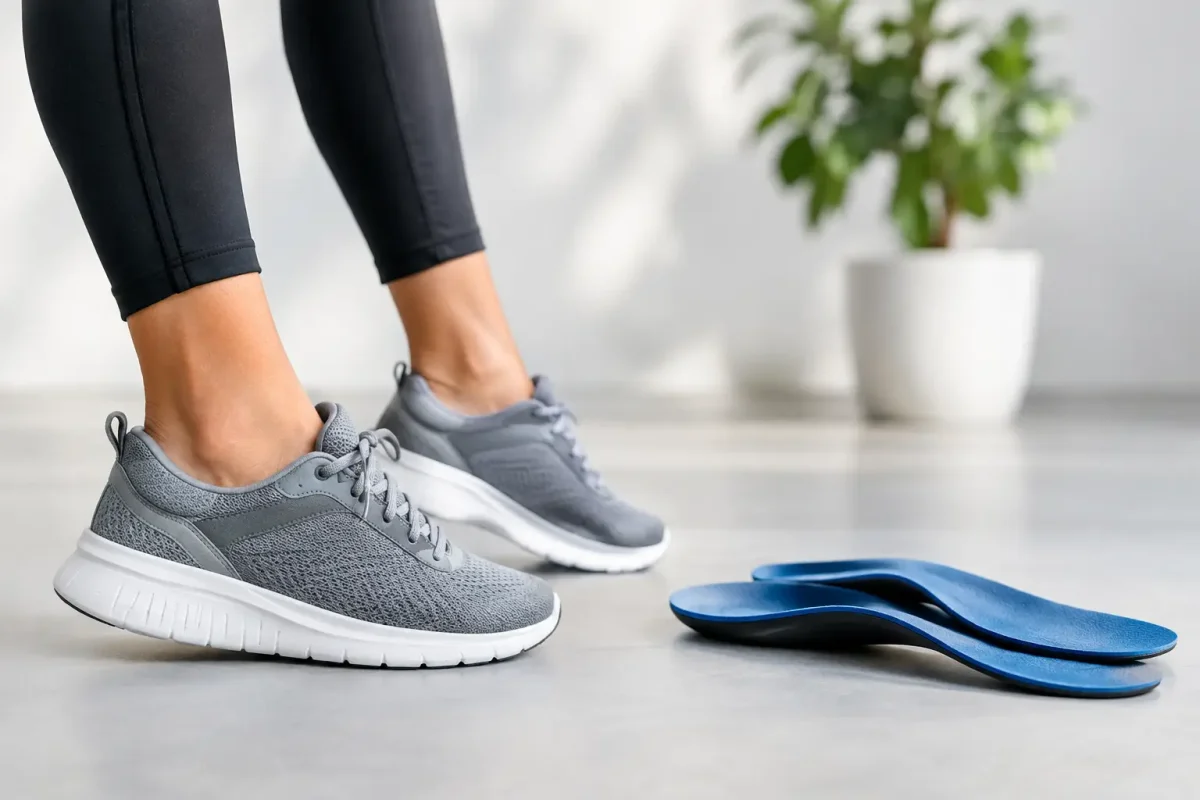
A shoe can feel soft in the shop and still leave your feet, calves or knees aching by the end of a Melbourne workday. For people with flat feet, the best shoes for flat feet are not simply the pair with the highest arch or the most cushioning. They are the pair that supports how your feet and legs move, fits your foot shape properly, and suits what you need to do in them.
Flat feet are common, and not everyone with low arches has pain. But when the foot rolls in excessively, or pronates, it can place extra load on the plantar fascia, tendons, ankles, shins, knees and hips. The right footwear can reduce that load and make standing, walking, running or keeping up with the family feel far more comfortable.
Why flat feet need more than a soft shoe
A flat foot may be flexible, with an arch that appears when you sit or stand on tiptoes, or more rigid, with little visible arch at any time. Some people have had flat feet since childhood. Others notice their arches lowering later in life, after injury, pregnancy, changes in activity, weight changes or tendon problems.
What matters clinically is not just the height of your arch. We look at how your foot moves, how stable your ankle and knee are, where you feel symptoms, and the demands of your day. A hospitality worker on hard floors needs something different from a netball player, while a child with tired legs needs a different approach again.
Very soft, flexible shoes can feel pleasant initially, but they may allow an already mobile foot to collapse further through the midfoot. Conversely, an aggressively shaped arch support can feel intrusive or painful if it does not match your foot. Effective footwear is supportive without forcing your foot into an unnatural position.
Best shoes for flat feet: the features that matter
Rather than relying on a label such as “orthopaedic” or “arch support”, assess the whole shoe. Quality construction and a good fit are more useful than marketing claims.
A stable heel counter
The heel counter is the firm cup around the back of the shoe. Press it between your fingers. It should resist being squashed easily and help hold your heel in a stable position. This is particularly helpful if your heels roll inward, your ankles feel wobbly, or you wear through the inside edge of your shoes.
Support through the middle of the shoe
Hold the shoe at the heel and forefoot, then try to twist it. A supportive walking or running shoe should have some resistance through the midfoot rather than twisting like a towel. It should bend mainly where your toes bend, not fold in half through the arch.
This does not mean every shoe needs to be stiff. A shoe for gym work, for example, may need a different balance of flexibility and stability. The goal is controlled movement where your foot needs it most.
Enough depth and a removable insole
Many people with flat feet benefit from an insole or custom orthotic, but it must sit inside the shoe without crowding the toes or lifting the heel out of the back. Look for a shoe with adequate depth, a secure heel, and a removable liner. If you remove the original insole to make room for an orthotic, the shoe should still feel stable around the foot.
A broad, comfortable toe box
Your toes need room to spread during walking and running. A narrow toe box can lead to pressure, blisters, corns, bunion irritation or numbness, even if the shoe has excellent arch support. Your forefoot should not feel squeezed, and there should be roughly a thumb’s width between your longest toe and the end of the shoe.
Cushioning suited to your activity
Cushioning helps reduce impact, particularly on hard surfaces, but more is not always better. Highly cushioned shoes can feel less stable for some people, especially if the sole is narrow or the heel is elevated. For long shifts on your feet, a stable cushioned walking shoe may be ideal. For strength training, a lower and firmer platform often gives better control.
Secure fastening and the right size
Laces, straps or other adjustable fastenings keep the heel positioned at the back of the shoe. Slip-on styles can be convenient, but they often make the toes grip to stop the shoe sliding off. Try shoes later in the day when feet are slightly larger, wearing the socks you normally use. Both feet should be measured, as one foot is often longer or wider than the other.
Choose shoes for the life you actually lead
The best shoe is activity-specific. One pair is rarely perfect for every situation.
For work, prioritise a supportive enclosed shoe with a firm heel counter, stable sole and enough cushioning for concrete or tiled floors. If safety footwear is required, check that the boot has enough width and depth for your foot shape and any prescribed orthotic. A heavier work boot may be necessary for protection, but it should not cause heel slippage or squeeze the forefoot.
For walking, choose a shoe that feels stable from heel strike through to push-off. A rocker-style sole can sometimes reduce pressure through the forefoot and make walking more comfortable, but it may not suit everyone’s balance or ankle control. Take a few laps of the shop rather than judging the shoe from a few steps in front of the mirror.
For running and court sports, the shoe should match your sport as well as your foot mechanics. Running shoes are designed for forward motion, while court shoes need greater side-to-side stability. Wearing a soft running shoe for tennis, netball or gym classes can increase the risk of rolling an ankle. If you are returning to sport after plantar heel pain, shin splints or an ankle injury, footwear should form part of a broader rehabilitation plan, not the whole solution.
For school shoes and children’s sneakers, avoid choosing solely by arch height. Children’s feet develop at different rates, and flat-looking feet can be normal in younger children. Signs worth assessing include pain, frequent tripping, early fatigue, avoiding activity, uneven shoe wear, or complaints of leg pain. A secure shoe with a stable heel and adequate toe room is generally more useful than an overly hard shoe.
When an orthotic can help
Over-the-counter arch supports can provide useful comfort for mild symptoms, particularly when paired with a well-fitting stable shoe. They are not automatically the right answer, however. A generic device may be too high, too short, too firm, or positioned incorrectly for your foot.
Custom orthotics are designed after a detailed assessment of your foot posture, walking or running pattern, joint movement, strength, footwear and symptoms. They can help redistribute pressure, support the foot more effectively and reduce strain on structures such as the plantar fascia or posterior tibial tendon. They are often valuable for persistent heel pain, recurrent injury, marked overpronation, arthritis, diabetes-related pressure concerns, or demanding work and sport requirements.
At Comfort Feet Podiatry Group, 3D biomechanics analysis can help identify the movement patterns behind your symptoms, so footwear and orthotic recommendations are based on your body rather than a one-size-fits-all template.
Signs your current shoes are working against you
Shoes do not need to be visibly destroyed to be part of the problem. Pay attention if you develop aching arches, heel pain, shin soreness, knee discomfort, numb toes or blisters after wearing a particular pair. Inspect the outsole too. More wear along the inside edge, a collapsed heel, or a sole that bends and twists too easily can signal that the shoe is no longer giving you enough support.
Replace shoes when the midsole feels flat, the tread is worn, or the upper no longer holds your foot securely. Mileage matters for runners, but time matters too: footwear used every day for work can lose its structure long before it looks worn out.
Don’t ignore new or worsening flat-foot pain
Pain on the inside of the ankle, swelling, sudden loss of arch height, or difficulty rising onto one foot can indicate a tendon issue that needs prompt assessment. Seek professional advice sooner if pain persists beyond a few weeks, changes how you walk, interrupts work or sport, or occurs alongside diabetes, poor circulation or altered sensation.
The right shoe can be a powerful first step, but lasting comfort comes from understanding why your feet are under strain. When footwear, foot strength, mobility and lower-limb rehabilitation work together, you have a better chance of moving with confidence – from the morning commute to the activities that make life enjoyable.