
A run that ends early because of heel pain, aching feet after a warehouse shift, or a child who avoids sport can all have one thing in common: the way the feet and lower limbs are moving under load. A foot biomechanics assessment looks beyond the sore spot to identify movement patterns that may be placing extra strain on your feet, ankles, knees or calves.
For many people, pain is not caused by one dramatic incident. It builds gradually. Your footwear, work demands, training volume, previous injuries, foot shape and muscle control can all influence how you walk, run, stand and change direction. Understanding that pattern gives your podiatrist a clearer starting point for treatment that supports lasting movement, not just short-term relief.
What is a foot biomechanics assessment?
A foot biomechanics assessment is a detailed clinical examination of how your feet and legs function. It considers both structure and movement: what your feet look like while you are sitting or standing, and what happens when you walk, run, squat, rise onto your toes or perform other relevant movements.
The aim is not to label every difference in foot posture as a problem. Flat feet, high arches and feet that roll in or out can all be pain-free. The key question is whether the way your body moves is contributing to symptoms, limiting performance or increasing your risk of recurring injury.
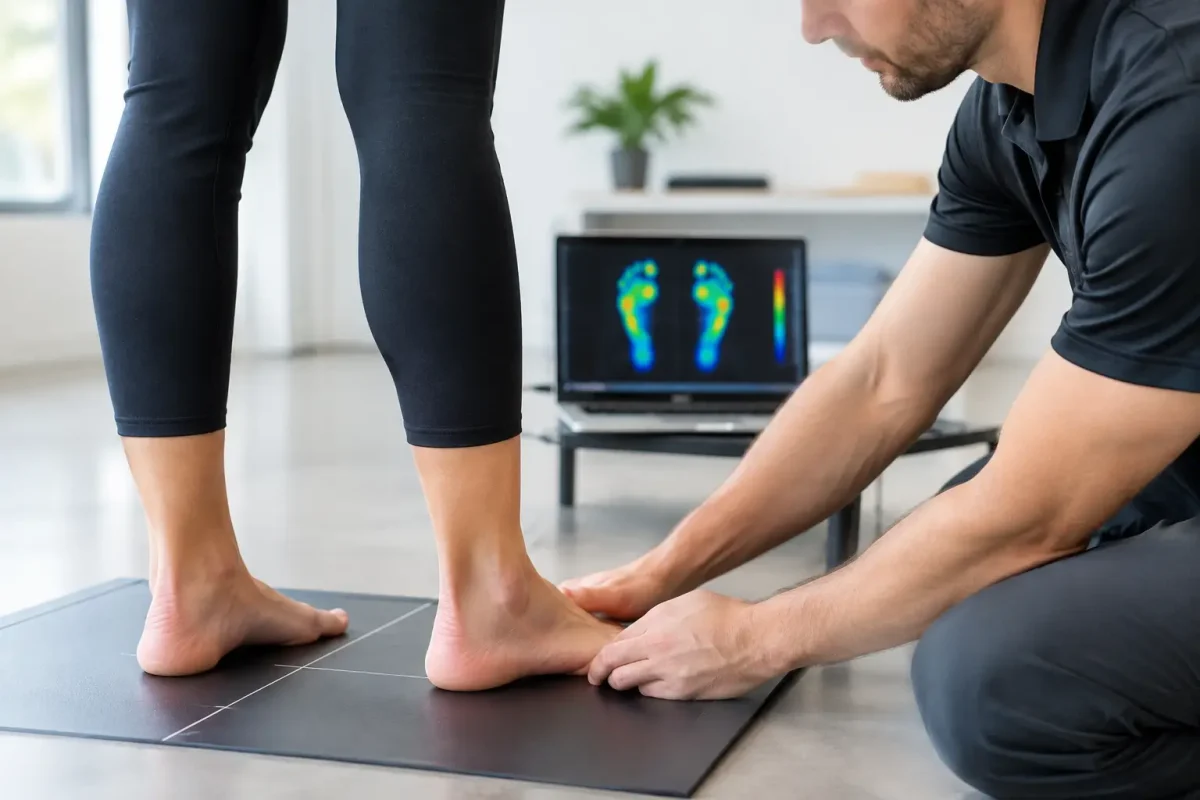
At Comfort Feet Podiatry Group, this assessment can include advanced 3D biomechanics analysis where clinically appropriate. This technology can help capture movement in greater detail, but it works best alongside a hands-on examination and a conversation about your daily life. Numbers and images matter, yet so does knowing whether you stand on concrete all day, have returned to exercise after injury, or need to keep up with your kids without pain.
When should you consider an assessment?
Persistent pain is a clear reason to book, especially if it returns whenever you increase activity. Heel pain, plantar fasciitis, aching arches, forefoot pain, shin splints, recurring ankle sprains and knee discomfort can all warrant a closer look at lower-limb mechanics.
An assessment can also be useful before pain becomes severe. Runners preparing for an event, workers spending long hours on their feet and people returning to sport after a break may notice stiffness, uneven shoe wear or a loss of confidence in one leg. These signs do not automatically mean something is seriously wrong, but they are worth investigating when they affect your activity.
Parents may seek a paediatric assessment if their child trips frequently, complains of leg pain, avoids walking longer distances or seems unable to keep up with peers. Children’s feet change as they grow, so treatment is never based on a one-size-fits-all idea of what a foot should look like. Assessment helps distinguish normal development from a problem that needs support.
What happens during a foot biomechanics assessment?
Your appointment begins with your story. Your podiatrist will ask where the pain is felt, when it started, which activities trigger it and what makes it settle. They may also discuss previous injuries, medical history, work requirements, sport, footwear and your goals. A recreational runner wanting to complete a half marathon needs a different plan from someone whose priority is walking comfortably through the supermarket or getting through a full shift.
The physical examination may include checking joint movement in the feet, ankles, knees and hips; muscle strength; calf flexibility; balance; foot posture; and areas of tenderness. Your podiatrist may assess how your joints move together, as a restriction at the ankle or weakness around the hip can change the load through the foot.
You will usually be observed standing and moving. Depending on your symptoms, this may involve walking, running on a treadmill, squatting, lunging, hopping or single-leg balance tasks. Video and 3D biomechanics analysis can show timing, alignment and loading patterns that are difficult to judge from a static examination alone.
Your shoes are part of the evidence as well. Wear patterns can suggest where pressure and friction occur, although they do not provide a diagnosis by themselves. Bring the shoes you regularly wear for work, walking or sport if they are relevant to your concerns.
What your results can reveal
A good assessment does not simply tell you that your foot “overpronates” or that one leg turns in. Those observations only become meaningful when they are connected to your symptoms and capacity.
For example, a runner with heel pain may have limited ankle movement, tight calves and a recent jump in training kilometres. Another person with similar-looking feet may be pain-free because their tissues are coping well with their current load. The treatment approach should reflect those differences.
Your podiatrist may identify factors such as reduced big-toe movement, unstable ankle control after a sprain, poor calf endurance, uneven loading through the forefoot, or weakness and control issues higher up the leg. Sometimes the outcome is reassuring: there may be no concerning mechanical issue, and the focus can shift to managing training load, footwear comfort or recovery.
This is why a foot biomechanics assessment is more useful than a quick scan or an online gait quiz. It helps place movement findings in the context of the person standing in front of the clinician.
Treatment should match the cause and your goals
Assessment is only valuable if it leads to a practical plan. Depending on the findings, your treatment may include targeted exercises to improve strength, balance, mobility or running control. Neuromuscular rehabilitation can help retrain movement after injury, while hands-on care may be used to address stiffness and improve comfort where appropriate.
Custom orthotics may be recommended when they can reduce painful load, improve support or help you tolerate work and activity more comfortably. They are not a universal answer and should not replace rehabilitation when strength, mobility or training factors also need attention. The best orthotic is one designed around your foot, footwear, symptoms and activity, then reviewed as your needs change.
Other treatments, such as shockwave therapy, therapeutic ultrasound, dry needling or lower-limb sports massage, may form part of a broader care plan for selected conditions. Their role depends on the diagnosis and stage of recovery. A treatment that settles pain can create a valuable window to rebuild strength and return to activity, but it is rarely the whole solution on its own.
Footwear guidance is another common outcome. The right shoe is not necessarily the most expensive or most heavily structured option. It needs to suit your foot shape, activity and symptoms. A shoe that feels excellent for a short walk may not be suitable for a long nursing shift, court sport or trail running.
Getting ready for your appointment
Wear or bring the footwear you use most often, including sports shoes if your symptoms occur during exercise. If you have imaging, previous treatment notes or a list of medications, bring those along as well. Most importantly, be clear about what better movement would allow you to do.
That goal might be returning to weekend football, standing through a workday without aching, walking safely after a fall, or simply taking the dog around the block without planning where to rest. Your podiatrist can use that goal to guide both assessment and treatment decisions.
Better movement starts with useful answers
Foot and lower-limb pain can narrow your world quickly. You may stop exercising, alter how you work, or put up with discomfort because you assume it is part of getting older or being active. It does not have to stay that way.
A thorough assessment gives you more than a description of your gait. It provides a clearer path towards pain relief, stronger movement and the confidence to return to the activities that matter to you. If pain is changing the way you move, booking an assessment is a practical first step towards moving more comfortably again.