
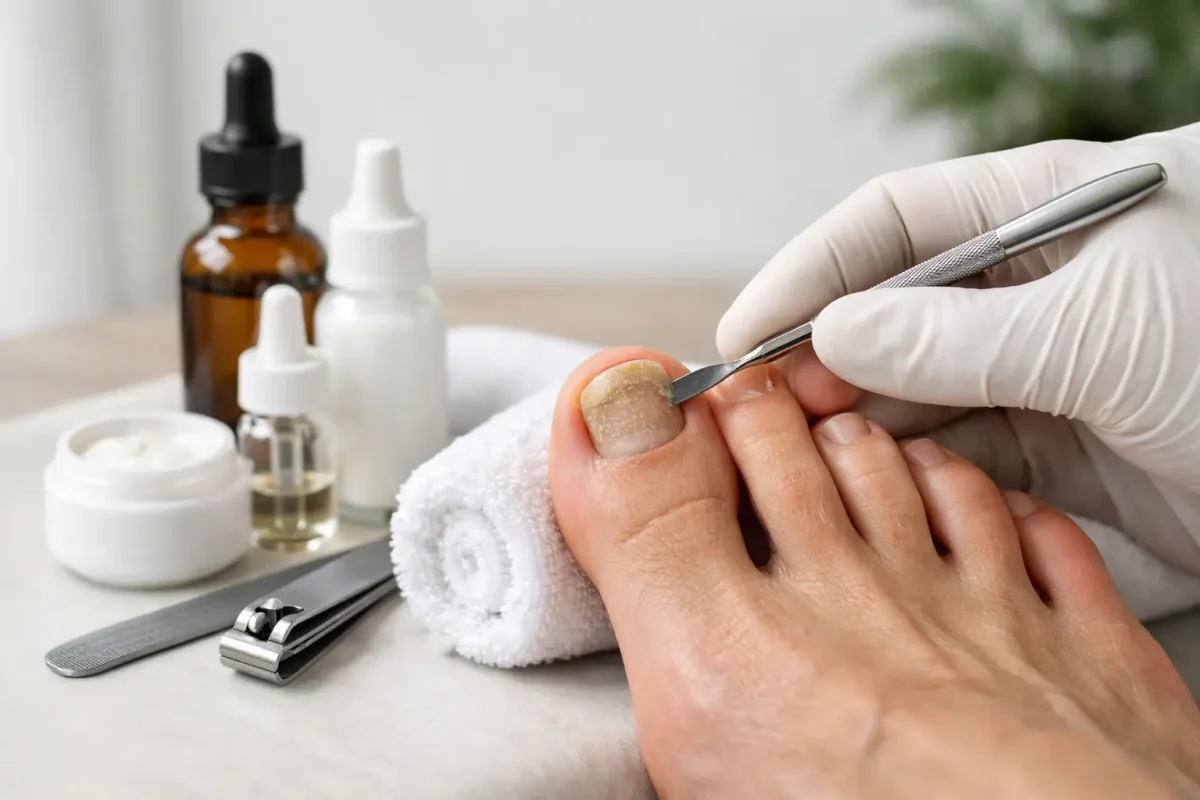
A thick, yellow or crumbly toenail can feel like a small problem – until it catches on socks, becomes painful in shoes or makes you think twice about sandals, the pool or a weekend at the beach. Effective fungal nail treatment is not about masking the appearance of the nail. It is about confirming what is causing the change, reducing infected nail material and creating a realistic plan for healthy nail growth.
Fungal nail infections are common, particularly for people who wear enclosed work boots, train regularly, use communal change rooms or have spent years managing sweaty feet. They can also be stubborn. Toenails grow slowly, so even when treatment is working, it may take many months before a clearer nail has fully grown through.
Why fungal nail treatment needs a proper diagnosis
Not every thick, discoloured or misshapen nail is caused by fungus. Repeated pressure from running shoes, a past injury, psoriasis, eczema and some medical conditions can all change how a nail looks and grows. A nail damaged by trauma may be yellow, lifted or ridged but will not improve with antifungal products alone.
That distinction matters. Using a treatment that does not match the problem wastes time and can allow an infection to become more established. During a podiatry assessment, the nail, surrounding skin and footwear pressures can be examined to identify whether fungal infection is likely. In uncertain or persistent cases, a nail sample may be recommended for laboratory testing.
A thorough assessment also looks for athlete’s foot between the toes or on the sole. Fungal skin infection often acts as a reservoir, allowing fungus to repeatedly spread back to the nails. Treating the nail while ignoring the skin can lead to frustrating recurrence.
Signs a fungal nail infection may be present
Fungal nails do not always look the same. Some start with a pale white or yellow patch near the edge. Others become progressively thicker and more brittle, with debris building beneath the nail. The nail may lift away from the nail bed, develop an uneven surface or become difficult to trim safely.
Pain is another reason to act. A thickened nail can press into the top of a shoe, causing tenderness with walking, sport or long shifts on your feet. For older adults, people with reduced flexibility or anyone with diabetes, trying to cut a hardened nail at home can lead to cuts, ingrown edges and avoidable infection risks.
Fungal nail treatment options
The right approach depends on how many nails are involved, how much of each nail is affected, whether the infection has reached the nail base and your general health. A podiatrist can explain the trade-offs clearly, rather than promising an overnight fix.
Nail reduction and clinical care
Professional thinning, trimming and removal of crumbly infected material can make a major difference to comfort straight away. It reduces pressure in footwear, helps make the nail easier to manage and can improve the penetration of topical antifungal treatments.
This is particularly useful when nails are thick, painful or difficult to cut safely. Regular clinical care may be part of a broader treatment plan, especially for patients whose circulation, sensation or mobility means self-treatment is not suitable.
Topical antifungal treatments
Medicated solutions or lacquers are commonly used for mild to moderate infections, particularly when the infection is limited to a small section of one or two nails. Consistency is crucial. Most treatments need regular application for many months, because the aim is to protect new nail as it grows.
Topical treatment can be a sensible option for people who cannot take oral medication or prefer a non-systemic approach. However, it may be less effective when the nail is very thick, several nails are involved or infection extends close to the nail base. Thinning the nail professionally can help improve its usefulness.
Oral antifungal medication
For more extensive infections, a GP or dermatologist may prescribe oral antifungal medication. These medicines travel through the bloodstream to the nail and can be more effective for deeper or widespread infection. They are not right for everyone, as existing health conditions, other medicines and potential side effects need to be considered. Your prescribing clinician may also arrange blood tests where appropriate.
Oral medication is often paired with podiatry nail care and treatment of athlete’s foot. This combined approach addresses both the appearance and comfort of the affected nail, while reducing the chance of reinfection from surrounding skin.
Managing footwear and foot environment
Fungus thrives in warm, damp environments. Treatment is far more likely to hold when daily habits reduce moisture around the feet. Rotate shoes so they can dry fully between wears, choose breathable footwear where practical and change socks after exercise or a long day in work boots.
Shoes, socks, nail clippers and shower surfaces can all contribute to reinfection if they are not managed. Antifungal footwear sprays or powders may be recommended as part of your plan. It is also wise not to share nail tools, socks or shoes with family members.
What results should you expect?
A fungal nail can look worse before it looks better, particularly as damaged nail grows outward. The encouraging sign is a clearer strip of new nail appearing at the base, near the cuticle. That new growth needs time to travel to the tip.
Toenails commonly take nine to 18 months to grow out fully. The big toenail is often the slowest. This means a treatment plan should be judged over months, not weeks. Stopping too early because the nail seems improved can allow surviving fungus to spread again.
It also depends on the underlying cause of nail damage. If running, tight footwear or toe shape continually place pressure on the nail, the nail may remain thick or distorted even after infection has cleared. Addressing shoe fit, toe pressure and lower-limb mechanics can be relevant for active people who want a durable result.
When to see a podiatrist sooner
Book an assessment promptly if a nail is painful, bleeding, lifting significantly or becoming ingrown. Seek professional advice rather than self-treating if you have diabetes, poor circulation, reduced sensation, an immune condition or a history of foot ulcers. Small cuts around the toes can become serious more quickly when healing is compromised.
A dark brown or black mark under a nail also deserves assessment, especially if it is new, changing or not clearly linked to an injury. While bruising is common after sport or a dropped object, persistent pigment changes should not simply be assumed to be fungus.
Keep fungal nails from returning
Prevention is not glamorous, but it is the part that protects the time and effort invested in treatment. Dry carefully between the toes after bathing, wear thongs in public showers and pool change rooms, and deal with athlete’s foot early. Choose socks that move moisture away from the skin and avoid wearing damp shoes again the next day.
Keep nails trimmed straight across, but do not dig aggressively into the corners or cut them too short. If nails are already thick, curved or hard to reach, routine podiatry care is safer than forcing ordinary clippers through them.
At Comfort Feet Podiatry Group, fungal nail care starts with identifying what is happening beneath the visible change. With a tailored plan, regular clinical support where needed and practical prevention strategies, you can protect your comfort in shoes and get back to moving with confidence.