
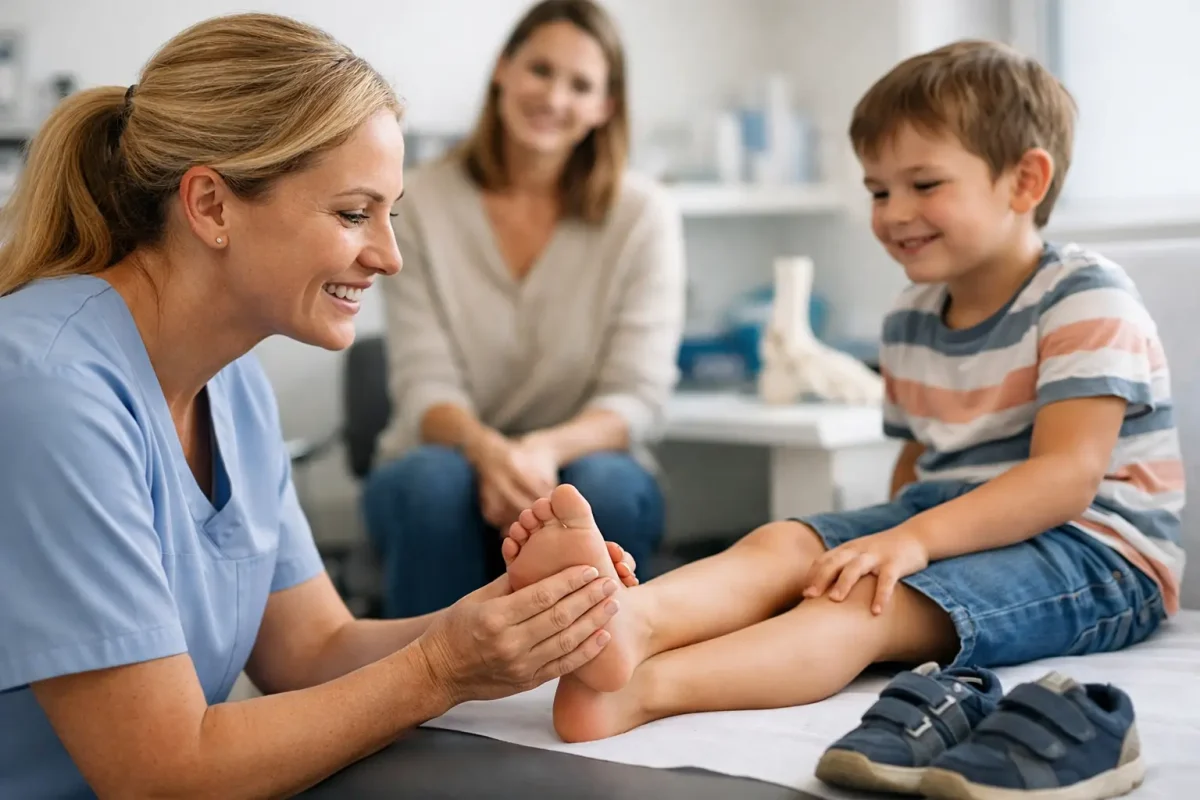
Children rarely describe foot or leg pain in clinical terms. They may avoid running at school, ask to be carried after a walk, wear out one shoe faster than the other, or simply stop enjoying a sport they once loved. Finding a children’s podiatrist Melbourne families can rely on gives those small changes the attention they deserve – before pain starts limiting confidence, movement or participation.
Children’s feet are not simply smaller versions of adult feet. Their bones, muscles, gait and coordination are developing rapidly, and a healthy assessment looks at the whole lower limb: feet, ankles, calves, knees, hips and the way your child moves. Some changes are a normal part of growing. Others benefit from early, targeted care.
When should your child see a podiatrist?
A child does not need to be in severe pain to benefit from podiatry assessment. Persistent symptoms, recurring injuries or noticeable changes in walking are all worthwhile reasons to book. Early assessment can clarify whether reassurance is appropriate, whether footwear changes may help, or whether a treatment and rehabilitation plan is needed.
Parents often seek help for heel pain, flat feet, inward-turning feet, toe walking, frequent tripping, knee pain or tired legs. Sporting children may present with shin pain, ankle sprains, sore knees or pain beneath the heel after training. Nail concerns, such as ingrown toenails, warts, athlete’s foot and fungal nail changes, also deserve professional attention when they are painful, spreading or not settling with sensible care.
It is especially useful to arrange an appointment when pain keeps returning, lasts beyond a few days after activity, causes limping, wakes your child at night, or changes how they play. A sudden inability to bear weight, a significant swelling or redness with fever needs prompt medical assessment.
Common concerns a children’s podiatrist in Melbourne can assess
Growing pains, heel pain and active kids
Not every ache in an active child is a serious injury, but repeated pain should never be dismissed as something they must simply grow out of. Heel pain is particularly common in school-aged children who run, jump or play court sports. It can be linked to growth-related stress around the heel, tight calves, training load, footwear or the way the foot absorbs force.
The goal is not automatically to stop sport. A podiatrist can assess the cause, then help adjust activity, support recovery and build the strength and flexibility needed for a safer return. Depending on the presentation, care may include hands-on treatment, stretching guidance, neuromuscular rehabilitation, footwear advice, temporary heel support or custom orthotics.
Flat feet, high arches and unusual walking patterns
Many young children have feet that appear flat, particularly when standing, and this can be entirely normal. The more relevant questions are whether the feet are flexible, whether your child has pain or fatigue, and whether the foot posture affects walking, running or balance.
A high arch can also change pressure through the foot and make ankle instability or shoe discomfort more likely. Toe walking, in-toeing, out-toeing and frequent tripping each have several possible causes. A careful assessment considers developmental stage, joint range of motion, muscle strength, coordination and footwear rather than treating the visible foot position in isolation.
Knee, shin and ankle pain
Children often feel a lower-limb problem away from its source. For example, poor control through the foot and ankle may contribute to shin or knee pain during running. Repeated ankle sprains may be connected to weakness, balance deficits, reduced mobility or a return to sport that has progressed too quickly.
This is where a whole-body lower-limb approach matters. Assessing how the hips, knees, ankles and feet work together can reveal movement patterns that are missed when treatment focuses only on the sore spot.
Footwear problems and school shoes
A school shoe that is too short, too narrow or too worn can make a small issue feel much bigger by the end of the day. Yet the most expensive shoe is not always the best choice. The right shoe depends on your child’s foot shape, activity, comfort, stability and the demands of their school or sport.
Bring commonly worn shoes to the appointment if possible. Wear patterns, lack of support and pressure points can provide useful clues. A podiatrist can give practical guidance without assuming every child needs a heavy, rigid shoe or an orthotic.
What happens at a paediatric podiatry appointment?
A good children’s appointment should feel calm, age-appropriate and practical. The conversation usually starts with what parents have noticed: when symptoms began, whether pain occurs during or after activity, recent growth spurts, previous injuries, footwear and sport participation. Older children are encouraged to explain in their own words what they feel and what they cannot do comfortably.
Assessment may include observing standing posture, walking, running, balance, joint movement, muscle strength and tenderness. At Comfort Feet Podiatry Group, 3D biomechanics analysis may be used where it is clinically appropriate to better understand movement and loading patterns. This can be valuable for active children with recurring pain or injuries, but technology supports clinical judgement – it does not replace a hands-on examination.
From there, treatment is tailored to the child rather than built around a single product. Some children need reassurance and monitoring. Others benefit from a rehabilitation plan, activity modification, exercises, hands-on treatment or footwear changes. Custom orthotics can be helpful when they are indicated, particularly for persistent symptoms or significant loading issues, but they should support a broader plan for healthy movement.
Supporting your child between appointments
The most effective progress often happens in everyday routines. That may mean keeping up with a short exercise plan, easing training loads during a painful flare, replacing worn-out shoes or allowing enough recovery between sports sessions. Consistency matters more than doing everything perfectly.
Avoid pushing a child to play through pain simply because a game or training session is important. At the same time, complete rest is not always necessary or helpful. The right balance depends on the condition, pain level and the activity involved. Your podiatrist can explain which movements to reduce, which alternatives are safe and how to build back towards sport with confidence.
For nail and skin concerns, encourage dry feet, clean socks and properly fitted shoes. Do not cut deeply into the corners of toenails or attempt to remove warts aggressively at home, as this can increase soreness and infection risk.
Early care protects more than feet
When a child is uncomfortable, the effects can travel well beyond the footpath or sports field. Pain may change their willingness to walk to school, join in at recess, keep up with friends or continue a favourite activity. A clear diagnosis and a realistic plan can replace uncertainty with practical next steps.
If your child is limping, avoiding activity or repeatedly complaining of foot, heel, ankle, shin or knee pain, trust what you are seeing. Timely podiatry care can help them move more comfortably now and keep building the confidence to stay active as they grow.