
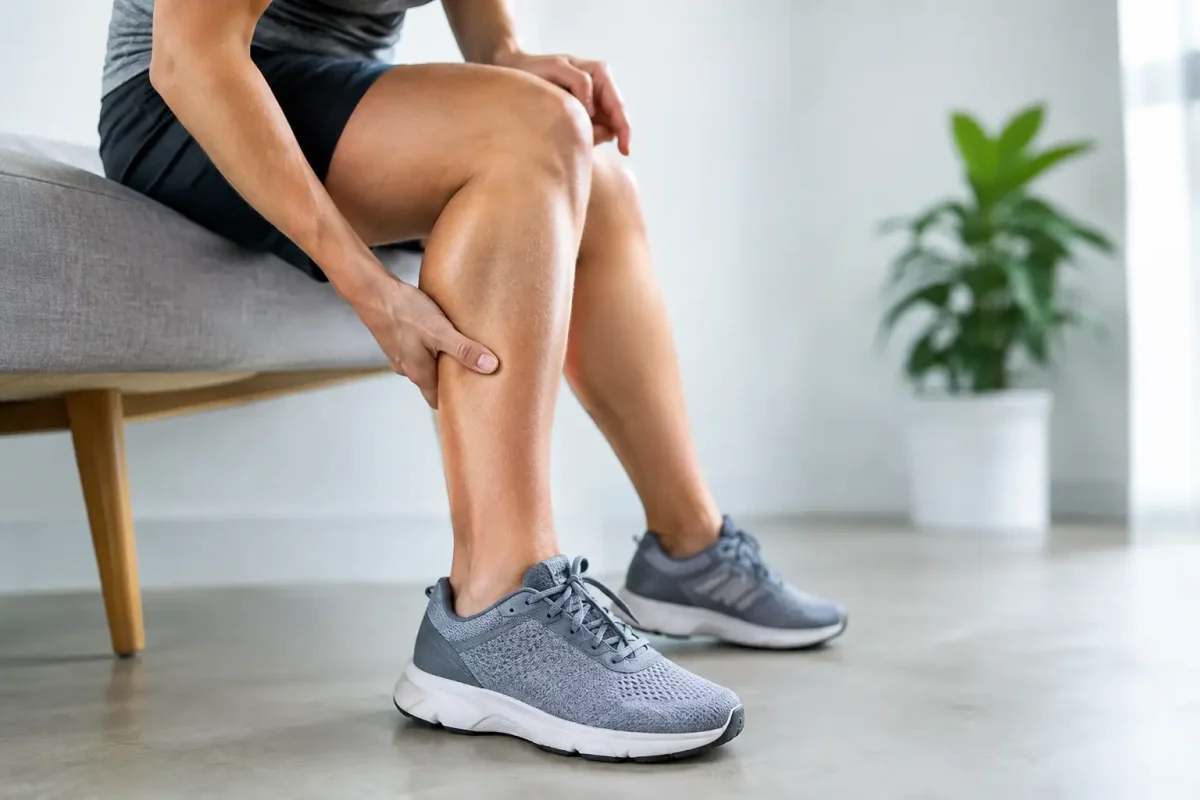
A calf that feels constantly tight can make every step less comfortable – whether you are running around the Tan, standing through a long work shift, or simply getting down the stairs in the morning. The top causes of calf tightness are not always in the calf itself. Your feet, ankles, walking pattern, training load and even the way you sit during the day can all change how hard these muscles have to work.
Calf tightness is common, but it should not become the normal price of staying active. Identifying the reason behind it is the first step towards reducing pain, improving ankle movement and returning to the activities you enjoy with more confidence.
Why calf tightness matters beyond the calf
Your calf is made up mainly of the gastrocnemius and soleus muscles, which join the Achilles tendon at the back of the heel. Together, they help control your ankle when you walk, absorb force when you land, and push you forward when you run or climb.
When these tissues are tight, sore or overloaded, the effects can travel further down the chain. Limited ankle movement may contribute to heel pain, plantar fasciitis, Achilles tendon pain, shin splints, forefoot pressure and recurrent ankle injuries. Some people also compensate by changing their stride, which can place extra demand on the knees, hips or lower back.
Top causes of calf tightness
A sudden increase in activity or training load
A sharp jump in running distance, hill work, gym sessions, court sport or walking can overload the calves before they have adapted. This is particularly common after returning to exercise following illness, injury or a busy period at work. It can also happen when athletes add speed sessions or change surfaces without allowing enough recovery.
The tightness may feel evenly spread through both calves and be most noticeable the day after exercise. Mild post-exercise stiffness can settle with recovery, but ongoing tightness, cramping or pain that changes your gait is a sign that your training load needs attention. Pushing through can turn simple muscle fatigue into a calf strain or Achilles tendon problem.
Reduced ankle mobility and prolonged sitting
Many Melbourne workers spend hours at a desk, in a car, or standing in one position. Keeping the ankle still for long periods can leave the calf feeling shortened and stiff, especially first thing in the morning or after getting up from a chair.
Restricted ankle mobility may also develop after an ankle sprain, time in a moon boot, previous surgery or repeated use of high-heeled footwear. The body often protects an old injury by limiting movement, even after the initial pain has gone. Without targeted rehabilitation, the calf may continue to work around that restriction.
Foot mechanics and unsuitable footwear
Your feet provide the base for every step. Flat feet, high arches, limited big-toe movement and excessive rolling in or out of the foot can all alter calf loading. This does not mean a particular foot type automatically causes pain, but it can make certain people more vulnerable when activity increases.
Footwear matters too. Shoes that are worn down, too flexible, too narrow or poorly matched to your activity can affect how force moves through the foot and ankle. A change from a supportive shoe to a flatter style can also make the calf and Achilles work harder. For runners, a sudden change in shoe heel height deserves the same careful adjustment as a change in training volume.
A podiatry assessment can examine your gait, ankle range and foot function rather than guessing that footwear alone is the issue. In some cases, custom orthotics or footwear advice can reduce unnecessary strain. In others, strengthening and mobility work will be the more useful solution.
Muscle weakness or poor load control
Tight does not always mean strong. A calf can feel firm and restricted because it is doing more than it can comfortably manage. Weakness in the calf itself, or reduced control through the foot, hips and trunk, may cause the muscle to grip during walking, running or balance tasks.
This is why stretching alone does not reliably solve persistent tightness. If the underlying issue is poor strength, reduced single-leg control or an inefficient running pattern, temporary relief may fade as soon as you resume activity. A rehabilitation plan needs to build the calf’s capacity gradually, not just lengthen it.
Dehydration, fatigue and cramping
Long days on your feet, hot weather, sweating heavily and inadequate fluid intake can contribute to cramping and a tight, fatigued calf sensation. Electrolyte imbalance may play a role for some people, particularly during prolonged endurance exercise, but it is not the explanation for every cramp.
Start with the basics: drink regularly, eat adequately around exercise and build demanding activity progressively. If cramps are frequent, severe, occur at rest or wake you repeatedly at night, arrange a health assessment rather than relying on supplements alone.
Calf strain, Achilles irritation or scar tissue
A sudden sharp pain, a pulling sensation or bruising can point to a calf strain. Even after the acute injury settles, the area may remain tight because the muscle has not regained full strength or confidence. Returning to sport too early is a common reason for recurrence.
Achilles tendon irritation can also be felt as calf tightness, particularly in the lower calf or just above the heel. Morning stiffness, pain at the start of activity and tenderness around the tendon are useful clues. These problems usually respond best to a tailored loading programme, with activity adjusted to keep symptoms manageable while strength improves.
Nerve or circulation-related symptoms
Not every tight calf is a muscle problem. Pain that shoots, burns, tingles or comes with numbness may be related to nerve irritation from the lower back or elsewhere in the leg. Symptoms that appear predictably after walking and ease with rest can sometimes be associated with circulation concerns.
One-sided calf swelling, warmth, redness, tenderness or sudden unexplained pain needs urgent medical attention, particularly after surgery, long-distance travel, a period of reduced mobility, pregnancy or recent illness. These can be warning signs of a blood clot. Shortness of breath, chest pain or coughing blood should be treated as an emergency.
What a thorough calf assessment looks for
Persistent calf tightness deserves more than a quick stretch recommendation. A clinician should ask when the symptoms started, where you feel them, what brings them on and whether they change with work, sport, footwear or rest. They may assess calf strength, ankle range of motion, balance, walking and running mechanics, and the way your foot loads during each step.
At Comfort Feet Podiatry Group, this can include 3D biomechanics analysis where appropriate, helping identify movement patterns that are not obvious during a brief examination. The findings guide treatment rather than applying the same solution to every sore calf.
Treatment may involve hands-on therapy, lower-limb sports massage, dry needling or therapeutic ultrasound when clinically appropriate, alongside mobility work and progressive strengthening. If foot mechanics are contributing, footwear changes or custom orthotics may be considered. The goal is not simply to make the calf feel looser for a day. It is to help it tolerate the demands of your work, exercise and daily life.
What you can do while arranging care
For a mild, recent flare-up without swelling or sharp pain, reduce the activity that aggravates it for a few days rather than stopping all movement. Gentle walking and comfortable ankle movement are often preferable to complete rest. Avoid aggressive stretching into pain, particularly if you suspect a strain or Achilles issue.
Once acute soreness settles, gradual calf raises, controlled ankle mobility work and a sensible return to activity can be more effective than repeated stretching. The right progression depends on your symptoms. A runner with Achilles stiffness, a warehouse worker on concrete floors and an older adult worried about balance will not need the same plan.
If your calves keep tightening, affect your ability to work or exercise, or are linked with foot or heel pain, book an assessment. A clear diagnosis can replace the cycle of temporary relief with a practical pathway back to comfortable, confident movement.