
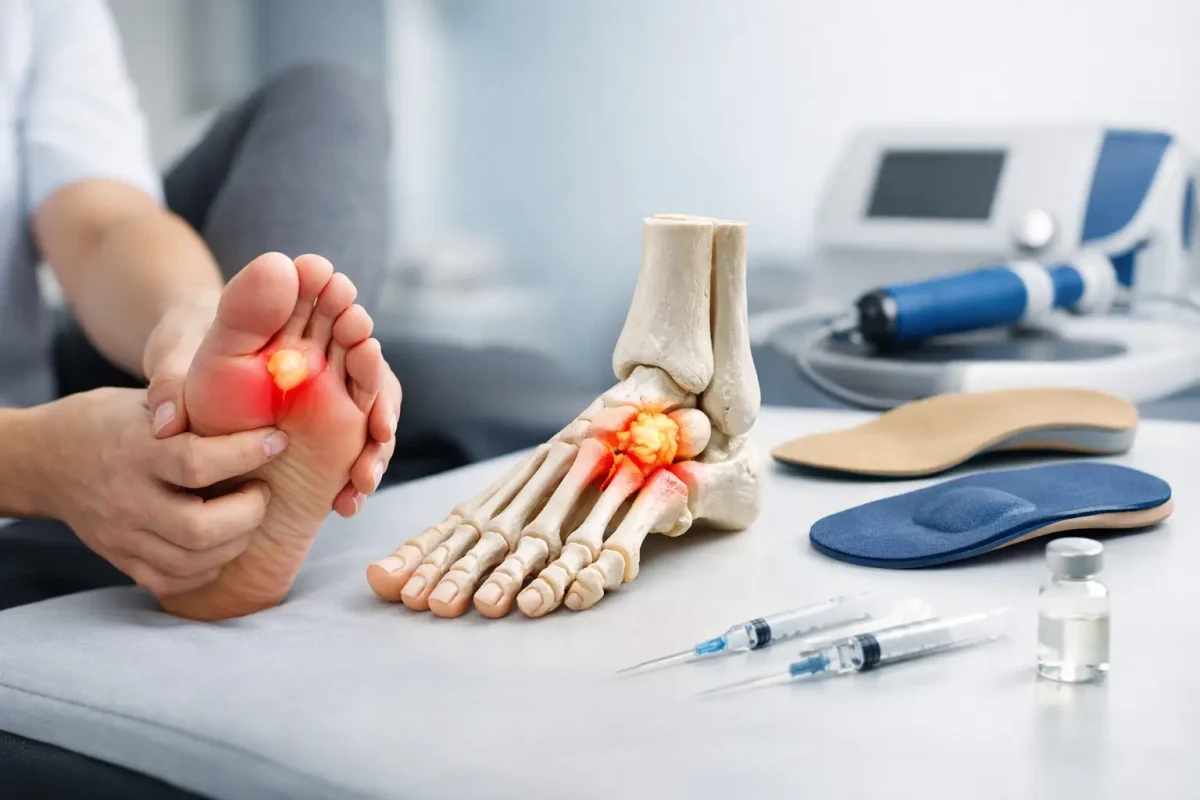
A sharp, burning pain beneath the ball of your foot can make every step feel uncertain. You may notice it while walking the dog, standing through a work shift or pushing off during a run. Morton’s neuroma treatment is about more than settling the immediate pain – it is about finding what is overloading the front of your foot and helping you move comfortably again.
Morton’s neuroma is a common cause of forefoot pain, but it is often mistaken for a stress injury, joint inflammation or simply shoes that have become uncomfortable. A clear assessment matters because the most effective treatment depends on the source, severity and duration of your symptoms.
What does Morton’s neuroma feel like?
Morton’s neuroma involves irritation and thickening of tissue around a nerve in the forefoot. It most often affects the space between the third and fourth toes, although it can occur elsewhere. Despite its name, it is not usually a true tumour.
People commonly describe a burning, stabbing or electric pain in the ball of the foot that may travel into the toes. Some feel tingling, numbness or the strange sensation of standing on a folded sock, a pebble or a ridge in their shoe. Symptoms can build gradually, then flare after long periods on your feet, higher-impact activity or wearing narrow footwear.
Pain may ease once shoes come off or you stop walking, but recurring symptoms are a sign not to ignore. Changing the way you walk to avoid pain can place extra strain on your ankle, knee, hip or lower back.
Why a proper diagnosis changes treatment
The front of the foot is a compact, hard-working area. Several conditions can create similar discomfort, including metatarsalgia, bursitis, plantar plate injuries, stress reactions, arthritis and nerve irritation from the lower back. Treating the wrong problem may provide short-term relief while allowing the real issue to continue.
A podiatry assessment looks at your symptoms, footwear, activity demands and medical history. Your podiatrist will examine the painful area, assess joint movement and test whether pressure between the metatarsal bones reproduces your symptoms. They may also assess your walking pattern and lower-limb alignment.
At Comfort Feet Podiatry Group, this may include 3D biomechanics analysis when it is useful for understanding how force moves through your feet during standing, walking and sport. Imaging such as ultrasound or MRI is not needed in every case, but may be recommended when the diagnosis is unclear or a more significant injury needs to be ruled out.
Morton’s neuroma treatment usually starts conservatively
For many people, non-surgical care is the right first step. The aim is to reduce compression and irritation around the nerve while improving how your foot handles load. Results are rarely instant if symptoms have been present for months, but a consistent treatment plan can make daily walking and activity far more manageable.
Footwear that gives your forefoot room
Shoes can either aggravate a neuroma or give it the conditions it needs to settle. A shoe with a wider, deeper toe box reduces side-to-side pressure on the toes and ball of the foot. A cushioned sole and stable base can also reduce repetitive impact.
This does not mean every shoe must be bulky or athletic. The best choice depends on your work, sport and lifestyle. However, regularly wearing narrow, pointed or high-heeled shoes can keep the nerve compressed and make recovery harder. If you need dress shoes for work or an event, your podiatrist can help you make practical changes without asking you to abandon your routine altogether.
Offloading pads and custom orthotics
A metatarsal pad is positioned just behind the ball of the foot to spread the metatarsal bones and take pressure away from the irritated nerve. Positioning is crucial. A pad placed directly under the painful spot can make symptoms worse, which is why professional fitting is valuable.
Custom orthotics may be recommended where foot mechanics are contributing to repeated overload. They are designed around your foot shape, footwear and movement pattern, rather than acting as a generic cushion. Some people need temporary offloading while the area settles; others benefit from longer-term support for flat feet, high arches, instability or high activity demands.
Managing load without giving up movement
Resting completely is not always necessary, but pushing through sharp or burning pain is unlikely to help. Temporarily reducing aggravating activities such as running, court sports, steep hills or long walks can calm symptoms. Lower-impact options may allow you to maintain fitness while your foot recovers.
Your plan may also include calf and foot mobility work, strengthening and neuromuscular rehabilitation. Restricted ankle movement, weak foot control or changes higher up the leg can alter forefoot loading. Addressing these factors helps create a more durable result than simply cushioning the sore area.
When injections or other procedures may help
If footwear changes, offloading and rehabilitation do not provide enough relief, your podiatrist may discuss referral for further treatment. Corticosteroid injections can reduce inflammation and pain for some people, particularly when combined with changes that reduce ongoing nerve compression. Their effect varies, and repeated injections are not suitable for everyone.
Other image-guided procedures may be considered by an appropriately qualified specialist in persistent cases. These can include alcohol sclerosing injections or radiofrequency procedures intended to reduce nerve pain. The best option depends on the size and location of the neuroma, your symptoms, previous treatment and the risks you are willing to accept.
Surgery is generally reserved for pain that remains limiting despite well-managed conservative care. It can be very effective for selected patients, but recovery takes time and there is a possibility of ongoing numbness, scar sensitivity or recurrent symptoms. A good treatment pathway gives conservative care a genuine chance while recognising when a specialist opinion is appropriate.
What can delay recovery?
The most common obstacle is continuing the same pressure that caused the flare in the first place. This may be a favourite pair of narrow shoes, a sudden jump in training volume, standing on hard floors for long shifts or returning to impact sport too quickly.
Another issue is relying on temporary relief alone. Massage, ice and anti-inflammatory medication may reduce discomfort for some people, but they do not necessarily change the mechanical pressure around the nerve. They work best as part of a broader plan rather than the whole solution.
It is also worth considering your other health needs. Diabetes, reduced circulation, inflammatory arthritis and altered sensation in the feet can affect both diagnosis and treatment choices. Tell your clinician about these conditions, as well as any medications and previous foot injuries.
When should you book an assessment?
Book an appointment if forefoot pain is recurring, affecting your work or sport, causing numbness in the toes or changing the way you walk. Seek prompt medical advice for sudden severe pain, marked swelling, redness, fever, an open wound or a foot that becomes unusually cold, pale or blue.
Early care is often simpler care. The sooner pressure on an irritated nerve is identified and managed, the better the chance of staying active without allowing a small foot problem to dictate your day.
Your feet carry you through school drop-offs, workdays, training sessions and weekends with the people you care about. If each step is becoming something you brace for, a targeted assessment can turn that warning sign into a clear plan for more comfortable movement.