
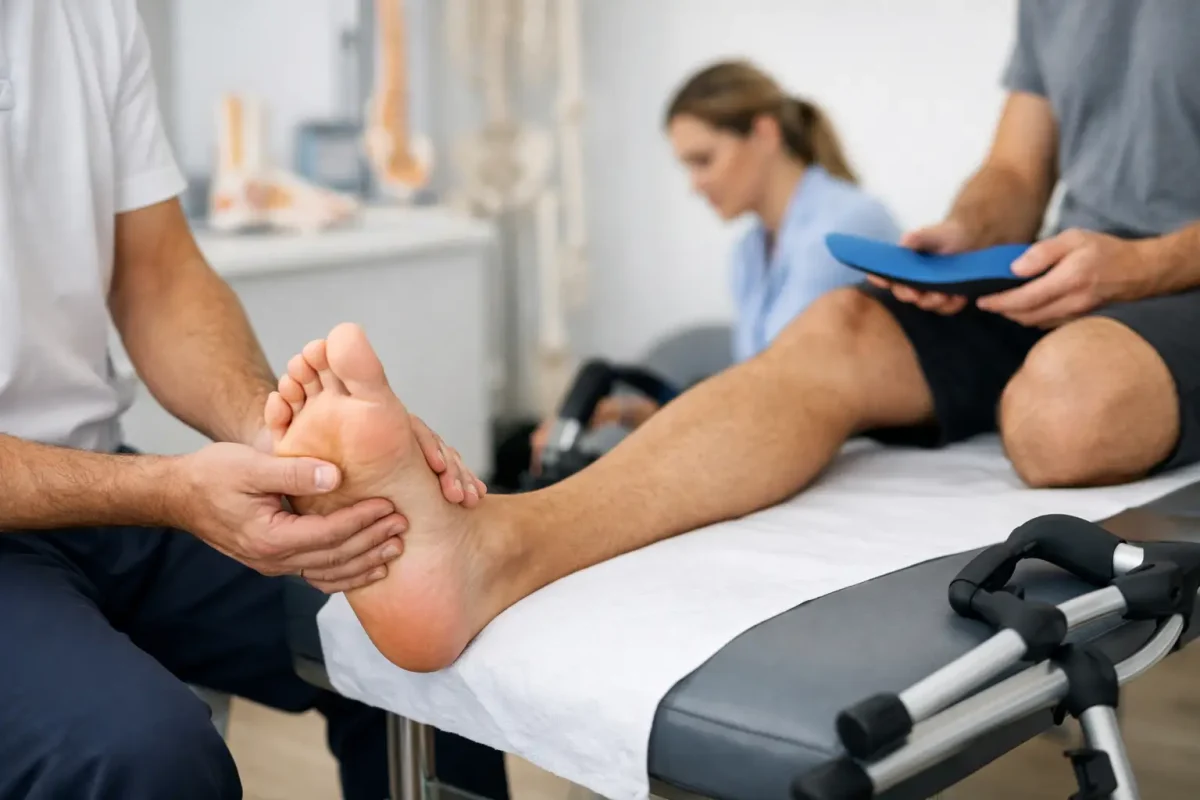
That sharp, first-step pain under the heel can make getting out of bed feel like a bigger task than it should. If you are looking for plantar fasciitis treatment Melbourne, the aim is not simply to settle soreness for a few days. It is to identify why the plantar fascia is being overloaded, reduce pain and help you move confidently through work, sport and family life again.
Plantar fasciitis is one of the most common causes of heel pain. The plantar fascia is a strong band of connective tissue running from the heel to the toes. It helps support the arch and manage force every time you walk, run, stand or push off. When that tissue is repeatedly overloaded, pain can develop at or near its attachment to the heel.
The condition can be stubborn, but it is treatable. The best path is rarely a single device or a one-off treatment. It is a considered plan that matches your symptoms, daily demands, foot mechanics and recovery goals.
When heel pain is likely to be plantar fasciitis
Plantar fasciitis often causes pain on the underside of the heel, commonly towards the inner edge. It may be most noticeable with the first few steps after getting out of bed or standing after a long period of sitting. The discomfort can ease as you move, then return after a busy day on your feet.
Runners may notice it when beginning a session, while hospitality, healthcare, retail and construction workers can feel it build after long shifts. Parents often put off treatment because there is always another school run, errand or activity to manage. Yet ongoing heel pain can change the way you walk, creating extra strain through the calf, ankle, knee or opposite foot.
Not all heel pain is plantar fasciitis. A heel fat-pad problem, nerve irritation, stress injury, arthritis, Achilles tendon condition or pain referred from elsewhere in the lower limb may feel similar. This is why a proper assessment matters, particularly if pain is severe, follows an injury, causes swelling or numbness, occurs at rest, or is not improving.
What causes the plantar fascia to become overloaded?
There is not always one obvious trigger. Sometimes symptoms begin after a jump in running distance, a new job requiring more standing, a holiday with extra walking or a return to exercise after time away. In other cases, the load has gradually exceeded the foot’s capacity over months.
Tight or underperforming calf muscles can increase pull through the heel. Flat feet, very high arches, reduced big-toe movement, limited ankle mobility and poor lower-limb control can also change how forces travel through the foot. Worn-out shoes, unsupportive footwear and regularly walking barefoot on hard floors may add to the problem for some people.
Body weight, training load and recovery all play a role, but heel pain is not a personal failing. It is a mechanical and tissue-load issue that deserves a practical solution. The right treatment depends on what is driving your individual symptoms.
Plantar fasciitis treatment Melbourne patients can build around
At Comfort Feet Podiatry Group, plantar fasciitis care begins with understanding the full picture, not just pressing on the painful spot. A podiatrist may assess your walking pattern, footwear, foot posture, ankle range, calf function and the strength and control of the lower limb. Where appropriate, 3D biomechanics analysis can provide a detailed view of how your feet and legs move under load.
Reducing pain without stopping life completely
Relative rest is often useful, but it does not usually mean doing nothing. It means temporarily modifying the activities that repeatedly flare the heel while preserving as much healthy movement as possible. A runner may reduce distance or avoid hills for a period. Someone who stands for work may need better footwear, scheduled movement breaks or an adjustment to their workload where possible.
Supportive shoes with appropriate cushioning and structure can reduce irritation. The best choice depends on your foot shape, workplace requirements and activity. A shoe that feels comfortable in the shop is not automatically right for an eight-hour shift or a long run, so professional guidance can prevent expensive trial and error.
Taping, padding or simple heel supports may also be used to provide short-term comfort. These strategies can be valuable while the tissue settles, but they work best alongside rehabilitation rather than as the whole answer.
Building strength, mobility and load tolerance
The plantar fascia is influenced by more than the foot alone. Calf flexibility and strength, ankle mobility, intrinsic foot-muscle function and hip control can all affect how it manages load. A rehabilitation plan may include targeted calf and plantar fascia stretches, progressive strengthening and neuromuscular exercises designed around your starting point.
The timing matters. Aggressive stretching into severe pain can aggravate an irritable heel, while doing too little can leave the tissue unprepared for daily demands. A podiatrist can help set a level that is challenging enough to create progress without repeatedly triggering a flare-up.
For active people, the return to sport should be gradual and measurable. The goal is not to wait until you feel perfect before moving again. It is to increase walking, running, gym work or court sport in a way the heel can tolerate. This is often the difference between a short-lived improvement and a durable return to activity.
Custom orthotics when they suit the problem
Custom orthotics may be recommended when foot mechanics, pain levels or activity requirements indicate that additional support could help. They are designed to improve how load is distributed through the foot and lower limb, rather than simply filling a shoe.
Orthotics are not essential for every person with plantar fasciitis, and they are not a substitute for rehabilitation. However, they can be particularly useful for people with recurring symptoms, demanding standing jobs, significant biomechanical needs or sport-specific footwear challenges. The fit, materials and design should suit the shoes you actually wear – work boots, runners, school shoes or casual footwear – and be reviewed as your symptoms change.
Advanced therapies for persistent heel pain
When symptoms have persisted despite a well-followed conservative plan, advanced in-clinic therapies may be considered. Shockwave therapy is commonly used to stimulate healing processes in stubborn plantar fascia conditions. It is usually delivered as part of a broader treatment program, not as a stand-alone cure.
Therapeutic ultrasound, dry needling and lower-limb sports massage may also be appropriate in selected cases, particularly where calf tightness, muscular trigger points or soft-tissue restrictions are contributing to the load on the heel. These treatments are chosen after assessment and should have a clear role in your recovery plan.
No therapy is right for everyone. Your health history, medication, circulation, sensitivity, pregnancy status and the exact diagnosis can affect whether a treatment is suitable. Clear clinical advice matters more than chasing the latest quick fix.
What you can do while waiting for your appointment
Avoid repeatedly testing the painful heel by walking barefoot on hard floors or pushing through sharp pain. Choose supportive footwear as often as possible and reduce the activity that most reliably brings on symptoms, whether that is running, long walks or extended standing.
Gentle calf and foot mobility work may help if it does not increase pain afterwards. A cold pack wrapped in a cloth can provide short-term relief for some people after a busy day. Keep in mind that pain relief and recovery are not always the same thing. If the heel feels better only while you are resting but flares as soon as normal activity resumes, it is time to investigate the underlying loading issue.
When to seek prompt assessment
Book an assessment sooner if heel pain is worsening, you cannot comfortably bear weight, there is marked swelling or bruising, or symptoms began after a fall or sudden impact. Numbness, burning, night pain, a fever or an open wound also warrant timely medical attention.
For many people, the more common concern is pain that has lingered for weeks and keeps interfering with their routine. Early care can reduce the chance of compensations developing elsewhere in the lower limb and give you a clearer route back to the things that matter to you.
Your heel should not dictate whether you take the dog for a walk, finish a shift comfortably or line up for your next event. With an individual assessment and a treatment plan built around your movement goals, each step can start feeling like progress again.