
A knee that aches on the stairs, flares after a run or stiffens during a long shift may not be a knee-only problem. Can podiatry help knee pain? In many cases, yes. When the way your feet, ankles and legs move is placing repeated stress through the knee, a podiatrist can identify the contributing movement pattern and build a practical treatment plan around it.
The knee sits in the middle of a hard-working chain. Every step transfers force from the ground through your feet and ankles, into the knees, hips and lower back. If your foot rolls in too far, your ankle is stiff, or one leg is taking more load than the other, the knee may have to compensate thousands of times a day. That can matter whether you are training for a fun run, standing on concrete at work, chasing children around the house or simply trying to stay mobile.
Can podiatry help knee pain caused by walking or running?
Podiatry is particularly relevant when knee pain is linked with activity, footwear or a noticeable change in the way you walk. A podiatrist does not replace assessment from a GP, physiotherapist or orthopaedic specialist where it is needed. Instead, podiatry brings a focused understanding of the lower limb, especially the foot and ankle mechanics that can influence how the knee tracks and absorbs load.
For example, excessive foot pronation – often described as the foot rolling inwards – can be associated with the lower leg rotating inwards. In some people, this may increase strain around the kneecap or along the outside of the knee during running. High, rigid arches can create a different issue: less natural shock absorption, meaning force is transferred higher up the leg. Flat feet, unstable ankles, limited big-toe movement and tight calves can also change the way you move.
That does not mean everyone with flat feet will develop knee pain, or that every sore knee needs orthotics. Bodies are individual. The key question is whether a specific movement pattern is contributing to your symptoms and goals. A thorough podiatry assessment looks beyond the shape of your feet to understand how they function under load.
When the feet and ankles may be part of the problem
Knee pain can have many causes, including osteoarthritis, tendon irritation, patellofemoral pain, a meniscus injury, ligament injury or referred pain from the hip or back. A podiatrist can help determine whether lower-limb mechanics are likely to be adding stress, while recognising when you need broader medical investigation.
You may benefit from a podiatry assessment if your knee pain is accompanied by foot, ankle, calf or shin discomfort; if it began after changing shoes, increasing your training or returning to activity after an injury; or if you notice uneven shoe wear. Pain that appears during running, squatting, climbing stairs or after long periods on your feet can also be a useful clue.
Athletes often notice symptoms when training volume rises faster than the body can adapt. Workers may feel it after consecutive long shifts in unsupportive safety boots. For older adults, reduced ankle mobility, balance changes and joint stiffness can gradually alter walking patterns. In each situation, the aim is not simply to make the foot look more aligned. It is to reduce unnecessary strain and restore confident, efficient movement.
Signs that need prompt medical attention
Some knee symptoms should be assessed urgently by a doctor or emergency department rather than managed as a routine biomechanics issue. Seek prompt care if you cannot bear weight after an injury, the knee is significantly swollen, hot or red, it is visibly deformed, locks completely, repeatedly gives way, or you have fever or feel unwell. Sudden calf swelling or shortness of breath also needs urgent medical attention.
What happens in a podiatry knee pain assessment?
A quality assessment starts with your story. Your podiatrist will ask where the pain sits, what brings it on, how long it lasts, what activity you want to return to and whether there was an injury or training change. Details matter. Pain at the front of the knee on stairs calls for a different line of enquiry from pain on the outside of the knee while running.
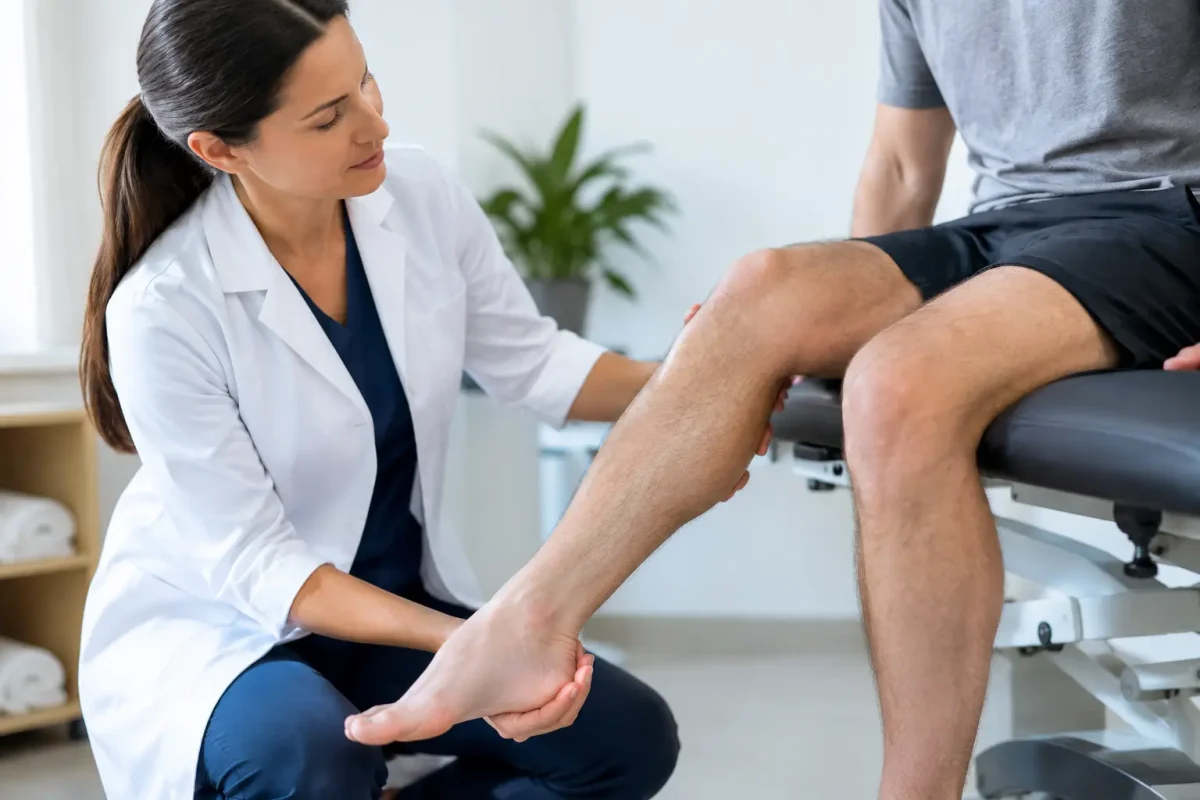
The physical examination may include checking foot posture, ankle range of motion, calf flexibility, joint movement, muscle strength, balance and tenderness. Your footwear is also worth reviewing. A shoe can be comfortable but no longer supportive enough for its job, particularly if the midsole has compressed or the sole is worn unevenly.
At Comfort Feet Podiatry Group, 3D biomechanics analysis can add another layer of information by assessing the way you stand and move. Walking or running assessment may reveal timing, loading and alignment patterns that are difficult to see when you are sitting on an examination chair. Your podiatrist can then explain what is relevant to your pain, rather than overwhelming you with measurements that do not change the plan.
If the examination suggests a problem outside podiatry scope, such as a significant internal knee injury, your podiatrist can recommend referral or collaboration with your GP, physiotherapist, osteopath, exercise physiologist or orthopaedic specialist. Good care is coordinated care.
Treatment is more than an insole
Custom orthotics can be useful for some knee pain presentations, but they are not a universal answer. Where appropriate, an orthotic can support the foot, redistribute pressure and influence lower-limb loading during walking, work or sport. The design should match your footwear, activity and clinical findings. A device that works well in running shoes may not suit dress shoes, work boots or footy boots.
Often, the most effective plan combines several strategies. Your podiatrist may recommend targeted exercises to improve foot, ankle, calf, hip or knee control, plus a gradual return-to-activity plan. This is particularly important for runners and field-sport athletes, because reducing pain without rebuilding capacity can lead to the same issue returning once training ramps up.
Hands-on treatment may also form part of care when it suits your condition. Depending on the assessment, this can include lower-limb sports massage, therapeutic ultrasound, dry needling, shockwave therapy or neuromuscular rehabilitation. These treatments are not shortcuts around strength, mobility and sensible loading. They may, however, help settle pain or improve movement enough for rehabilitation to progress.
Footwear advice can be equally valuable. The right shoe depends on your foot shape, work demands, surface, sport and comfort – not just a label claiming to be the best stability shoe. For some people, a more supportive shoe reduces symptoms during a flare. For others, a change in heel height, fit or flexibility is more relevant. Your podiatrist can help you make decisions based on your movement and daily life.
What results can you expect?
Recovery timelines depend on the diagnosis, how long symptoms have been present, your activity demands and how consistently the plan is followed. A mild overload problem may settle within weeks with load modification and targeted treatment. Longer-standing pain, arthritis or symptoms following injury can require a more gradual approach.
The goal is not to promise a pain-free knee after one appointment. It is to identify modifiable contributors, reduce aggravation and give you a clear pathway back to the things that matter: walking the dog, finishing a work shift comfortably, getting through a game, travelling, or keeping up with family.
It also helps to avoid the boom-and-bust cycle. Resting completely until pain disappears, then jumping straight back into a long run or full training session, often re-irritates the area. A measured increase in walking, running, gym work or sport gives tissues time to adapt. Your podiatrist can help set those steps at a level that is challenging enough to build capacity but not so aggressive that it repeatedly triggers pain.
Give your knee the full lower-limb assessment it deserves
Knee pain is frustrating because it can limit far more than exercise. It can affect your commute, your job, your sleep and the freedom to move without thinking about every step. If your symptoms may be linked to the way your feet and lower limbs are loading, a podiatry assessment can provide useful answers and a treatment plan built around your life.
You do not need to wait until pain forces you to stop altogether. Early assessment can help you understand what your body is responding to, make practical changes and move towards a stronger, more comfortable return to activity.