
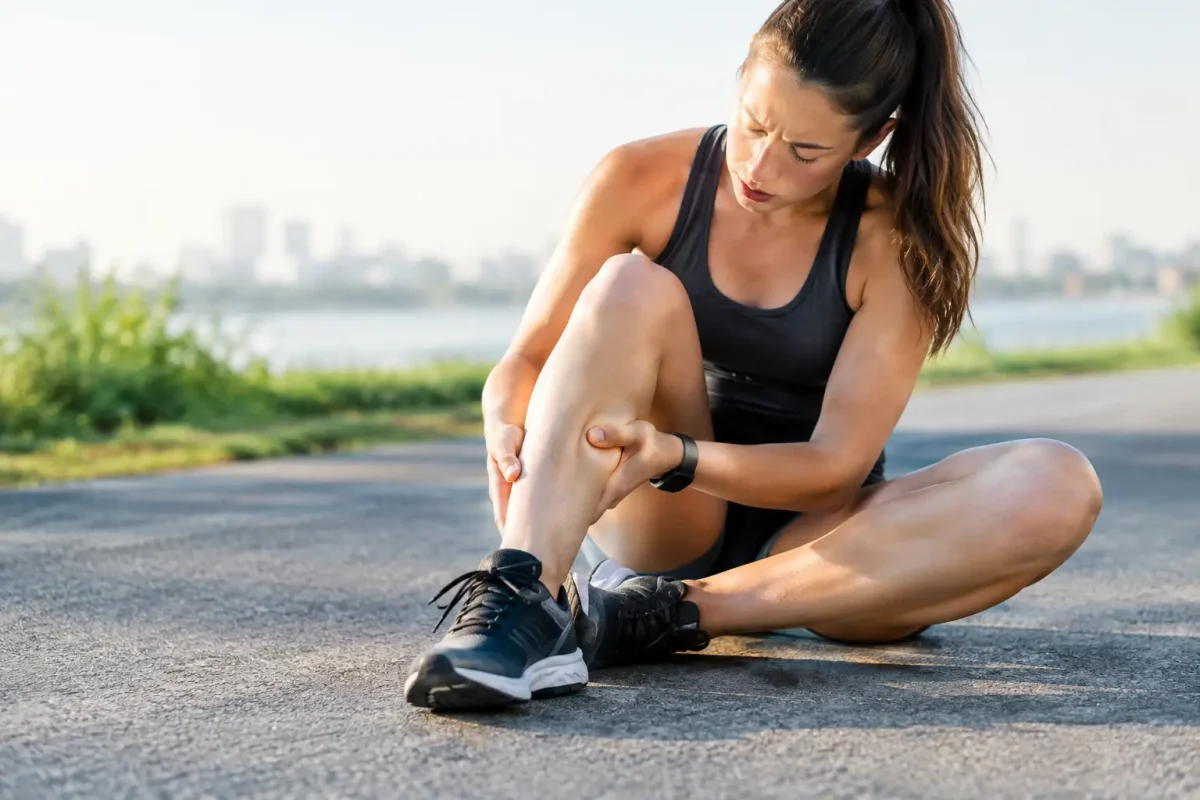
That ache along the inside of your shin can turn an enjoyable run, netball session or work shift on your feet into a painful calculation. Effective shin splints recovery is not about pushing through until the pain disappears. It is about settling irritated tissue, finding the load or movement pattern that caused the flare-up, and rebuilding your capacity so you can move with confidence again.
Shin splints is the everyday name for medial tibial stress syndrome (MTSS). It commonly causes a broad, tender ache along the inner edge of the shinbone, often during or after running, jumping, walking hills or spending long hours standing. The condition is particularly common when training volume, intensity or terrain changes faster than the body can adapt.
Start Shin Splints Recovery by Getting the Diagnosis Right
Not every sore shin is a shin splint. This matters because continuing to train on a bone stress injury can make a manageable problem significantly more serious. With MTSS, discomfort is usually spread over a longer section of the inner shin and may ease as you warm up in the early stages. A stress fracture is more likely to produce a sharp, highly localised point of pain that worsens with impact and may eventually hurt at rest.
You should arrange a professional assessment promptly if pain is severe, you are limping, the shin is swollen, pain wakes you at night, or there is one precise spot that is very painful to touch. Pain after a fall or direct blow also needs assessment. In some cases, imaging may be appropriate to rule out a stress injury or another cause of lower-leg pain.
A podiatry assessment looks beyond the painful area. Your footwear, training history, running surface, ankle mobility, calf strength, hip control and foot mechanics can all influence the forces travelling through the shin. This is where a 3D biomechanics analysis can be valuable: it helps identify movement patterns that may not be obvious when you are simply sitting on the treatment table.
Settle the Flare-Up Without Losing All Momentum
The first goal is to reduce the activity that provokes symptoms. That does not always mean complete rest. If walking is comfortable, you may be able to continue normal daily movement while temporarily reducing running, jumping, court sport or hill sessions. The right level of modification depends on your pain, job demands and whether a bone stress injury has been excluded.
Avoid the tempting cycle of taking a few days off, feeling better, then returning to the same distance and pace. Symptoms often return because the tissue has not regained its ability to tolerate load. Instead, reduce the aggravating activity enough for pain to settle, then build back gradually.
Simple measures can help in the early stage. Ice may provide short-term pain relief after activity, while supportive shoes can make standing and walking more comfortable. Gentle calf mobility work can be useful if it does not increase pain. Anti-inflammatory medicines are not a substitute for assessment or load management, and they are not suitable for everyone, so speak with your GP or pharmacist if you are considering them.
Hands-on care may also form part of treatment where appropriate. Lower-limb sports massage can address calf tightness, while therapeutic ultrasound, dry needling or shockwave therapy may be considered as part of an individual treatment plan. These treatments are most useful when paired with a clear rehabilitation plan rather than relied on as a quick fix.
Rebuild Capacity From the Foot Up
Your shin has to absorb force every time your foot meets the ground. Improving the strength and control of the muscles around the foot, ankle, calf, knee and hip helps spread that load more effectively. Rehabilitation should be progressive, not punishing.
Early exercises may focus on comfortable calf raises, ankle control and foot strength. As symptoms improve, the program can progress to single-leg calf work, balance tasks, controlled hopping and sport-specific drills. A runner may need to tolerate repeated impact; a warehouse worker may need endurance for concrete floors; a footballer needs changes of direction and acceleration. The rehab plan should match the life you are returning to.
Calf strength deserves particular attention. The calf complex works hard to control the ankle and absorb impact, especially during running. Weakness, fatigue or restricted ankle movement can shift stress towards the shin. Hip and trunk control also matter, particularly if the knee collapses inward or the pelvis drops with each step.
It is normal to feel muscles working during rehabilitation. It is not the goal to reproduce your familiar shin pain. Mild discomfort that settles quickly may be acceptable in some stages, but worsening pain during exercise, pain that lingers into the next day, or a return of limping means the load should be reviewed.
Footwear and Orthotics: Useful, but Not a Standalone Answer
Shoes do not need to be the newest or most expensive pair, but they should suit your activity, fit securely and not be excessively worn. Compressed midsoles, uneven outsole wear and shoes that no longer feel stable can alter how forces travel through your lower limb. Rotating between suitable pairs can be helpful for regular runners, although it will not correct a training error on its own.
For some people, custom orthotics can reduce strain by supporting foot function and improving how the foot manages load. They may be especially relevant where a detailed assessment finds excessive foot motion, a high-arched rigid foot, a significant side-to-side difference or symptoms that persist despite sensible training changes. Others may recover well without orthotics. The right choice depends on your biomechanics, footwear and goals, not a one-size-fits-all rule.
Return to Running in Measured Steps
A return to impact activity should begin only when daily walking is comfortable and the shin is no longer tender or increasingly sore after normal activity. You should also be able to complete the strength and control exercises prescribed for you without a symptom flare-up.
Start with a walk-run approach on a predictable, flat surface rather than immediately returning to trails, intervals or hills. Keep the effort easy and leave recovery days between sessions at first. Increase one variable at a time: duration before speed, and speed before hills or hard sessions. If pain builds during a run, changes your stride, or is worse the next morning, step back to the last comfortable level.
Cross-training can maintain fitness while your impact tolerance returns. Cycling, swimming, deep-water running or an elliptical trainer may be suitable options if they are pain-free. The best choice is the one that keeps you active without irritating the shin.
Prevent the Next Flare-Up
Shin splints frequently follow a sudden change: a return to sport after a break, a new boot camp, more shifts on hard floors, a race-training block, or swapping flat paths for hills. Your tissues adapt well when the increase is gradual. They struggle when several demands rise at once.
Keep an eye on the total picture, including sleep, recovery days, nutrition and stress. Low energy availability can affect bone health and recovery, particularly in athletes who are training hard while under-fuelling. Persistent fatigue, recurring injuries or changes in menstrual cycles warrant discussion with a GP and allied health team.
If shin pain keeps returning, do not accept it as part of being active. A thorough assessment can identify whether the problem is training load, footwear, lower-limb strength, foot mechanics or a combination of factors. At Comfort Feet Podiatry Group, treatment is built around relieving pain while helping you return to the sport, work and everyday movement that matters to you.
A well-managed recovery should leave you more capable than before the flare-up. Give your body the right diagnosis, the right amount of load and a clear plan forward, and each step can become a more comfortable one.