
That sharp first step out of bed, the ache through your shins after a run, or the foot pain that builds during a long shift can gradually shrink your world. Custom orthotics Melbourne patients choose are not simply inserts for shoes – they are a clinical treatment option designed around how your feet, ankles, knees and legs move together.
When pain affects your work, training, school drop-off or confidence getting around, the goal is not to mask it with a generic insole. It is to identify why a particular structure or movement pattern is placing too much load on a tissue, then create a practical plan to help you move with greater comfort and control.
When custom orthotics Melbourne patients need may help
Orthotics may be considered when the foot is repeatedly overloaded, poorly supported or unable to manage the demands placed on it. This can happen with flat feet, high arches, arthritis, leg-length differences, previous injuries, changes in activity levels or footwear that does not suit your needs. However, foot shape alone does not determine whether you need orthotics. Many people with flat feet have no pain at all, while someone with a seemingly typical foot shape may develop persistent heel, forefoot or knee symptoms.
A podiatrist will look at the location, timing and behaviour of your pain. Heel pain that is worst on the first few steps in the morning needs a different approach from pain under the ball of the foot during netball, or aching arches after standing on concrete all day. Orthotics can be useful for conditions including plantar fasciitis, Achilles tendon pain, shin splints, metatarsalgia, Morton’s neuroma, ankle instability and some forms of knee pain linked to lower-limb mechanics.
They can also form part of a preventative strategy for active people who have had recurring injuries or are increasing their walking, running or sporting load. The important distinction is that an orthotic should be prescribed for a clear clinical reason, not because everyone who runs or has low arches is assumed to need one.
Orthotics work best as part of a treatment plan
A custom orthotic changes how forces are distributed through the foot and lower limb. Depending on your needs, it may cushion a sensitive area, support the arch, improve stability, reduce strain on a tendon or assist the foot to move more efficiently through each step. Small adjustments can make a meaningful difference when they are matched to the problem being treated.
But orthotics are rarely a stand-alone pain solutionist. If a calf is tight, a hip is weak, an ankle has lost movement after a sprain, or training load has risen too quickly, those factors need attention as well. A well-rounded treatment plan may include hands-on therapy, stretching and strengthening, neuromuscular rehabilitation, footwear advice, sports massage or other targeted treatment where appropriate.
This matters because pain can settle temporarily while the reason it developed remains. The aim is to help you return to an active lifestyle with better capacity, rather than become dependent on an insert while avoiding the movements that matter to you.
What happens during a custom orthotic assessment?
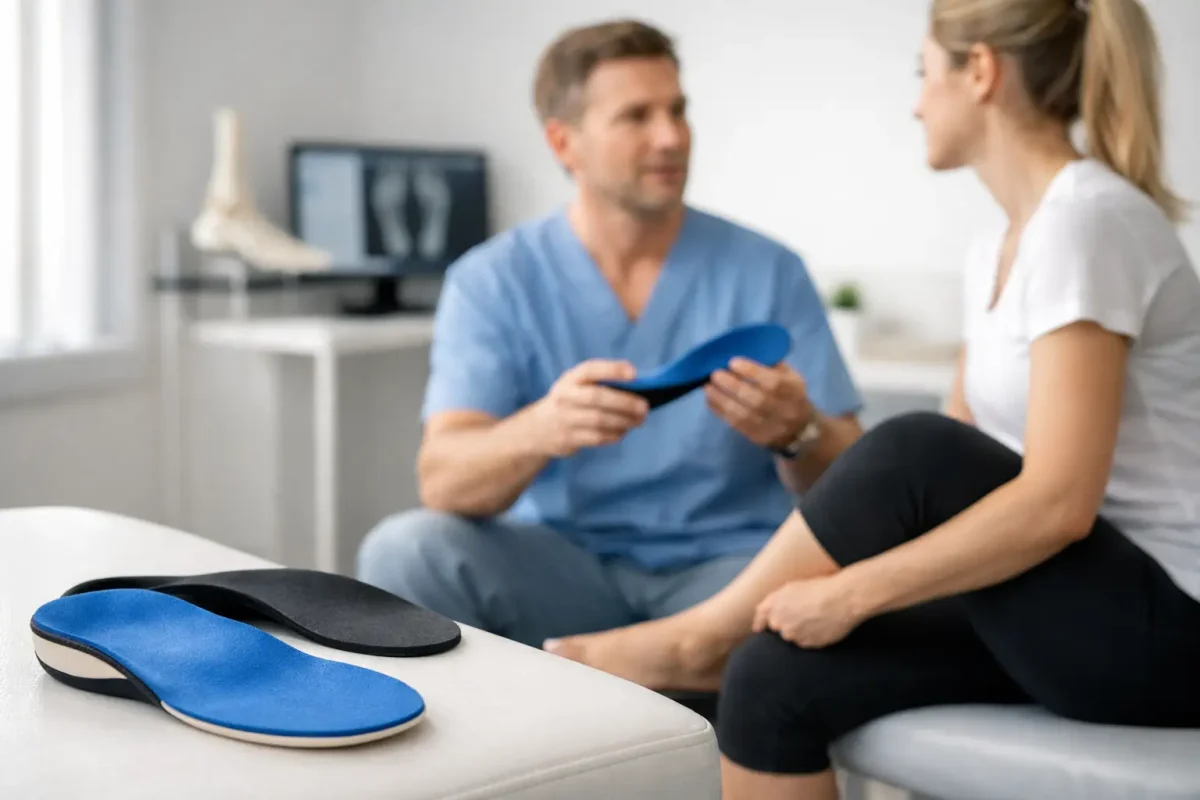
A proper orthotic prescription starts well before any device is made. Your podiatrist should discuss your symptoms, medical history, previous injuries, daily activity, work demands, sport and footwear. A tradie spending ten hours in steel-cap boots has different needs from a walker, dancer, office worker or teenage footballer.
Your assessment may include checking joint movement, muscle strength, balance, foot posture, walking or running technique, and the way your symptoms respond to loading. At Comfort Feet Podiatry Group, 3D biomechanics analysis can add detailed information about lower-limb movement patterns, helping the clinician connect what is happening at the foot with the ankle, calf, knee and hip.
Your shoes are part of the prescription
An excellent orthotic can still be uncomfortable or ineffective in unsuitable footwear. Your podiatrist will consider the shoes you wear most often – such as work boots, runners, school shoes, casual footwear or sport-specific shoes – before recommending the orthotic design.
Some devices are slim and flexible enough for everyday shoes. Others need more depth and a firmer heel counter, particularly where substantial control or cushioning is required. There is always a trade-off between support, bulk, durability and the types of footwear you want to use. Being honest about what you will actually wear helps create a solution that fits real life.
The device is made for your movement needs
Custom orthotics are created from measurements or an impression of your feet and prescribed to address your individual findings. Materials vary from softer cushioning layers to more supportive shells, and many devices combine both. A runner managing forefoot pain may need pressure relief and shock absorption, while a person with ankle instability may benefit from a design that improves control through stance.
Once fitted, the orthotics should be checked in your shoes and adjusted if necessary. Comfort is not an afterthought. You should understand what the device is intended to do, how to wear it and when to return for review.
Custom orthotics versus shop-bought insoles
Off-the-shelf insoles can be a reasonable short-term option for mild discomfort, extra cushioning or a trial of added support. They are readily available and cost less upfront. For some people, particularly those with no established injury, that may be all that is needed.
The limitation is that a retail insole cannot account for the specific source of your pain, the way your joints move or the demands of your work and sport. If symptoms are persistent, one-sided, worsening or returning every time you become active, guessing with multiple pairs of inserts can become more expensive than seeking assessment early.
Custom orthotics are not automatically better simply because they are custom-made. Their value comes from the quality of the diagnosis, prescription, fit and follow-up. A device should be adjusted to your symptoms and progress, not handed over as a one-size-fits-all answer with a higher price tag.
Getting used to your orthotics safely
Your body may need time to adapt, especially if the orthotics make a noticeable change to how your feet are supported. Most people begin by wearing them for short periods and gradually build up, following their podiatrist’s advice. Do not take them on a full-day hike, a long work shift or a hard training session on day one unless you have specifically been advised to do so.
Mild awareness of the device can be normal during the settling-in period. Ongoing rubbing, numbness, increased pain or a feeling that you are being forced into an unnatural position is not something to push through. Contact your podiatry clinic so the fit and prescription can be reviewed.
Your orthotics also need occasional reassessment. Children’s feet grow, activity levels change, injuries occur and materials wear down. A device that suited you two years ago may no longer match your current shoes, body weight, sport or symptoms.
Choosing care that looks beyond the foot
Foot pain is often the point where the problem is felt, not the whole story. That is why the strongest results come from care that considers your footwear, training, work, strength, mobility and lower-limb mechanics together. For people managing an NDIS, WorkSafe Victoria, TAC or DVA pathway, clear assessment and a practical rehabilitation plan can also help make treatment easier to coordinate.
If pain is changing the way you walk, stopping you from exercising or making ordinary days harder than they should be, it is worth having it assessed. The right orthotic is not about forcing your foot into a perfect shape – it is about giving your body the support it needs to keep moving towards the life you want to live.