
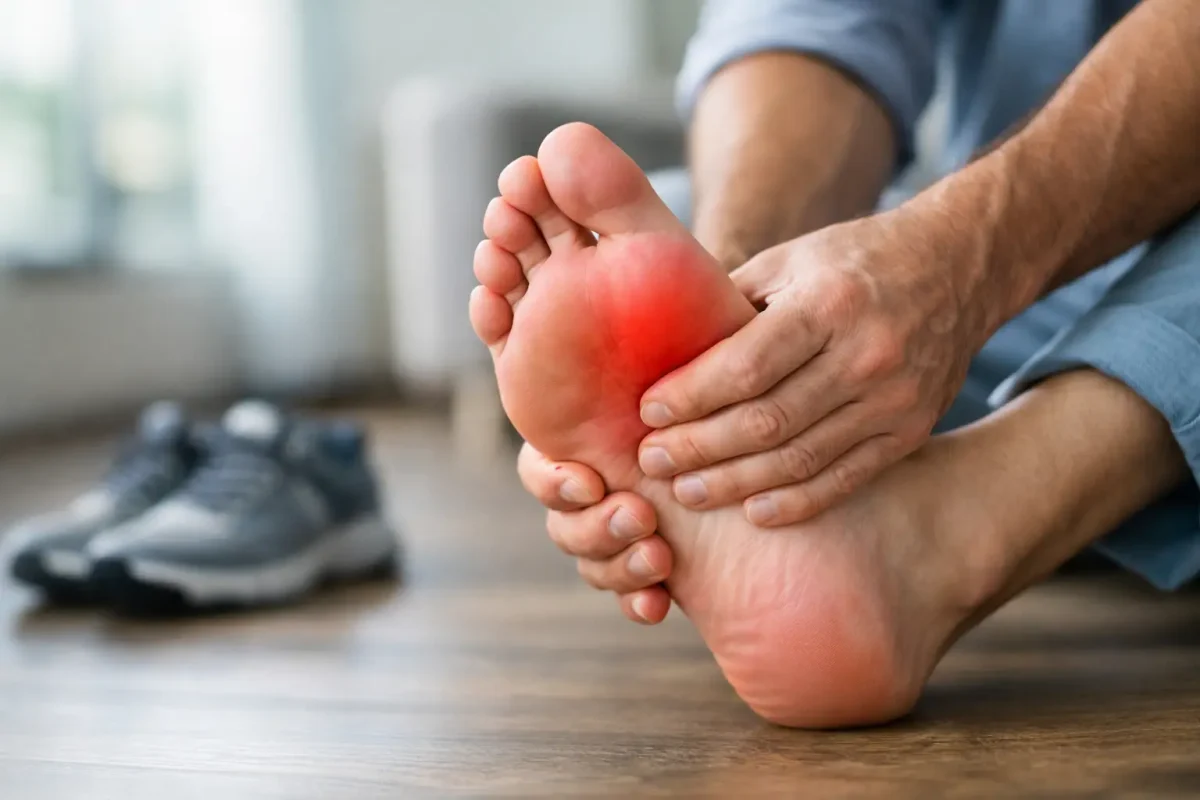
The first steps out of bed, the walk from the car park to work, or the final kilometres of a run can all expose foot pain that is easy to dismiss at first. But when soreness changes how you walk, stops you exercising, or makes a normal day feel like hard work, it is worth taking seriously. Your feet do far more than carry your body weight – they influence how your ankles, knees, hips and lower back move too.
Foot pain is a signal, not just a nuisance
Foot pain can begin suddenly after a twist, awkward landing or increase in training. It can also build slowly, often because the tissues of the foot are being asked to do more than they can comfortably manage. Long shifts on hard floors, worn-out shoes, a change in activity, altered gait, body-weight changes and medical conditions can all play a part.
The location and pattern of pain offer useful clues. Pain beneath the heel that is worse with the first few steps in the morning may be linked with plantar fasciitis or irritation of the plantar fascia. Burning, tingling or a feeling of a small pebble under the ball of the foot can occur with Morton’s neuroma. Pain through the top or outside of the foot may follow overload, tendon irritation or a sprain, while pain around the big toe can be associated with joint changes, bunions or footwear pressure.
A sore foot is not always a foot-only problem. Tight calves, reduced ankle movement, weak hip control and a change in running technique can shift load into the feet. This is why a quick look at the painful spot alone may not reveal the full cause. A proper lower-limb assessment considers how you stand, walk, work, train and recover.
Common triggers that deserve attention
Some foot problems are obvious, such as an ingrown toenail, wart, blister or fungal skin infection. Others are more subtle. A gradual ache under the heel, recurring pain after sport, or cramping in the arch may persist because the contributing load has not changed.
Footwear matters, but it is rarely the entire answer. Shoes that are too narrow, too loose, overly worn or unsuitable for the activity can aggravate symptoms. Equally, moving abruptly into highly supportive shoes, minimalist shoes or new work boots can irritate tissues that have not had time to adapt. The right choice depends on your foot shape, activity, symptoms and comfort, rather than a one-style-fits-all rule.
For active people, spikes in training are a common culprit. Adding hill sessions, increasing kilometres, returning to sport after time off, or playing more games across a weekend can overload the plantar fascia, tendons or bones. For workers, repeated standing, ladders, concrete floors and safety boots may create a similar strain without any single memorable injury.
When foot pain needs prompt care
Not every ache requires urgent treatment, but certain symptoms should not be managed with a wait-and-see approach. Seek timely professional assessment if you cannot bear weight, have severe swelling or bruising after an injury, notice a deformity, or feel pain that is worsening rather than settling.
A hot, red, swollen foot or toe can indicate infection or inflammation and should be assessed promptly, particularly if you have diabetes, poor circulation, nerve changes or reduced sensation. Open wounds, unexplained colour changes, fever, calf swelling, or numbness that persists also need medical attention.
Children should be assessed when foot or heel pain causes limping, stops them joining in sport, wakes them at night or continues beyond a short period. Growing bodies can experience temporary soreness, but persistent pain should not simply be put down to growth.
Why pushing through can make recovery harder
Continuing to run, work or train through escalating pain can change your movement pattern. You may unconsciously shift weight to the other side, shorten your stride or avoid pushing through the affected foot. That compensation can place extra strain on the ankle, knee, hip or back.
Rest can be useful in the short term, but complete inactivity is not always the best longer-term solution. Many conditions respond better to a planned reduction in aggravating activity, followed by progressive strengthening and a safe return to movement. The aim is not merely to settle pain for a few days. It is to restore the capacity your feet need for daily life, work and sport.
Foot pain treatment starts with the right diagnosis
Effective care begins by understanding the story behind your symptoms. A podiatry assessment may include questions about your work, footwear, training load, previous injuries and health history, alongside hands-on examination of the painful area. Your clinician may assess joint movement, muscle strength, tendon load tolerance, balance and walking or running mechanics.
Where appropriate, 3D biomechanics analysis can provide a detailed picture of how the foot and lower limb move. This can be particularly useful for recurring injuries, sports-related symptoms and pain that has not responded to general advice. If a stress injury, significant tear or another condition requiring imaging is suspected, referral for the appropriate investigation may be recommended.
Treatment should match the diagnosis and your goals. A warehouse worker needs a practical plan for long shifts. A footballer may need a structured return-to-training programme. An older adult may be focused on balance, confidence and safer walking. These are different problems, even when the painful area is similar.
Depending on the cause, a tailored plan may include:
- footwear guidance and activity modifications that reduce aggravating load without unnecessarily stopping movement
- hands-on treatment, lower-limb sports massage or therapeutic ultrasound where clinically appropriate
- exercises to improve foot, calf, ankle and hip strength, mobility and control
- custom orthotics when they can improve comfort, redistribute pressure or support a specific movement need
- shockwave therapy, dry needling or neuromuscular rehabilitation as part of a broader treatment programme for suitable conditions.
No single treatment suits every type of foot pain. Orthotics can be valuable for some people, for example, but they work best when prescribed for a clear reason and combined with the right footwear, load management and rehabilitation. Similarly, stretching may help tight calves, yet aggressive stretching can aggravate an acute injury. Diagnosis matters.
What you can do while waiting for an appointment
If there has been no major injury and you can walk safely, reduce activities that clearly provoke symptoms for several days. That might mean swapping running for cycling, shortening a walk, taking more seated breaks at work, or avoiding barefoot time on hard floors. Keep moving within a comfortable range rather than repeatedly testing a painful activity.
Choose shoes that feel stable, have enough room through the toes and are appropriate for the task at hand. Avoid relying on heavily worn runners or unsupportive footwear when your feet are already sore. A cool pack wrapped in a cloth may help settle pain after activity for short periods. Do not apply ice directly to skin, and take extra care if you have altered sensation or circulation concerns.
Pay attention to patterns. Note where the pain occurs, what it feels like, whether it is worse in the morning or after activity, and what footwear or exercise seems to trigger it. This information can make an assessment more efficient and help identify the real driver of the problem.
Comfort Feet Podiatry Group approaches foot pain as part of the wider lower-limb picture, helping Melbourne patients move with more confidence at work, in sport and at home. If every step is becoming something you brace for, an early assessment can turn a vague ache into a clear, practical plan for getting back to comfortable movement.